


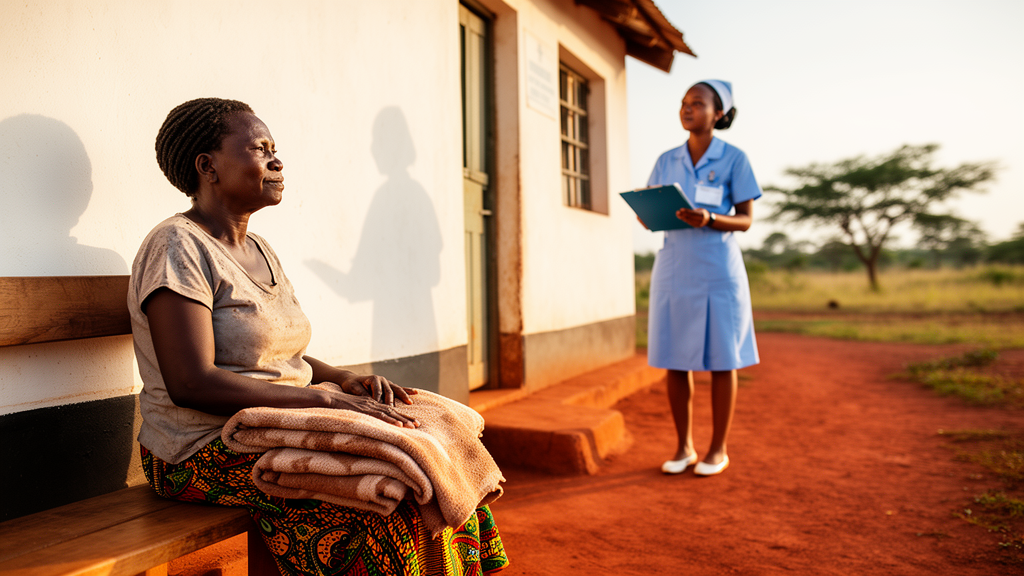
More than 70 percent of the world’s completed suicides occur in low- and middle-income countries, yet the populations at greatest risk in these settings often remain invisible to researchers and health systems alike. A new study from Neno District, Malawi, published in BMC Public Health, brings one such hidden population into sharp focus: adults living with chronic health conditions who also carry the burden of depression. The research, led by Kondwani Mpinga and Owen Mwale of Partners In Health in Neno, with colleagues from the RAND Corporation and Malawi’s Ministry of Health, found that roughly one in ten chronic care patients screened for depression reported suicidal behavior, a prevalence the authors describe as elevated and demanding timely, targeted intervention.
The findings emerge from an unusually rigorous screening architecture embedded within a randomized controlled trial designed to treat major depressive disorder in rural Malawi. Rather than surveying the general population, the team recruited 2,240 adult patients already receiving care for chronic health conditions who presented with low mood or anhedonia, the twin cardinal symptoms of depression. Each of these patients was assessed using the Patient Health Questionnaire, or PHQ-9, a nine-item screening instrument that probes depressive symptoms over the preceding two weeks. Critically, the PHQ-9 includes a dedicated item on thoughts of being better off dead or of hurting oneself in some way, and any patient who expressed suicidal ideation on this item was then escalated to a more detailed suicidality assessment tool.
This two-stage design matters for interpreting the results. The overall prevalence of suicidal behavior among the 2,240 screened patients was 10.3 percent, meaning that approximately 230 individuals in the cohort reported some form of suicidality. Within this group, the breakdown reveals the clinical texture of the problem: 34 percent reported suicidal ideation within the last week, 26 percent had an existing self-harm plan, 10 percent were currently experiencing suicidal ideation at the time of assessment, and 7 percent had attempted suicide in the past. The coexistence of recent ideation and concrete plans among more than a quarter of suicidality-positive patients signals a level of acute risk that goes well beyond passive thoughts of death.
To understand who was most at risk, the researchers turned to multivariable logistic regression, a statistical technique that estimates the independent association between each demographic characteristic and the odds of reporting suicidal behavior while holding all other variables constant. Three correlates emerged with statistical significance. Elevated depressive symptoms were strongly associated with suicidal behavior, with a p-value below 0.000, indicating an association so robust that the probability of it arising by chance alone is vanishingly small. Younger age was associated with greater odds of reporting suicidal behavior, with p equal to 0.001, and female sex was associated with greater odds as well, with p equal to 0.02.
The age and sex findings deserve particular scrutiny because they complicate assumptions drawn from other settings. In many high-income countries, completed suicide is more common among men, even though suicidal ideation and attempts are often reported more frequently by women, a pattern sometimes attributed to differences in method lethality and help-seeking behavior. The Malawian data, showing that women with chronic conditions and depression carry greater odds of suicidality, aligns with the ideation side of this international pattern but arises in a context where the structural drivers may differ profoundly. Women in rural Malawi often face constrained economic autonomy, heavy caregiving obligations, and limited access to mental health services, and the intersection of chronic physical illness with these pressures may amplify psychological distress in ways that clinical screening must account for.
The association between younger age and suicidality is equally consequential for health system planning. Younger adults with chronic diseases such as HIV, diabetes, or hypertension face decades of ongoing treatment, and the prospect of lifelong medication adherence, stigma, and potential disease progression can weigh heavily on mental health. In Neno District, a mountainous rural area where Partners In Health and the Malawian Ministry of Health have built an integrated chronic care and depression treatment program, identifying younger patients as a high-risk subgroup offers a concrete targeting strategy: depression screening and suicidality assessment could be prioritized for younger chronic care patients, with additional vigilance for women and for anyone whose PHQ-9 responses indicate worsening depressive symptoms.
The study’s methodological pedigree strengthens confidence in its conclusions. Because the screening occurred within a randomized controlled trial funded by the National Institute of Mental Health under grant R01 MH117760, the data collection followed a prespecified protocol with trained clinicians, counselors, and data clerks responsible for depression care services. All trial participants provided verbal or written informed consent, and the final study protocol was approved by the RAND Human Subjects Protections Committee in the United States and the National Health Sciences Research Committee in Malawi. The funder had no role in study design or implementation apart from ensuring compliance with ethics guidelines, and the authors declare no competing interests. These safeguards reduce the risk that the 10.3 percent prevalence figure reflects artifacts of convenience sampling or inconsistent assessment procedures.
Still, the study has boundaries that readers should keep in mind. The cohort consisted of chronic care patients with low mood or anhedonia who were being screened as part of a depression treatment trial, so the prevalence estimate applies to this clinically selected population rather than to all adults with chronic conditions or to the general population of Malawi. The cross-sectional nature of the analysis means the reported associations between depressive symptoms, age, sex, and suicidal behavior describe correlations at a single point in time rather than causal pathways. And because the suicidality assessment was triggered by PHQ-9 ideation responses, the detailed breakdown of recent ideation, plans, and attempts applies only to the subset of patients who screened positive, not to the full cohort.
These limitations do not diminish the central message, which the authors state plainly: suicidal behavior is elevated among adult patients with chronic conditions in Neno District, and roughly one in ten individuals in this high-risk group report suicidality. The authors call for timely, targeted interventions to address the problem, and the trial infrastructure that produced these findings may itself point the way forward. Because the screening was embedded within a program to treat major depressive disorder, the results suggest that depression treatment delivered through existing chronic care channels can double as a suicide prevention platform, reaching patients who would rarely present to specialized psychiatric services in a district where mental health resources remain scarce.
The implications ripple outward across sub-Saharan Africa, where chronic disease burdens are rising and mental health services remain chronically underfunded. If one in ten depressed chronic care patients in a rural Malawian district reports suicidality, health systems throughout the region may be overlooking a substantial reservoir of acute risk within their routine clinics. The Neno findings, published open access under a Creative Commons license, offer both a warning and a template: systematic depression screening with PHQ-9 in chronic care settings, escalation to detailed suicidality assessment for positive screens, and prioritized attention to younger patients, women, and those with severe depressive symptoms could transform silent risk into actionable care.
Subject of Research: Public Health
Article Title: Prevalence and correlates of suicidal behavior among adults with chronic health conditions in Malawi
Article References: Mpinga, K., Mwale, O., Okunogbe, A., Kamwiyo, M., Aron, M. B., Houde, A., Munyaneza, F., Ruderman, T., Matanje, B., Liwimbi, O., Kulisewa, K., Udedi, M., & McBain, R. (2026). Prevalence and correlates of suicidal behavior among adults with chronic health conditions in Malawi. BMC Public Health. https://doi.org/10.1186/s12889-026-29305-w
Image Credits: AI Generated
DOI: 10.1186/s12889-026-29305-w
Keywords: suicide, Malawi, depression, chronic disease, mental health, public health, sub-Saharan Africa, PHQ-9, Prevalence, correlates, suicidal, behavior
Cite Scienmag News
Glenn Wilkins. (October 17, 2026). One in Ten Chronic Care Patients in Malawi Report Suicidal Behavior, Study Finds. Scienmag. https://scienmag.com/one-in-ten-chronic-care-patients-in-malawi-report-suicidal-behavior-study-finds/
Glenn Wilkins. "One in Ten Chronic Care Patients in Malawi Report Suicidal Behavior, Study Finds." Scienmag, 17 October 2026, https://scienmag.com/one-in-ten-chronic-care-patients-in-malawi-report-suicidal-behavior-study-finds/. Accessed 17 October 2026.
Glenn Wilkins. "One in Ten Chronic Care Patients in Malawi Report Suicidal Behavior, Study Finds." Scienmag. October 17, 2026. https://scienmag.com/one-in-ten-chronic-care-patients-in-malawi-report-suicidal-behavior-study-finds/


