


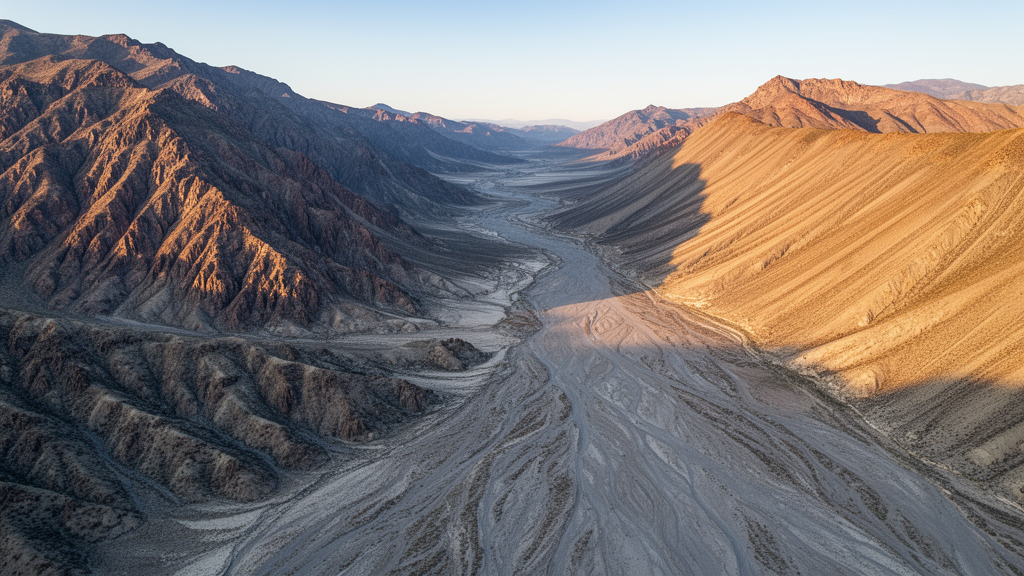
Deep beneath the vineyards and truffle forests of southern Piemonte, a single sedimentary basin has quietly recorded one of the most dramatic tectonic stories in Europe. New research published in the Swiss Journal of Geosciences argues that the so-called Tertiary Piemonte Basin is not merely a footnote in the history of the Alps or the Apennines, but a unique archive that spans the entire life of both mountain belts. The basin, the study concludes, acted as “one basin for two orogens,” witnessing the birth of the Alps and then being swept up into the rising Apennines as the Mediterranean’s tectonic machinery reorganised itself around it.
The research, led by geologists working with the Piemonte Geological Map and a network of seismic sections crossing the whole basin, integrates surface mapping with subsurface data for the first time at a truly regional scale. The team traced the basin’s sedimentary successions across six distinct sub-domains, from the Torino Hill and Monferrato in the north to the Langhe, Alto Monferrato and Borbera-Grue in the south and east. By tying outcrop geology to roughly three hundred kilometres of seismic multipanels, the authors reconstructed how the basin evolved from a retroforeland depression behind the rising Western Alps into a thrust-top basin riding on the frontal thrusts of the young Apennine belt.
The story begins in the middle to late Eocene, when the collision between the European and Adriatic plates was still in its early stages. As the Alpine orogen started to exhume its high-pressure metamorphic rocks, the flexural load of the growing mountain chain bent the lithosphere and created space for sediment. On the external side of the belt, the Alpine Foreland Basin received continental and shallow-marine deposits, while on the internal side a large retroforeland realm developed over the deformed Ligurian units. The earliest sediments of the Tertiary Piemonte Basin, deep-water marls known as the Marne di Monte Piano, rest unconformably on these non-metamorphic Ligurian successions, marking the first chapter of a basin that would persist for more than thirty million years.
What makes the basin remarkable is its sensitivity to tectonic change. The sedimentary fill is punctuated by a series of regional-scale unconformities, labelled D0 through D7, each one recording a major geologic event that can be correlated across the entire basin and, in many cases, into the neighbouring EpiLigurian basins of the Northern Apennines and the Gonfolite Basin of the Southern Alps. These unconformities bound unconformity-bounded stratigraphic units, or synthems, whose ages and distributions the authors mapped in detail using the Piemonte Geological Map as a continuous regional framework. The result is a chronostratigraphic architecture that reads like a seismograph of Mediterranean geodynamics.
The first major reorganisation came in the early Rupelian, around thirty-four million years ago. As the Adriatic microplate moved westward and the Ligurian rollback subduction initiated, a transtensional regime developed in the inner side of the uplifting Alpine belt. High-angle synsedimentary faults dissected the basin substratum into a mosaic of fault blocks, and coarse continental to shallow-marine conglomerates and sandstones of the Molare, Cardona and Savignone formations began to accumulate. These deposits, the study notes, are the distinguishing feature of the Tertiary Piemonte Basin, marking the onset of erosion synchronous with the rapid exhumation of Alpine metamorphic rocks very close to the rising mountain chain, in a retroforeland geodynamic setting that the more distal EpiLigurian successions never shared.
By the late Rupelian and Chattian, the basin entered a subsidence-dominated phase. The Ligurian Alps experienced more than four kilometres of subsidence between thirty and twenty-six million years ago, and deep-water hemipelagic marls with interbedded re-sedimented sandstone bodies accumulated across the basin. This quiet period ended abruptly in the early Burdigalian, around twenty million years ago, when the direction of motion of the Adriatic indenter shifted from northwest to west-northwest. The resulting oblique convergence triggered a major contractional event that inverted many of the basin’s earlier structures, uplifted its margins, and carved the regionally extensive D2 unconformity. Shallow-water carbonate ramps of the Pietra da Cantoni and Visone formations then spread over the deformed Oligocene slope sediments, a dramatic reshaping that correlates with coeval tectonic events recorded in the Gonfolite Basin and the EpiLigurian domains.
The late Burdigalian brought a second, even more profound inversion. The main depocentre shifted abruptly to the southwest, into the Langhe region, and the entire basin drowned. More than seven hundred metres of westerly-derived turbidites of the Cortemilia Formation spread across the basin floor, while the formerly active sediment sources in the Ligurian Alps gradually gave way to new sources in the west as the Alpine axial belt continued to exhume. From this point onward, the Tertiary Piemonte Basin was no longer simply a retroforeland depression behind the Alps. It had become an episutural basin on top of the northeast-vergent Apennine tectonic belt, its fate now tied to the northeastward propagation of the Apennine thrust front rather than to the Alpine collision alone.
The Miocene chapters record this transition in ever-sharper detail. In the Langhian and Serravallian, shelf systems prograded from both the western and eastern basin margins, progressively reducing the extent of the deep-water depocentre. By the Tortonian, the basin had reached its final configuration as a confined thrust-top basin bordered by the Torino Hill-Monferrato structural high, which now separated it from the ancestral Padane foredeep to the north. The Messinian Salinity Crisis then left its unmistakable signature: selenite gypsum of the Vena del Gesso Formation accumulated in shallow marginal basins, and when an intra-Messinian tectonic pulse reactivated the Apennine thrust front, the primary evaporites were dismantled and re-sedimented as chaotic gravity-flow deposits of the Valle Versa Complex, bound below by the regionally extensive D5 unconformity.
The seismic data add a crucial third dimension to this story. The multipanels reveal that the basin’s outcrop belts, separated at the surface by wide areas of Pliocene and Quaternary cover, are physically continuous in the subsurface. Beneath the Alessandria Basin, the sections image long-lived depocentres confined by prominent structural highs shaped by compressional deformation of a reflective Ligurian substratum, as well as polyphasic flower structures where the Grognardo deformation zone intersects east-west high-angle faults. The sections also document two major depocentre shiftings, one of late Burdigalian age and another of intra-Langhian age, confirming that the basin’s history was one of repeated inversion and migration rather than steady subsidence in a single place.
The study’s most provocative conclusion concerns the nature of that subsidence. Previous subsidence curves for the basin, the authors argue, were distorted by the inclusion of Pliocene and Quaternary deposits that belong to an entirely new generation of basins born after the intra-Messinian tectonic event. When the record is restricted to the Oligocene-Miocene life of the basin, it becomes clear that effectively continuous subsidence occurred only in the Langhe sub-domain, while the basin margins experienced repeated uplift and inversion. This suggests, the team argues, that large-scale far-field stresses and crustal bending may have been less important during the Oligocene and Miocene than the local dynamics of fault-bounded basins formed in the Alpine retroforeland setting. The Tertiary Piemonte Basin, in other words, was not a passive flexural sag but an active, mixed-mode basin whose complex history was shaped by the interplay of Alpine collision, Apennine subduction, and the anticlockwise rotation of the entire Alps-Apennines junction zone. As the Mediterranean’s tectonic plates continue their slow collision, the basin’s sedimentary archive remains the most complete witness to how two mountain belts grew into one integrated orogenic system.
Subject of Research: Tertiary Piemonte Basin sedimentary record of the Alps-Apennines orogenic interference zone in northwest Italy
Article Title: One basin for two orogens
Article References: d’Atri, A., Irace, A., Piana, F., Rossi, M., & Bertok, C. (2026). One basin for two orogens. Swiss Journal of Geosciences, 119, 197-248. https://doi.org/10.3897/sjg.119.184128
Image Credits: AI Generated
Keywords: Tertiary Piemonte Basin, Alps, Apennines, orogeny, sedimentary basins, unconformities, Adria-Europe collision, Messinian Salinity Crisis, seismic stratigraphy, Piemonte, tectonics, geology
Cite Scienmag News
Violet Maxwell. (October 15, 2026). One basin for two orogens. Scienmag. https://scienmag.com/one-basin-for-two-orogens/
Violet Maxwell. "One basin for two orogens." Scienmag, 15 October 2026, https://scienmag.com/one-basin-for-two-orogens/. Accessed 15 October 2026.
Violet Maxwell. "One basin for two orogens." Scienmag. October 15, 2026. https://scienmag.com/one-basin-for-two-orogens/


