


LOGAN, UTAH, USA – A long-standing debate among evolutionary scientists goes something like this: Does evolution happen in a predictable pattern or does it depend on chance events and contingency? That is, if you could turn back the clock, as celebrated scientist Stephen Jay Gould (1941-2002) described in his famous metaphor, “Replaying the Tape of Life,” would life on Earth evolve, once again, as something similar to what we know now, or would it look very, very different?

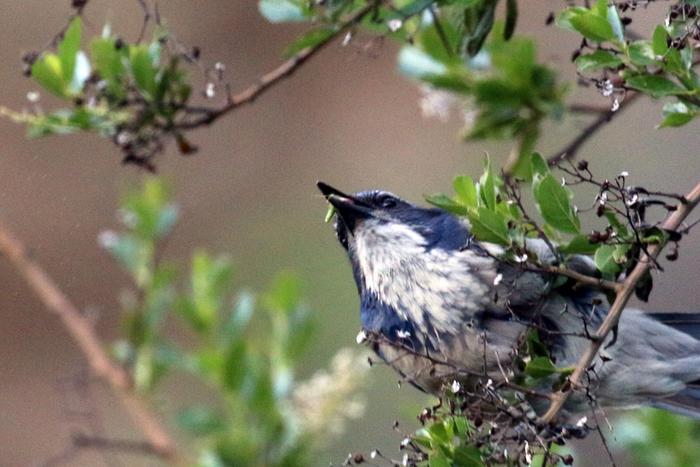
Credit: Henri Truchassout
LOGAN, UTAH, USA – A long-standing debate among evolutionary scientists goes something like this: Does evolution happen in a predictable pattern or does it depend on chance events and contingency? That is, if you could turn back the clock, as celebrated scientist Stephen Jay Gould (1941-2002) described in his famous metaphor, “Replaying the Tape of Life,” would life on Earth evolve, once again, as something similar to what we know now, or would it look very, very different?
“If you frame it as an either/or question, it’s too simplistic,” says Utah State University evolutionary biologist Zachariah Gompert. “The answer isn’t ‘completely random’ or ‘completely deterministic and predictable.’ And yet, examining short time scales, we can find predictable, repeatable evolutionary patterns.”
Gompert and colleagues report evidence of repeatable evolution in populations of stick insects in the May 24, 2024, online edition of the American Association for the Advancement of Science’s journal Science Advances. Collaborating authors on the paper include Gompert’s long-time collaborator Patrik Nosil and other researchers from France’s University of Montpelier, Brazil’s Federal University of São Paulo, the University of Nevada, Reno and Notre Dame University. The research is supported by the National Science Foundation and the European Research Council.
The team examined three decades of data on the frequency of cryptic color-pattern morphs in the stick insect species Timema cristinae in ten naturally replicate populations in California. T. cristinae is polymorphic in regard to its body color and pattern. Some insects are green, which allows the wingless, plant-feeding insect to blend in with California lilac (Ceanothus spinosus) shrubs. In contrast, green striped morphs disappear against chamise (Adenostoma fasciculatum) shrubs.
Hiding amongst the plants is one of T. christinae’s key defenses as hungry birds, such as scrub jays, are insatiable predators of the stick insects.
“Bird predation is a constant driver shaping the insects’ organismal traits, including coloration and striped vs. non-striped,” says Gompert, associate professor in USU’s Department of Biology and the USU Ecology Center. “We observed predictable ‘up-and-down’ fluctuations in stripe frequency in all populations, representing repeatable evolutionary dynamics based on standing genetic variation.”
He says a field experiment demonstrates these fluctuations involved negative frequency-dependent natural selection (NFDS), where cryptic color patterns are more beneficial when rare rather than common. This is likely because birds develop a ‘search image’ for very abundant prey.
“At short time scales, evolution involving existing variations can be quite predictable,” says Gompert, who received a National Science Foundation CAREER grant in 2019 to support his research. “You can count on certain drivers always being there, such as birds feeding on the insects.”
But at longer time scales, evolutionary dynamics become less predictable.
“The populations might experience a chance event, such as a severe drought or a flooding event, that disrupts the status quo and thus, the predictable outcomes,” Gompert says.
On long time scales, a new mutation in the species could introduce a rare trait, he says. “That’s about as close to truly random as you can get.”
“Rare things are easily lost by chance, so there’s a strong probability a new mutation could disappear before it gains a stronghold,” he says. “Indeed, another species of Timema stick insect that also feeds on chamise either never had or quickly lost the mutations making the cryptic stripe trait. Thus, the evolution of stripe is not a repeatable outcome of evolution at this long scale.”
Gompert notes replicated, long-term studies from natural populations, including research on the famous Darwin’s finches, are rare.
“Because most of this work is restricted to one or few populations, it is difficult to draw inferences on repeatability among multiple evolutionary independent populations,” he says. “Such studies are challenging to implement not only because they take concerted effort, but also because you can’t rush time.”
Gompert, who is designated a High Ranked Scholar by ScholarGPS, has developed, with USU colleagues, a research-intensive, interactive introductory biology laboratory class to introduce undergraduates to research. He and colleagues also developed an interactive presentation about evolution for all ages, called “Nabokov’s Butterflies,” that was presented at the USU College of Science’s Science Unwrapped public outreach program in 2022.
###
Journal
Science Advances
Method of Research
Observational study
Subject of Research
Animals
Article Title
Evolution repeats itself in replicate long-term studies in the wild
Article Publication Date
24-May-2024
COI Statement
The authors declare that they have no competing interests.
Cite Scienmag News
Gavin Prescott. (May 24, 2024). On repeat: Biologists observe recurring evolutionary changes, over time, in stick insects. Scienmag. https://scienmag.com/on-repeat-biologists-observe-recurring-evolutionary-changes-over-time-in-stick-insects/
Gavin Prescott. "On repeat: Biologists observe recurring evolutionary changes, over time, in stick insects." Scienmag, 24 May 2024, https://scienmag.com/on-repeat-biologists-observe-recurring-evolutionary-changes-over-time-in-stick-insects/. Accessed 4 September 2026.
Gavin Prescott. "On repeat: Biologists observe recurring evolutionary changes, over time, in stick insects." Scienmag. May 24, 2024. https://scienmag.com/on-repeat-biologists-observe-recurring-evolutionary-changes-over-time-in-stick-insects/

