


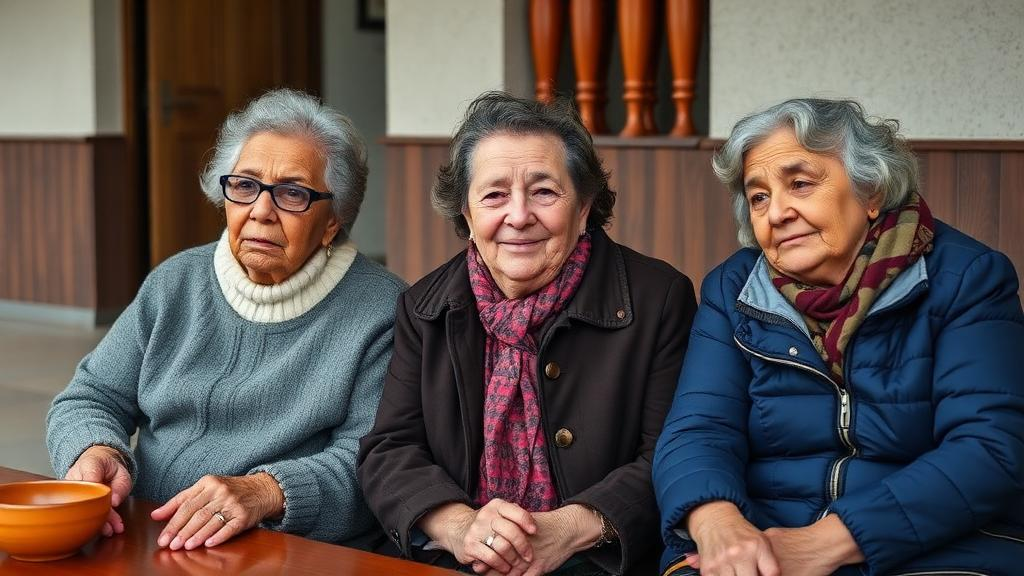
In the popular imagination, homelessness in later life is a story told mostly about men sleeping rough on downtown sidewalks. A new study from the University of Calgary flips that picture on its head, following eleven women aged 57 to 65 through the shelters, waiting lists, and hospital corridors of a large Western Canadian city. What the researchers found is not a portrait of passive dependency, but of women who, despite extraordinary structural obstacles, run an invisible economy of care for themselves and for everyone around them.
The study, published in Frontiers in Global Women’s Health, used a narrative inquiry design embedded within a larger participatory action research project. Each of the eleven participants took part in two in-depth interviews lasting up to two and a half hours, followed by three sequential focus groups held between February and May 2025. Rather than fragmenting the women’s accounts into codes and categories, the team applied Riessman’s thematic and structural narrative analysis, treating the stories as wholes. They paid attention not only to what was said but to how it was told: the sequencing, repetitions, interruptions, and omissions that revealed how the women made sense of their lives. The researchers then wove the material into composite narratives, first-person accounts built from multiple participants’ verbatim words, a strategy chosen to protect anonymity for women escaping abusive partners or hiding their housing insecurity from their own families.
The health burden the women carried was staggering. Every single participant met the criteria for multimorbidity, meaning two or more co-existing chronic conditions, a profile associated with reduced function, increased health service use, and premature death. Their conditions spanned diabetes, heart failure, cancer, chronic pain, arthritis, memory problems, depression, anxiety, and post-traumatic stress disorder, with many health problems attributed to or worsened by past intimate partner violence, which ten of the eleven women reported. Long-term homelessness is known to accelerate aging, with people experiencing homelessness presenting health profiles comparable to housed individuals ten to twenty years older. That is why age 50 is widely accepted as the threshold for older in homelessness research, and why women aged 55 and older now constitute the majority of visibly homeless women in Canada.
From the analysis, two storylines emerged. The first, which the researchers named Hurry up and Wait, captures the cruel rhythm of bureaucratic systems that appear to offer help while simultaneously disempowering the people they serve. Women described shelters as unsafe and unstable yet nearly impossible to exit. One woman recounted bed bugs, lice, and the risk of being barred from the shelter entirely if staff suspected she was photographing conditions on her phone. Another described how a case manager required her to phone every two weeks to keep her place on a waitlist for accessible subsidized housing, and how a full voice mailbox could cost her that spot. Mandatory workshops on resume writing and nutrition were repeated regardless of need, and one facilitator’s joking tone during a session on intimate partner violence left participants distressed.
The composite narrative of Marilyn, assembled from several women’s experiences, illustrates how these constraints compound. After a stroke at 54 ended her work and driving, she cycled through an emergency shelter, a hostile relative’s home, and her daughter’s apartment, all while facing rents above $1,200 against income support of less than $1,000 a month. A missing credit history, destroyed by an ex-partner’s fraudulent cards, and mobility limitations that ruled out staircases closed off even the cheapest options. Full disability benefits, which might have changed the math, required yet more medical documentation, expensive taxi rides, and waits of more than a year to see a neurologist. Seniors housing with elevators and lower rents sat just out of reach behind an age-65 eligibility threshold. Her summary was blunt: stuck everywhere.
The second storyline, Making lemonade, documents what the women did inside these constraints. They formed bonds in shelters that outlasted re-housing, talking daily and providing emotional support across the city. They searched for housing together, attended each other’s medical appointments, and exchanged tips on navigating resources. One participant, a recognized artist, offered to teach craftwork in the shelter; another used her computer skills to file housing applications not only for herself but for other residents. Women advocated at building meetings in transitional housing, set boundaries against drug smoke and violence, and used humor strategically, greeting shelter staff behind the glass with a cheerful line that, as one woman recalled, made her smile for the first time.
It is this relational labor that the researchers propose as a previously unrecognized form of social capital. Social capital, in the sociological sense, refers to the resources people derive from their networks and relationships, and it has been mapped in homelessness research across three domains: interpersonal relationships, access to formalized services, and the exchange of emotional, practical, and informational support. The Calgary women built bonding relationships with socially similar peers and bridging relationships with service providers who treated them with dignity. They worked to repair family ties, maintained fierce identities as mothers and grandmothers, and drew on cultural teachings about looking out for one another. In the language of urban geography, they functioned as people as infrastructure, informal networks of cooperation that patched over the fragmentation and under-resourcing of formal systems.
The researchers are careful to note the limits of this finding. Mutual aid, however productive, cannot substitute for housing and healthcare, and other scholars have cautioned that homelessness itself undermines the reciprocity and autonomy that sustain social capital. The structural barriers the study documents are formidable: affordable housing stock that has declined since federal withdrawal from housing provision in the 1980s and 1990s, income supports so low that some women continued working low-wage jobs despite serious illness, and specialist care waits that rippled outward, blocking disability income, transportation passes, and housing waitlists that all demanded medical proof. Age-based eligibility criteria excluding adults under 65 from seniors’ housing left a gap that the study’s participants, most aged 57 to 64, fell straight through.
The study’s methods deserve attention in their own right. The work grew out of the Exchange, a collective of older adults with lived experience of late-life homelessness who co-direct research aimed at improving services. Recruitment used snowball sampling through shelters, transitional housing, and an elder abuse shelter, and the team employed a trauma-informed approach throughout, providing transportation, food, honoraria, and process consent revisited at every encounter. The authors acknowledge limitations: the sample was intentionally small, and Black, Indigenous, and people of color, as well as LGBTQ and Two-Spirit participants, were underrepresented relative to their prevalence in the homeless population, a gap the researchers attribute partly to recruitment pathways that reproduce the same structural barriers the study examines.
The implications reach from clinic to legislature. For health providers, the findings underscore the gendered nature of late-life homelessness and the value of trusting, person-centered primary care relationships, which ten of the eleven women had established. For homelessness organizations, the study argues for relational continuity and manageable caseloads to counter the burnout and turnover that erode the few supportive connections women found. For policymakers, the message is that older women’s lived expertise must inform system design, and that trauma-informed, age- and ability-specific services are likely to yield high returns while preventing the institutionalization the women themselves identified as their greatest fear. Behind the policy language, though, is the study’s central, quietly radical observation: the women it followed were never simply waiting to be helped. They were helping, every day, in ways no system counted.
Subject of Research: Experiences of aging, health, and homelessness among older women and their mutual support networks
Article Title: Help me, and I'll help myself (and others). A narrative inquiry into older women's experiences of health and homelessness
Article References: Help me, and I'll help myself (and others). A narrative inquiry into older women's experiences of health and homelessness. (n.d.). https://doi.org/10.3389/fgwh.2026.1740814
Image Credits: AI Generated
DOI: 10.3389/fgwh.2026.1740814
Keywords: homelessness, older women, aging, social capital, narrative inquiry, health equity, shelters, housing policy, caregiving, structural stigma, participatory research, Canada
Cite Scienmag News
Ophelia Keating. (October 16, 2026). Older Women Facing Homelessness Turn Mutual Care Into Unrecognized Social Capital. Scienmag. https://scienmag.com/older-women-facing-homelessness-turn-mutual-care-into-unrecognized-social-capital/
Ophelia Keating. "Older Women Facing Homelessness Turn Mutual Care Into Unrecognized Social Capital." Scienmag, 16 October 2026, https://scienmag.com/older-women-facing-homelessness-turn-mutual-care-into-unrecognized-social-capital/. Accessed 16 October 2026.
Ophelia Keating. "Older Women Facing Homelessness Turn Mutual Care Into Unrecognized Social Capital." Scienmag. October 16, 2026. https://scienmag.com/older-women-facing-homelessness-turn-mutual-care-into-unrecognized-social-capital/


