


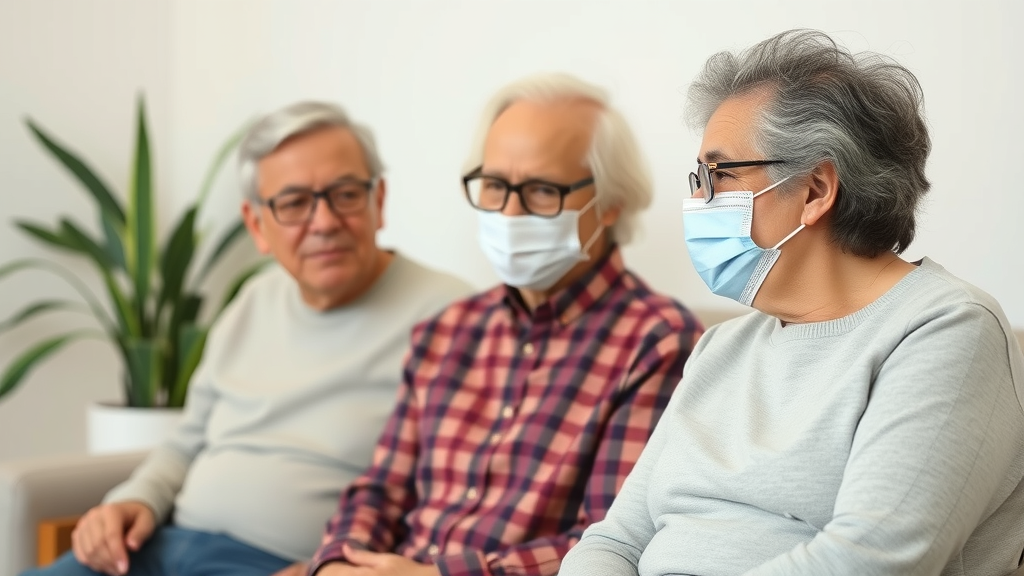
When the COVID-19 pandemic swept across the globe, few groups faced a heavier combination of biological risk and psychological strain than older adults. They were repeatedly told they were the most likely to die if infected, yet they were also asked to isolate from the family members and friends who anchored their daily lives. A new cross-sectional study of 412 community-dwelling older adults in western Iran, published in Ageing International, offers one of the most detailed portraits to date of how this population actually responded to that dual burden, documenting both the stress they carried and the coping strategies they deployed to manage it.
The research team, led by investigators affiliated with Tabriz University of Medical Sciences and several other Iranian institutions, set out to examine which coping strategies older adults used during the pandemic and which personal and social factors were associated with those choices. Participants completed the Coping Strategies Questionnaire, a validated instrument that distinguishes between emotion-focused strategies, which regulate the distress generated by a stressor, and problem-focused strategies, which attempt to change the stressor itself. The questionnaire also captures specific tactics within those broad families, including escape-avoidance, positive reappraisal, seeking social support, and planned problem-solving. Alongside the coping measure, respondents answered a socio-economic and health information questionnaire that allowed the researchers to connect coping patterns to marital status, living arrangement, sex, and other characteristics.
The results confirm that the pandemic placed a substantial psychological load on this population. Roughly half of the participants, 50.5 percent, reported frequently experiencing COVID-19-related stress, and 42 percent said they sometimes felt anxious about contracting the disease. These figures align with a broader international literature showing elevated anxiety and distress among older people during the crisis, but they also complicate the stereotype of the frazzled elderly: a majority of respondents were not in constant distress, and their day-to-day behavior suggested a striking degree of practical resilience. Adherence to preventive measures was high, with 87.1 percent reporting mask use and 84.7 percent reporting vaccination, rates that indicate most older adults in the sample translated their concern about infection into concrete protective action.
On the central question of coping style, the data show a modest but consistent tilt toward emotion-focused strategies. Participants scored higher on emotion-focused coping overall, with a mean of 25.88 plus or minus 9.23, than on problem-focused coping, which averaged 24.63 plus or minus 10.18. Within the emotion-focused domain, escape-avoidance was the most commonly used single strategy, at 8.38 plus or minus 2.91, suggesting that many older adults managed pandemic stress primarily by distancing themselves mentally from the threat rather than by confronting it directly. Within the problem-focused domain, positive reappraisal was the most frequent tactic, at 7.65 plus or minus 3.42, indicating that a substantial share of respondents worked to reframe the crisis in more constructive terms, finding meaning or silver linings in an otherwise threatening situation.
The demographic patterns embedded in these averages are arguably the study’s most actionable contribution. Women reported significantly greater use of problem-focused coping strategies than men, a difference that reached statistical significance at p below 0.05. This finding runs counter to some older research traditions that associated emotion-oriented coping with women and problem-solving with men, and it suggests that in this Iranian sample, women were more likely to take active, instrumental steps to manage the pandemic’s demands. The authors note that such differences may reflect gendered patterns of responsibility for household and family welfare, which can push women toward practical engagement with problems even under severe constraints.
Marital status and living arrangement emerged as even sharper dividing lines. Older adults without a spouse and those living alone reported significantly greater use of escape-avoidance coping, with differences reaching p of 0.001 or better. In contrast, participants who had a spouse reported greater use of problem-focused coping overall, along with more frequent seeking of social support and planned problem-solving, all at p below 0.05. The interpretation offered by the researchers is straightforward: a spouse functions as both a practical collaborator and an emotional resource, making it easier to approach problems directly and to draw on shared social networks. An older adult living alone, lacking that immediate partner, may retreat into avoidance as the only readily available means of managing overwhelming stress. This resonates with earlier findings from the coping literature, including systematic reviews linking loneliness to less adaptive coping strategies, and with pandemic-era studies in Switzerland and the Netherlands showing that the quality of social relationships strongly shaped older adults’ well-being during lockdowns.
The theoretical framing of the study draws on the classic transactional model of stress and coping developed by Lazarus and Folkman, which holds that coping outcomes depend on the appraisal of a threat and the resources a person can mobilize against it. Seen through that lens, the elevated escape-avoidance among unpartnered and solo-living elders is not simply a character trait but a signal of depleted coping resources. When a stressor such as a lethal pandemic cannot be escaped physically, and when the social scaffolding for problem-solving is thin, avoidance becomes a default regulatory strategy. The authors argue that the reverse pattern among married participants, who leaned on social support seeking and planned problem-solving, demonstrates how embeddedness in a supportive relationship can convert passive worry into active management.
The findings carry practical weight for public health planning. The researchers conclude that social and living conditions appeared to shape coping patterns among older adults, and they recommend strengthening problem-focused coping strategies as a route to better psychological well-being in future public health crises. In concrete terms, that could mean interventions that pair isolated older adults with trained peers or volunteers, programs that teach reappraisal and structured problem-solving skills, and outreach systems that identify solo-living elders as a priority group for psychological support during emergencies. Because most participants already adhered to masks and vaccination, the unmet need is less about convincing older adults to protect themselves and more about equipping them, especially the unpartnered, with cognitive and social tools to carry the psychological weight of a prolonged crisis.
The study also has limitations worth keeping in view. Its cross-sectional design captures a single moment and cannot establish whether coping strategies caused differences in distress or vice versa. The sample was drawn from community-dwelling older adults in western Iran, so the findings may not generalize to institutionalized elders or to other cultural settings, and the Coping Strategies Questionnaire, while validated in Persian in prior psychometric work, relies on self-report that can be shaped by social desirability. Nevertheless, by documenting who used which strategies at scale, the study adds an important piece to the emerging global picture of pandemic resilience in later life. It suggests that resilience among older adults is not an innate trait distributed evenly across the population, but a capacity that depends heavily on relationships, living circumstances, and the availability of social support. As health systems prepare for future epidemics in aging societies, that message may prove to be the study’s most enduring legacy: protecting the mental health of older adults requires protecting the social connections that make adaptive coping possible.
Subject of Research: Coping strategies and associated factors among Iranian older adults during the COVID-19 pandemic
Article Title: Resilience in the Face of Risk: How Older Adults Coped with COVID-19 pandemic
Article References: Matlabi, H., Abdoli, F., Ahmadi, S., Valiee, S., & Ahmadi, A. (2026). Resilience in the Face of Risk: How Older Adults Coped with COVID-19 pandemic. Ageing International, 51(3), Article 35. https://doi.org/10.1007/s12126-026-09677-5
Image Credits: AI Generated
DOI: 10.1007/s12126-026-09677-5
Keywords: COVID-19, older adults, coping strategies, stress, resilience, escape-avoidance, problem-focused coping, social support, marital status, living alone, gerontology, mental health
Cite Scienmag News
Ophelia Keating. (September 12, 2026). Older Adults Leaned on Coping Strategies to Endure COVID-19 Stress, Iranian Study Finds. Scienmag. https://scienmag.com/older-adults-leaned-on-coping-strategies-to-endure-covid-19-stress-iranian-study-finds/
Ophelia Keating. "Older Adults Leaned on Coping Strategies to Endure COVID-19 Stress, Iranian Study Finds." Scienmag, 12 September 2026, https://scienmag.com/older-adults-leaned-on-coping-strategies-to-endure-covid-19-stress-iranian-study-finds/. Accessed 4 October 2026.
Ophelia Keating. "Older Adults Leaned on Coping Strategies to Endure COVID-19 Stress, Iranian Study Finds." Scienmag. September 12, 2026. https://scienmag.com/older-adults-leaned-on-coping-strategies-to-endure-covid-19-stress-iranian-study-finds/


