


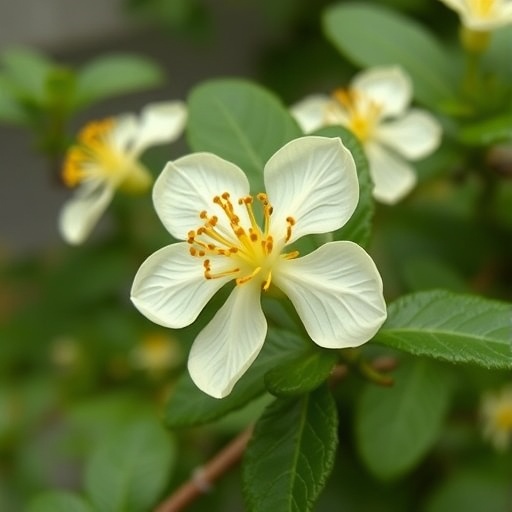
In a groundbreaking study published in BMC Genomics, a team of researchers led by Wang et al. have unveiled the significant role of the GATA transcription factor OfGATA9 in regulating flower size in sweet osmanthus (Osmanthus fragrans). This research holds promise for enhancing ornamental plant traits, alongside offering insights into the underlying genetic mechanisms of flower development. The findings are particularly relevant in the context of horticulture, where flower size can significantly influence aesthetic appeal and market value.
Transcription factors are vital proteins that govern the expression of genes, orchestrating the plant’s growth and developmental processes. Among various transcription factors, GATA family members have been recognized for their roles in numerous physiological responses in plants. This study meticulously examined the specific GATA factor, OfGATA9, and its interaction with gene expression during flowering. By understanding the function of OfGATA9, the researchers aimed to shed light on the complexities of flower development in sweet osmanthus.
Through a series of experiments using genetic manipulation techniques, the researchers demonstrated that the overexpression of OfGATA9 in sweet osmanthus significantly increased flower size compared to control plants. This correlation suggests that OfGATA9 not only impacts the physical traits of flowers but could also be pivotal in the overall reproductive success of the plant species. There is a strong link between flower size and pollinator attraction, which is crucial for the plant’s propagation.
Molecular analyses conducted in the study illustrated that OfGATA9 operates by activating downstream target genes involved in flower development. The team utilized RNA sequencing data to identify these target genes, revealing a comprehensive network influenced by OfGATA9. Interestingly, the identified genes were associated with various pathways, including those responsible for cell growth and hormone signaling, suggesting a multilayered regulatory mechanism at play.
In the context of urban horticulture, the findings of this research are particularly significant. With increasing demand for ornamental plants that offer not only aesthetic beauty but also resilience against environmental stressors, understanding the genetic basis of flower size can contribute to breeding programs aimed at producing superior cultivars. The ability to manipulate flower size through specific gene expression can lead to innovations in urban landscaping and floral design.
Moreover, cultivating awareness regarding the genetic basis of ornamental traits paves the way for sustainable horticulture practices. By utilizing genetic insights, horticulturists can enhance desirable traits in flowers while minimizing the need for chemical interventions. This aligns with the broader goals of sustainable agriculture, where genetic approaches can reduce dependencies on pesticides and fertilizers, promoting ecosystem health.
The implications of the study extend beyond ornamental horticulture. Floral traits play a vital role in plant ecology, influencing interactions with pollinators and other species. With the ongoing global decline in pollinator populations, enhancing flower traits through genetic research could be a strategic approach to support ecological balance. Understanding how to attract beneficial insects through flower size and structure will undoubtedly aid in conservation efforts.
While the current findings centered on sweet osmanthus, the broader applicability of GATA transcription factors suggests that similar regulatory mechanisms could be present in other flowering plants. This opens up new avenues for research into various species, enhancing our understanding of plant development on a wider scale. Indeed, the potential for cross-species genetic studies is enticing, with the possibility of uncovering universal principles governing flower size and growth.
As the research community continues to delve deeper into plant genomics, the work of Wang et al. stands out as a significant contribution. It highlights not only the complexity of flower development but also the innovative approaches that can be employed to enhance plant traits. Such knowledge will undoubtedly drive forward the fields of genomics, horticulture, and even ecological conservation.
In conclusion, the exploration of OfGATA9’s role in flower size regulation represents a milestone in plant genetic research. The multifaceted approach taken by the researchers, combining molecular biology, genetics, and ecology, promises to enrich our understanding of plant development and evolution. Moving forward, the integration of these findings into practical applications in horticulture and conservation could usher in a new era for ornamental plants, ensuring they thrive both in gardens and natural ecosystems.
The culmination of this research, as documented in the comprehensive study from Wang and colleagues, undoubtedly sets the stage for future explorations. As we harness the power of genetic discovery relating to plant traits, we move closer to a future where science and nature coexist harmoniously, benefiting both plants and the environments they inhabit.
Cite Scienmag News
Juliet Wilcox. (October 3, 2025). OfGATA9 Boosts Flower Size in Sweet Osmanthus. Scienmag. https://scienmag.com/ofgata9-boosts-flower-size-in-sweet-osmanthus/
Juliet Wilcox. "OfGATA9 Boosts Flower Size in Sweet Osmanthus." Scienmag, 3 October 2025, https://scienmag.com/ofgata9-boosts-flower-size-in-sweet-osmanthus/. Accessed 4 September 2026.
Juliet Wilcox. "OfGATA9 Boosts Flower Size in Sweet Osmanthus." Scienmag. October 3, 2025. https://scienmag.com/ofgata9-boosts-flower-size-in-sweet-osmanthus/


