

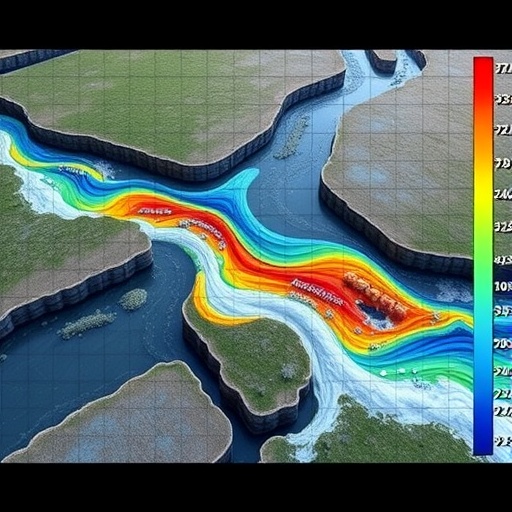
In a groundbreaking study published in Commun Earth Environ, researchers have unveiled alarming insights into future water availability that underscore critical implications for ecosystems, agriculture, and human populations reliant on freshwater resources. The research, led by scientists Kim, Lehner, Dagon et al., focuses on a troubling trend: the decline in runoff projected by climate models when compared with real-world observations. This development is not merely a statistic; it represents an existential threat to biodiversity and water security in an era defined by changing climatic patterns.
Traditionally, climate models have served as essential tools for predicting future environmental conditions, but their projections regarding water runoff may have overstated the benefits of managing water resources for agricultural and urban needs. The study’s authors emphasize that by constraining these models with observational data, a clearer and more sobering picture of future runoff trends emerges. The implications of these findings are manifold, impacting agricultural practices, urban planning, and conservation efforts across the globe.
As atmospheric temperatures rise, the rôle of runoff in the hydrological cycle becomes increasingly critical. Runoff refers to the portion of precipitation that flows off land surfaces, entering waterways and ultimately supporting ecosystems and human use. Climate models historically suggested that increased rainfall patterns would augment runoff. However, Kim and her team discovered that when integrating real-world observational data, projections indicating how runoff will change in future climate scenarios become considerably less optimistic.
The research team utilized extensive hydrological data from multiple regions to validate their findings and ensure a robust analysis. This involved comparing model outputs with actual observed runoff data over varied geographies and climate zones. The results were striking: many climate models fail to accurately predict significant declines in runoff, particularly in regions already experiencing water scarcity. This discrepancy raises questions about the reliability of existing models and their utility in guiding policy and decision making.
Moreover, the implications of reduced runoff extend beyond immediate water supply issues. In arid and semi-arid regions, agriculture plays a sizeable role in local economies, and diminished runoff can directly threaten food security. The findings suggest that insufficient runoff could lead to crop failures and livestock losses, exacerbating pre-existing vulnerabilities linked to poverty and unstable food systems. Farmers reliant on predictable water supplies may face unforeseen challenges, compelling a re-evaluation of agricultural practices and food production strategies in these vulnerable areas.
Urban areas, too, will feel the ramifications of these findings. Infrastructure designed to manage stormwater and reservoir systems may be rendered less effective if runoff fails to meet expected levels. Cities that depend on runoff for their water supply must reassess their supply management strategies and invest in alternative sources of fresh water to mitigate potential shortages. The disconnect between anticipated and actual runoff highlights a desperate need for urban planners to adapt to a more uncertain future.
Biodiversity is yet another victim of declining runoff. Many ecosystems rely on consistent water flow to sustain their inhabitants, including fish species that migrate upstream to spawn, wetlands that provide critical habitat, and forests that depend on seasonal rains. Reduced runoff can disrupt these ecological communities, leading to shifts in species distributions, alterations in breeding patterns, and the potential loss of certain species entirely. The cascading effects throughout food webs and ecosystems could be profound, resulting in long-term ecological imbalances.
As the climate crisis escalates, the intersection of feasible water management practices and ecological preservation becomes more complex. The study underscores the urgency of multidisciplinary approaches to address the challenge of dwindling water resources. Scientists, policymakers, and community stakeholders must collaborate to create adaptive strategies that can accommodate the realities of decreasing runoff. Solutions may include investing in green infrastructure, revising water allocation policies, and prioritizing conservation efforts to better manage scarce water resources.
The research by Kim et al. accentuates the importance of observational data in refining climate models. Real-world data needs to be at the core of climate change discussions and decision-making processes. Discrepancies between observed and projected conditions can lead to inadequate preparedness for water crises. Therefore, integrating current data into climate forecasting is crucial for ensuring that simulations remain relevant and actionable.
In conclusion, the forthcoming decline in runoff presents a multifaceted challenge that transcends borders and disciplinary boundaries. This study serves as a clarion call for heightened awareness and proactive response strategies to combat the onset of water scarcity amplified by a changing climate. Governments and organizations need to take heed of these findings, rethinking water resource management approaches for a sustainable future amid escalating climate change effects. The urgency to address this impending crisis cannot be overstated, as the very future of our ecosystems, food systems, and communities hangs in the balance.
The implications of this research go beyond mere predictions; they provide explicit guidance on the necessity for transformative actions. The need for resilient agricultural practices, sustainable urban water systems, and robust conservation measures is evident. We stand at a crossroads, with the knowledge gained from this study serving as both a warning and an opportunity to innovate and adapt in an evolving environmental landscape.
As regions worldwide grapple with the potential fallout from climate variability, the study emphasizes that environmental integrity and human well-being are intricately linked to the future of water resources. The time for collaborative, science-based solutions that account for the tightening grip of climate change is now. Only through concerted efforts can we hope to navigate the impending challenges posed by declining runoff and safeguard the essential resources needed for a thriving planet.
Subject of Research: Climate model projections and observed runoff declines
Article Title: Constraining climate model projections with observations amplifies future runoff declines
Article References:
Kim, H., Lehner, F., Dagon, K. et al. Constraining climate model projections with observations amplifies future runoff declines.
Commun Earth Environ (2026). https://doi.org/10.1038/s43247-026-03213-8
Image Credits: AI Generated
DOI: 10.1038/s43247-026-03213-8
Keywords: Climate Change, Runoff, Water Scarcity, Climate Models, Hydrology, Observational Data


