Saturday, October 24, 2026
Science
No Result
View All Result
  • Login
  • HOME
  • SCIENCE NEWS
  • CONTACT US
  • HOME
  • SCIENCE NEWS
  • CONTACT US
No Result
View All Result
Scienmag
No Result
View All Result
Home Science News Technology and Engineering

NYU AI tools flag citation hallucinations and locate lab protocols

October 24, 2026
in Technology and Engineering
Denise Maddox
By Denise Maddox Scienmag Editorial Profile - Mechanical Engineering
Reading Time: 3 mins read
0
NYU AI tools flag citation hallucinations and locate lab protocols

NYU AI tools flag citation hallucinations and locate lab protocols

65
SHARES
587
VIEWS
Share on FacebookShare on Twitter
ADVERTISEMENT

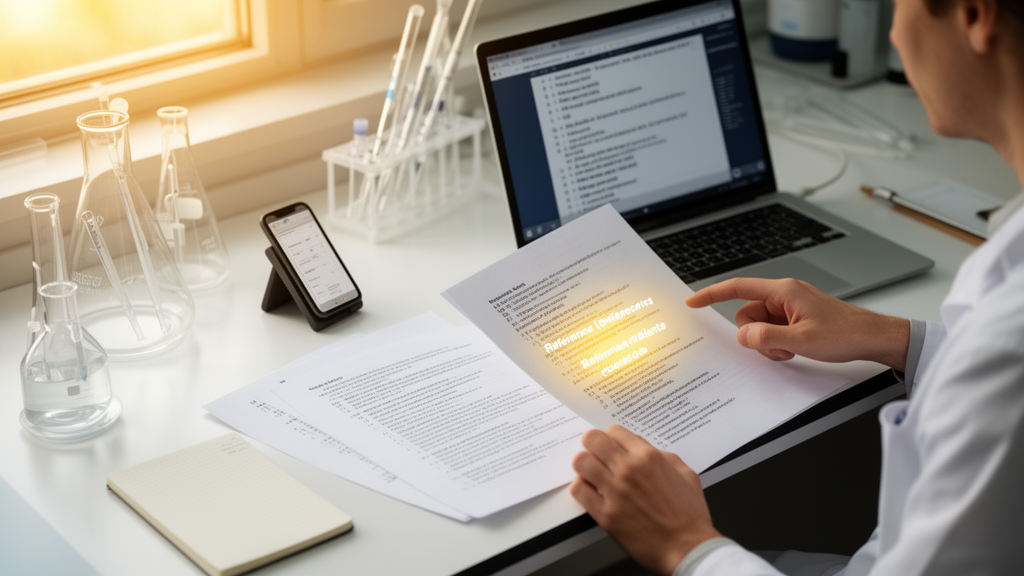
Computer scientists and students at New York University have built a pair of web-hosted artificial intelligence systems aimed at two persistent pain points in modern research: citations that misrepresent the papers they reference, and the laborious hunt for suitable experimental protocols. The tools, described in two articles in the journal MDPI Information, were led by Dennis Shasha, a professor of computer science at NYU’s Courant Institute School of Mathematics, Computing, and Data Science. One system, HallucinationNerd, checks whether the claims a document makes about its citations are actually backed up by the cited works. The other, ProtocolNerd, helps bench scientists find experimental protocols matched to their research questions.

HallucinationNerd grades each claim-citation pair it examines, assigning one of six labels: “Supported,” “Partially Supported,” “Not Supported,” “Contradicted,” “Cited article does not exist,” or “Could not access.” According to Shasha, checking all the claims an article makes about other articles helps both readers and authors determine whether the citing article fairly represents the state of the art, and accurately and efficiently evaluating previous research can only improve subsequent, related studies. The tool is designed for natural scientists and, eventually, social scientists who want to be sure that papers they write and depend on fairly represent the literature they cite.

ProtocolNerd targets the other end of the research workflow. Many hundreds of thousands of experimental protocols exist, and sorting through them is labor-intensive and error-prone, Shasha observes. The system is illustrated with a molecular biology scenario: a biologist seeking ways to make rice more drought tolerant might ask, in plain English, for protocols that test for drought tolerance in rice. ProtocolNerd would first ask clarifying questions, such as the growth stage of the rice plant, and would explain why it is asking. Once the scientist answers, the system would provide multiple protocols and give reasons why each might be helpful—or, alternatively, might not be.

The researchers validated both models against research databases using testing frameworks they compare to randomized control trials. For ProtocolNerd, the benchmark drew on scientific articles from PubMed and Europe PMC and tested whether the system, alongside other state-of-the-art systems, could identify the protocol used by an article based solely on its title and abstract. For HallucinationNerd, the validation used arXiv, the open-access repository of research papers, gauging the tool’s ability to separate hallucinations from supported claims by testing its outputs against the contents of papers in the repository and comparing its performance against existing systems. Shasha says the frameworks were designed to resemble randomized control trials for the same reason bench scientists consider such trials the gold standard: to eliminate bias and be able to test for statistical significance.

Shasha notes that ProtocolNerd is currently aimed at molecular biology and chemistry but can be extended by a domain expert to other disciplines, such as psychology and economics, even if that domain expert is not a programmer. If an experimentalist wishes to answer a new scientific question and needs a protocol to address it, finding the right protocol quickly is of great use, he says. The work was supported by NYU Wireless, an academic research center at NYU’s Tandon School of Engineering that backs advances in wireless communications, sensing, networking, and devices, and by the US Department of Energy’s Advanced Research Projects Agency-Energy under award DE-AR0002025 M0002. Shasha adds that the two tools will be most useful to natural scientists who wish to design new experiments based on the most relevant existing protocols and want to verify that the papers they depend on fairly represent the literature they cite.

Subject of Research: AI tools for citation verification and experimental protocol discovery

Article Title: Computer scientists build innovative tech tools to find experiments, detect citation “hallucinations”

Article References: Computer scientists build innovative tech tools to find experiments, detect citation “hallucinations”. Original publication (Bibliographic details unavailable.)

Image Credits: AI Generated

DOI: Not provided

Keywords: Computer, scientists, build, innovative, tech, tools, find, experiments, detect, citation, hallucinations, scientific research

Cite Scienmag News

Denise Maddox. (October 24, 2026). NYU AI tools flag citation hallucinations and locate lab protocols. Scienmag. https://scienmag.com/nyu-ai-tools-flag-citation-hallucinations-and-locate-lab-protocols/

Denise Maddox. "NYU AI tools flag citation hallucinations and locate lab protocols." Scienmag, 24 October 2026, https://scienmag.com/nyu-ai-tools-flag-citation-hallucinations-and-locate-lab-protocols/. Accessed 24 October 2026.

Denise Maddox. "NYU AI tools flag citation hallucinations and locate lab protocols." Scienmag. October 24, 2026. https://scienmag.com/nyu-ai-tools-flag-citation-hallucinations-and-locate-lab-protocols/

Tags: AI applications in academic researchAI citation verification toolsAI-driven research validationautomated evaluation of scientific claimsbuildcitationcombating citation hallucinations in scientific literatureComputerdetectenhancing research reproducibility with AIexperimentsfindHallucinationNerd for checking citation claimshallucinationsimproving accuracy in scientific publishinginnovativelaboratory protocol search toolsnatural science research support toolsNYU computer science research toolsProtocolNerd for locating experimental lab protocolsScientific ResearchscientistsTechtools
Share26Tweet16
Previous Post

Biochar, Humic Acid and Rotation Ease Foxtail Millet Cropping Obstacles in Pot Study

Next Post

Hybrid transformer framework detects DDoS attacks with high accuracy in benchmark tests

Related Posts

Maximum Entropy Method Outpaces Classical Raking in High-Dimensional Synthetic Population Generation
Science News

Maximum Entropy Method Outpaces Classical Raking in High-Dimensional Synthetic Population Generation

October 24, 2026
Research report: The evolutionary accessibility of cultural fitness landscapes
Biology

Research report: The evolutionary accessibility of cultural fitness landscapes

October 24, 2026
Residual-state accounting targets leftover inspection opportunity in UAV route planning
Technology and Engineering

Residual-state accounting targets leftover inspection opportunity in UAV route planning

October 24, 2026
Hybrid Deep Learning Model Boosts Prediction of Slope Stability Safety Factor
Technology and Engineering

Hybrid Deep Learning Model Boosts Prediction of Slope Stability Safety Factor

October 24, 2026
New AI Method OSCAR Reveals Hidden Brain Network Reorganization in Tasks and Psychosis
Technology and Engineering

New AI Method OSCAR Reveals Hidden Brain Network Reorganization in Tasks and Psychosis

October 24, 2026
Survey maps the challenge of verifying robustness in binary neural networks
Technology and Engineering

Survey maps the challenge of verifying robustness in binary neural networks

October 24, 2026
Next Post
Hybrid transformer framework detects DDoS attacks with high accuracy in benchmark tests

Hybrid transformer framework detects DDoS attacks with high accuracy in benchmark tests

  • Mothers who receive childcare support from maternal grandparents show more optimized

    Mothers who receive childcare support from maternal grandparents show more parental warmth, finds NTU Singapore study

    27656 shares
    Share 11059 Tweet 6912
  • University of Seville Breaks 120-Year-Old Mystery, Revises a Key Einstein Concept

    1061 shares
    Share 424 Tweet 265
  • Bee body mass, pathogens and local climate influence heat tolerance

    682 shares
    Share 273 Tweet 171
  • Researchers record first-ever images and data of a shark experiencing a boat strike

    546 shares
    Share 218 Tweet 137
  • Groundbreaking Clinical Trial Reveals Lubiprostone Enhances Kidney Function

    531 shares
    Share 212 Tweet 133
Science

Embark on a thrilling journey of discovery with Scienmag.com—your ultimate source for cutting-edge breakthroughs. Immerse yourself in a world where curiosity knows no limits and tomorrow’s possibilities become today’s reality!

RECENT NEWS

  • Digital-Government Carbon Decline Steepens Where Electoral Democracy Is Stronger, 193-Country Panel Finds
  • Counting Tobacco Plants From Row Lines: A Low-Cost Annotation Method for UAV Field Surveys
  • Systematic review maps seven years of sports genomics research in Turkish athletes
  • Maximum Entropy Method Outpaces Classical Raking in High-Dimensional Synthetic Population Generation

Categories

  • Agriculture
  • Anthropology
  • Archaeology
  • Athmospheric
  • Biology
  • Biotechnology
  • Blog
  • Bussines
  • Cancer
  • Chemistry
  • Climate
  • Earth Science
  • Editorial Policy
  • Marine
  • Mathematics
  • Medicine
  • Pediatry
  • Policy
  • Psychology & Psychiatry
  • Science Education
  • Science News
  • Social Science
  • Space
  • Technology and Engineering

Subscribe to Blog via Email

Enter your email address to subscribe to this blog and receive notifications of new posts by email.

Join 5,152 other subscribers

© 2025 Scienmag - Science Magazine

Welcome Back!

Login to your account below

Forgotten Password?

Retrieve your password

Please enter your username or email address to reset your password.

Log In
No Result
View All Result
  • HOME
  • SCIENCE NEWS
  • CONTACT US

© 2025 Scienmag - Science Magazine

Discover more from Science

Subscribe now to keep reading and get access to the full archive.

Continue reading