


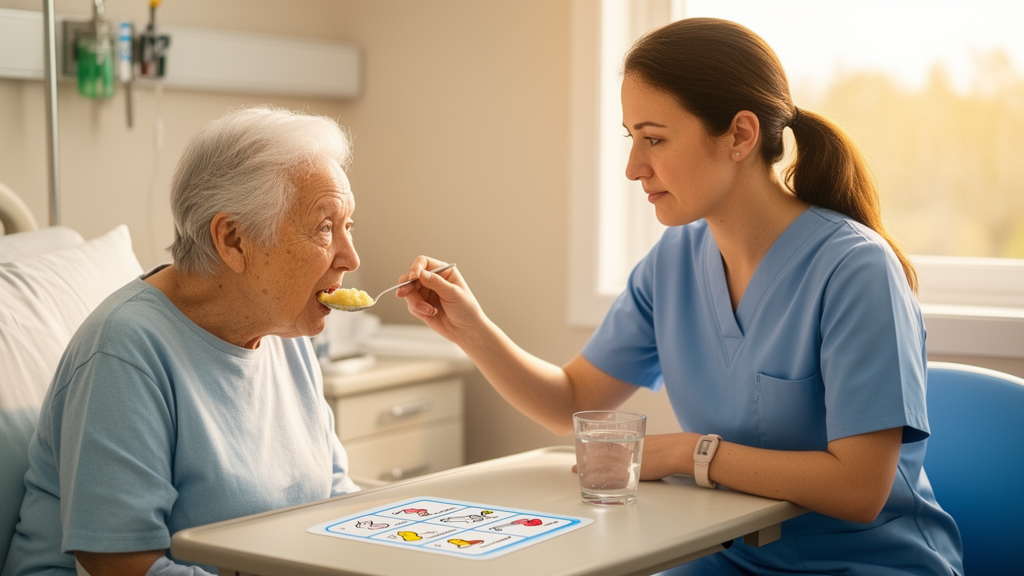
Swallowing is something most people never think about until it fails. For patients with brain tumors, that failure is a common and often devastating complication. Tumors and their treatments can disrupt the delicate neural circuitry that coordinates more than thirty pairs of muscles working in split-second harmony to move a bolus of food from mouth to stomach. The result, dysphagia, brings choking risks, malnutrition, dehydration, aspiration pneumonia, and a profound erosion of quality of life. Yet despite its frequency, swallowing rehabilitation in this population has remained surprisingly underexplored, with most evidence drawn from stroke care rather than oncology.
A new randomized controlled trial published in Supportive Care in Cancer offers some of the clearest evidence to date that a structured, nurse-led program can change that picture. Researchers at the First Affiliated Hospital of Soochow University in Suzhou, China, enrolled 120 brain tumor patients with dysphagia admitted between January and May 2024, and randomly assigned them in stratified fashion to two groups of sixty. The control group received conventional nursing care and standard treatment protocols. The intervention group received a nurse-led multimodal program combining personalized swallowing training, nutritional support, psychological care, and a family-participatory rehabilitation component, designed and dynamically adjusted by a team of nurses, rehabilitation therapists, and dietitians.
The technical logic behind the intervention reflects a growing consensus in neurogenic dysphagia research: no single therapy works in isolation. Personalized swallowing training targets the motor patterns of the oropharyngeal phase, strengthening muscle groups and retraining the timing of the swallow reflex. Nutritional support addresses the caloric deficit and dehydration that accompany impaired swallowing, which otherwise accelerate physical decline and reduce the capacity for rehabilitation. Psychological care tackles the anxiety and social isolation that often make patients avoid eating altogether, while family participation extends therapy into daily life beyond the hospital ward, where most recovery actually happens.
To measure outcomes, the researchers used validated bedside assessments. The Kubota drinking test, in which patients swallow water under observation, screens for aspiration risk and functional swallowing capacity. Saito’s swallowing function grading provides a structured clinical classification of swallowing impairment severity. Quality of life instruments captured the broader patient experience. Before-and-after comparisons within each group were analyzed with paired t-tests or Wilcoxon signed-rank tests, while between-group differences were assessed using independent samples t-tests or the Mann-Whitney U test, depending on data distribution.
The results were unambiguous. Both groups improved over time, which is expected as patients recover and receive baseline care, but the intervention group improved significantly more. Scores on the Kubota drinking test, Saito’s grading, and the quality of life measures all showed statistically significant enhancement in the intervention group compared with the control group, with P values below 0.05. Within both groups, scores improved progressively as the intervention continued, but the trajectory of improvement was steeper for patients receiving the nurse-led program.
What makes this finding clinically important is the role assigned to nurses. In many hospitals, swallowing rehabilitation is initiated by speech-language pathologists or rehabilitation physicians, with nurses relegated to monitoring and medication delivery. This study flips that hierarchy, positioning nurses as the architects and coordinators of a multidisciplinary plan. Because nurses have the most continuous contact with patients, they are ideally placed to detect subtle changes in swallowing performance, adjust feeding strategies in real time, reinforce training exercises between formal therapy sessions, and coach family members who will support the patient after discharge.
The trial was prospectively registered at the Chinese Clinical Trial Registry on January 5, 2024, under registration number ChiCTR240001265, and was conducted in accordance with the Declaration of Helsinki with formal exemption approval from the hospital’s ethics committee. All participants provided written informed consent. The authors, Yaping Lu and Haifeng Wu of the Department of Neurosurgery, report no competing interests, and the study received no dedicated funding.
The broader context strengthens the case for this approach. Previous research has documented that dysphagia in brain tumor patients differs from post-stroke dysphagia in important ways, often involving tumor location in the posterior fossa, surgical sequelae, and the cumulative effects of radiation and chemotherapy on neural tissue. Studies of inpatient rehabilitation have shown that swallowing outcomes in this group can be meaningful but require sustained, coordinated effort. Meanwhile, a 2025 scoping review of rehabilitation nursing for brain tumor patients highlighted how fragmented care remains, and separate surveys from Saudi Arabia and low- and middle-income countries have revealed persistent gaps in nurses’ knowledge and practices around dysphagia screening and management.
Multimodal interventions have already shown promise in adjacent fields. A multi-center randomized controlled trial published in the International Journal of Nursing Studies in 2024 demonstrated that nurse-delivered stepwise swallowing training improved dysphagia in patients with Alzheimer’s disease. Individualized nutritional support has produced significant benefits in stroke patients with oropharyngeal dysphagia, and enhanced dysphagia assessment combined with dietary guidance has improved outcomes in post-stroke populations. The Soochow study extends this evidence base into neuro-oncology, a setting where rehabilitation needs have historically been overshadowed by the urgency of tumor treatment itself.
The authors conclude that nurse-led multimodal intervention is significantly effective in improving both swallowing function and quality of life in brain tumor patients, providing comprehensive rehabilitation support through multidisciplinary collaboration and personalized care, and carrying genuine clinical promotion value. For a patient population facing enormous therapeutic challenges, the message is quietly radical: recovery of something as fundamental as eating does not have to wait for a cure. With trained nurses orchestrating swallowing therapy, nutrition, psychological support, and family involvement, patients can reclaim a measure of dignity and health even in the midst of serious illness. As health systems worldwide grapple with growing neuro-oncology caseloads, this study suggests that one of the most effective tools may already be on the ward, wearing scrubs.
Subject of Research: Nurse-led multimodal rehabilitation of dysphagia in brain tumor patients
Article Title: Assessment of the role and effectiveness of nurse-led multimodal intervention in the rehabilitation of dysphagia in patients with brain tumors
Article References: Lu, Y., & Wu, H. (2026). Assessment of the role and effectiveness of nurse-led multimodal intervention in the rehabilitation of dysphagia in patients with brain tumors. Supportive Care in Cancer, 34(10), Article 953. https://doi.org/10.1007/s00520-026-11203-x
Image Credits: AI Generated
DOI: 10.1007/s00520-026-11203-x
Keywords: brain tumor, dysphagia, swallowing rehabilitation, nurse-led intervention, randomized controlled trial, multimodal intervention, quality of life, nutritional support, neurogenic dysphagia, supportive cancer care, rehabilitation nursing, multidisciplinary care
Cite Scienmag News
Nathaniel Bowman. (October 18, 2026). Nurse-Led Multimodal Program Restores Swallowing in Brain Tumor Patients. Scienmag. https://scienmag.com/nurse-led-multimodal-program-restores-swallowing-in-brain-tumor-patients/
Nathaniel Bowman. "Nurse-Led Multimodal Program Restores Swallowing in Brain Tumor Patients." Scienmag, 18 October 2026, https://scienmag.com/nurse-led-multimodal-program-restores-swallowing-in-brain-tumor-patients/. Accessed 18 October 2026.
Nathaniel Bowman. "Nurse-Led Multimodal Program Restores Swallowing in Brain Tumor Patients." Scienmag. October 18, 2026. https://scienmag.com/nurse-led-multimodal-program-restores-swallowing-in-brain-tumor-patients/


