


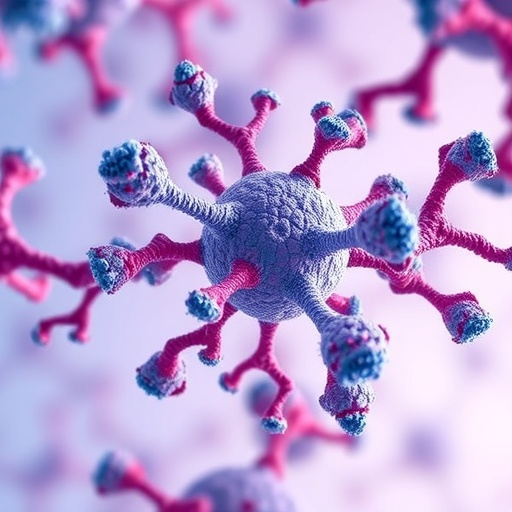
Researchers have made significant strides in the quest to battle one of the most formidable challenges in modern medicine: cancer. With the insatiable thirst for understanding cellular mechanisms tied to tumorigenesis, a new selective inhibitor named NSH76 has emerged, believed to have the potential to revolutionize cancer therapy. This innovative compound targets specific components of RNA polymerase I transcription, particularly its interaction with RRN3, presenting a promising avenue for more effective cancer treatments.
The study, spearheaded by Sarkar and colleagues, delves into the intricate relationship between RNA polymerase I transcription and the proliferation of cancer cells. The essential role of RNA polymerase I in synthesizing the ribosomal RNA components necessary for protein synthesis makes it a critical player in cellular growth and division. In many cancers, the dysregulation of this pathway leads to unchecked cellular growth, making it an attractive target for therapeutic intervention.
In seeking to exploit this vulnerability, researchers synthesized NSH76, a compound that selectively disrupts the interaction between RRN3, a cofactor essential for RNA polymerase I function, and the polymerase itself. This targeted action is pivotal since it minimizes the impact on normal cellular processes, thus reducing potential side effects associated with broader-spectrum chemotherapeutic agents. The design and development of NSH76 involved a comprehensive understanding of the structural biology of the polymerase complex, allowing scientists to pinpoint and inhibit RRN3 with remarkable specificity.
Through a series of in vitro experiments, the efficacy of NSH76 was tested against various cancer cell lines, revealing a pronounced reduction in cellular proliferation. The results were not merely a statistical anomaly; they showcased a clear connection between the inhibition of RNA polymerase I activity and subsequent apoptosis in cancerous cells. This exciting revelation provides a solid foundation for further development and potential clinical applications of the compound.
One key aspect scrutinized was the resistance mechanisms often employed by cancer cells in response to therapeutic challenges. Investigators meticulously dissected how these cells could potentially adapt to the inhibition of RNA polymerase I. By using genomic and proteomic analyses, the team observed that certain oncogenic pathways might compensate for the inhibited transcription, suggesting a need for combination therapies. This adaptive response highlights the importance of holistic treatment approaches that can counter the dynamic nature of cancer biology.
Additionally, the research extended beyond the laboratory, including a series of animal model studies aimed at evaluating the in vivo efficacy and safety profile of NSH76. Early results were encouraging, demonstrating significant tumor regression in treated mice compared to controls. These findings not only bolster confidence in the validity of targeting RNA polymerase I but also emphasize the potential of NSH76 as a contender in the landscape of molecularly targeted therapies.
The implications of such a discovery cannot be overstated, particularly in the context of personalized medicine. As the understanding of an individual patient’s tumor microenvironment becomes increasingly nuanced, the potential for tailoring therapies to target specific molecular vulnerabilities grows. NSH76, with its focused action, embodies the principles of precision oncology, allowing for a therapeutic option that could be finely tuned to the unique characteristics of different tumors.
Moreover, the compound’s synthesis and functional validation pave the way for additional derivatives that could enhance potency or reduce off-target effects further. The advancement of medicinal chemistry in conjunction with technological evolution, such as artificial intelligence and machine learning, promises a new era of drug discovery. This paradigm could yield more advanced inhibitors based on the insights gained from NSH76.
In terms of societal impact, the progression from discovery to clinical application holds enormous potential. As more effective treatments become available, the hope of transforming cancer from a terminal diagnosis into a manageable condition draws closer to reality. The work done by Sarkar et al. exemplifies a beacon of hope, illustrating the capacity for science to innovate and adapt in the face of difficult challenges.
The journey from the lab bench to a cancer clinic is fraught with hurdles, yet promisingly, the research community is urging forward. Next steps will include extensive clinical trials and partnerships with pharmaceutical companies capable of scaling production and ensuring comprehensive testing. As NSH76 inches closer to human application, the anticipation for what lies ahead is palpable.
Through this trailblazing work, Sarkar and the team not only provide insights into the workings of RNA polymerase I but also raise critical questions about how to approach cancer therapy moving forward. The potential for NSH76 to become a cornerstone of future treatment regimens is a testament to the evolutionary nature of scientific inquiry, proving that persistence in research may pave an untrodden path toward cancer eradication.
In conclusion, the introduction of NSH76 represents a dynamic advancement in the therapeutic landscape of oncology. With its specificity and scientifically-rooted promise, the compound illuminates the path towards a more refined and effective treatment strategy, encouraging optimism in the fight against cancer.
Sarkar, S.S., Sharma, M., Karmakar, A. et al. NSH76: a selective inhibitor of RRN3 and RNA polymerase I transcription with potential for cancer therapy.
J Transl Med 23, 1131 (2025). https://doi.org/10.1186/s12967-025-06588-y
Cite Scienmag News
Nathaniel Bowman. (October 20, 2025). NSH76: Targeting RRN3 to Combat Cancer. Scienmag. https://scienmag.com/nsh76-targeting-rrn3-to-combat-cancer/
Nathaniel Bowman. "NSH76: Targeting RRN3 to Combat Cancer." Scienmag, 20 October 2025, https://scienmag.com/nsh76-targeting-rrn3-to-combat-cancer/. Accessed 4 September 2026.
Nathaniel Bowman. "NSH76: Targeting RRN3 to Combat Cancer." Scienmag. October 20, 2025. https://scienmag.com/nsh76-targeting-rrn3-to-combat-cancer/


