


Colorado State University is leading a new interdisciplinary research project into the ways predators and prey in sensitive ecosystems may react to climate change based on their physiology, genetics and relationships to each other.
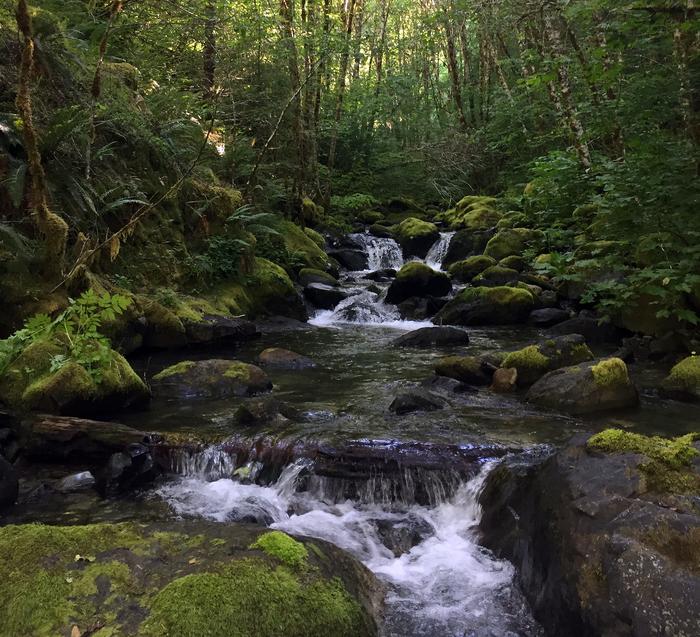
Led by Professor Chris Funk in the Department of Biology, the project is funded by the National Science Foundation’s Organismal Response to Climate Change program and will focus on interactions between cutthroat trout and tailed frogs in Pacific Northwest streams. This approach is one of the first times researchers have tried to test both the effects of evolution and species interactions to better understand species and ecosystem resilience and vulnerability to climate change.
The CSU team will work on the $1.7 million project with partners over the next four years in the field and lab. Funk said a key goal is to understand how relationships between different species, the coastal versus interior regional climatic variation, and elevation may shape responses to increasing water temperatures due to climate change.
“We are studying the adaptive capacity of these two closely linked species to better understand their ability to acclimate, evolve, or even to move to new locations in the face of changes to water flow or the broader food web,” he said. “This requires an integrated approach that combines expertise in physiology, genomics and ecology, along with skills in modeling and large data sets to understand and share the findings. We need all that expertise to pull this off.”
Cutthroat trout and the tailed frog tadpoles they feed on are an excellent pair to study and compare for this project, said Funk. Both are cold-water specialists known to be sensitive to warming temperatures, and both play key roles in Pacific Northwest stream ecosystems of which they are a part. Funk also noted that the trout – as predators – have lower abundance and a smaller genetic pool compared to the more numerous tailed frogs. As a result, the trout may not be as well adapted to local temperatures, making them more sensitive and vulnerable to climate change.
Field researchers will conduct work at 100 sites – including five different watersheds in Oregon, Washington and Montana – to collect genetic material from trout and frogs. The team will also collect information about their diet, thermal tolerance, and stream temperature and flow.
Interdisciplinary research is key to project’s conservation goals
CSU is joined on the project by researchers from the University of Montana and the University of Idaho. Other contributors include the U.S. Geological Survey and USDA Forest Service, along with the Oregon Department of Fish and Wildlife.
Alexandra Fraik is a research scientist with the Forest Service and a key contributor to the project. She specializes in using genomic tools to conduct research that informs managers about threatened and endangered species and their habitat. During the project, Fraik will use population genetic tools to help determine the traits and mechanisms that different species of cutthroat trout and tailed frog have evolved in response to different environmental conditions.

Credit: Credit: Brenna Forester and Colorado State University
Colorado State University is leading a new interdisciplinary research project into the ways predators and prey in sensitive ecosystems may react to climate change based on their physiology, genetics and relationships to each other.
Led by Professor Chris Funk in the Department of Biology, the project is funded by the National Science Foundation’s Organismal Response to Climate Change program and will focus on interactions between cutthroat trout and tailed frogs in Pacific Northwest streams. This approach is one of the first times researchers have tried to test both the effects of evolution and species interactions to better understand species and ecosystem resilience and vulnerability to climate change.
The CSU team will work on the $1.7 million project with partners over the next four years in the field and lab. Funk said a key goal is to understand how relationships between different species, the coastal versus interior regional climatic variation, and elevation may shape responses to increasing water temperatures due to climate change.
“We are studying the adaptive capacity of these two closely linked species to better understand their ability to acclimate, evolve, or even to move to new locations in the face of changes to water flow or the broader food web,” he said. “This requires an integrated approach that combines expertise in physiology, genomics and ecology, along with skills in modeling and large data sets to understand and share the findings. We need all that expertise to pull this off.”
Cutthroat trout and the tailed frog tadpoles they feed on are an excellent pair to study and compare for this project, said Funk. Both are cold-water specialists known to be sensitive to warming temperatures, and both play key roles in Pacific Northwest stream ecosystems of which they are a part. Funk also noted that the trout – as predators – have lower abundance and a smaller genetic pool compared to the more numerous tailed frogs. As a result, the trout may not be as well adapted to local temperatures, making them more sensitive and vulnerable to climate change.
Field researchers will conduct work at 100 sites – including five different watersheds in Oregon, Washington and Montana – to collect genetic material from trout and frogs. The team will also collect information about their diet, thermal tolerance, and stream temperature and flow.
Interdisciplinary research is key to project’s conservation goals
CSU is joined on the project by researchers from the University of Montana and the University of Idaho. Other contributors include the U.S. Geological Survey and USDA Forest Service, along with the Oregon Department of Fish and Wildlife.
Alexandra Fraik is a research scientist with the Forest Service and a key contributor to the project. She specializes in using genomic tools to conduct research that informs managers about threatened and endangered species and their habitat. During the project, Fraik will use population genetic tools to help determine the traits and mechanisms that different species of cutthroat trout and tailed frog have evolved in response to different environmental conditions.
She commented, “I’m excited to work with scientists from a variety of disciplines and backgrounds. It’s a great opportunity for cross collaboration and a way to help integrate cutting-edge science into decision making around managing these species. It could also provide a template for studying co-evolution of other species in changing climates.”
An additional goal of the project is to support conservation activities around these two species and the cold-water ecosystems they inhabit. To that end, the team plans to develop a simplified web-based modeling tool that natural resource managers can use to inform decision making. The final product will pull from data collected on changing environments, food webs and species interactions to generate models showcasing climate change vulnerabilities for a wide range of species.
Funk said that tool could be useful for a variety of situations beyond the Pacific Northwest region.
“This will be a powerful tool for officials considering conservation and management activities for fisheries, as an example. But it could also have broader applications across ecosystems, as the same predator-prey relationships that inform our work are applicable here as well,” he said.
Cite Scienmag News
Sloane Callahan. (August 26, 2024). NSF funds research on the effects of evolution and food webs in climate change response. Scienmag. https://scienmag.com/nsf-funds-research-on-the-effects-of-evolution-and-food-webs-in-climate-change-response/
Sloane Callahan. "NSF funds research on the effects of evolution and food webs in climate change response." Scienmag, 26 August 2024, https://scienmag.com/nsf-funds-research-on-the-effects-of-evolution-and-food-webs-in-climate-change-response/. Accessed 3 September 2026.
Sloane Callahan. "NSF funds research on the effects of evolution and food webs in climate change response." Scienmag. August 26, 2024. https://scienmag.com/nsf-funds-research-on-the-effects-of-evolution-and-food-webs-in-climate-change-response/

