


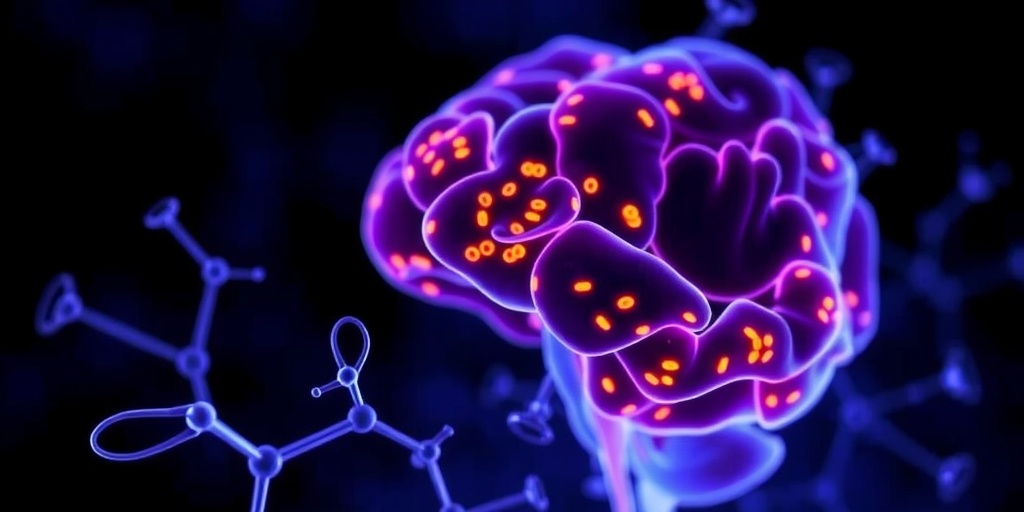
Northwestern University’s latest groundbreaking research unveils the potential of NU-9, an experimental small molecule compound approved for clinical trials targeted at amyotrophic lateral sclerosis (ALS), in enhancing the health of neurons within animal models of Alzheimer’s disease. This study marks a significant advancement in neurodegenerative disease research, offering hope for the treatment of multiple conditions rooted in similar pathological mechanisms. Unlike traditional approaches that focus on symptomatic relief, NU-9 aims to address and remedy the fundamental biological processes that lead to neurodegeneration.
The mechanism behind neurodegenerative diseases like ALS and Alzheimer’s disease often involves the misfolding and aggregation of proteins. This commonality forms the basis of the research, which emphasizes the importance of understanding and intervening at a cellular level to mitigate neuronal damage. The findings from this study suggest that NU-9 not only targets specific diseases but could have a broader application in treating various neurodegenerative disorders that share fundamental cellular dysfunctions.
Richard B. Silverman, the inventor of NU-9, expresses optimism about the drug’s efficacy, stating that the functional integrity of motor neurons in animal models can serve as a reliable indicator of potential outcomes in human applications. His confidence underscores the need for further clinical testing to establish the safety and effectiveness of NU-9 in humans, particularly regarding its capabilities in enhancing neuronal resilience and function across differing neurodegenerative contexts.
The research team, which includes key figures such as William Klein, a neurobiology expert, published their findings in the prestigious Proceedings of the National Academy of Sciences, highlighting the efficacy of NU-9 in both cellular models and small-scale mouse studies. Their work establishes a compelling narrative: there exists a shared pathway influenced by toxic protein accumulation in various neurodegenerative conditions. In essence, NU-9 appears to revitalize a cellular mechanism that naturally disposes of deleterious proteins, thereby salvaging neuronal health.
Through meticulous experimentation involving neuronal cultures from small animal models, researchers explored the interaction between NU-9 and amyloid beta, the protein responsible for Alzheimer’s pathology. The initial experiments revealed that amyloid beta oligomers adhered rapidly to neuronal surfaces, disrupting normal cellular function. However, when treated with NU-9 prior to the introduction of amyloid beta, there was a marked reduction in protein aggregation within the cells and along their dendritic structures. Astonishingly, even after the withdrawal of NU-9, the neurons maintained a protective response, indicating a lasting beneficial effect attributed to the compound.
Further extending their investigation, the research team transitioned to testing NU-9 in live animal models. The results were promising: mice administered with NU-9 showcased enhanced performance on memory assessments, suggesting cognitive benefits associated with the treatment. The study also highlighted another significant revelation: NU-9’s capacity to attenuate neuroinflammation, a major contributing factor to Alzheimer’s progression, thereby offering dual-action benefits.
Klein emphasizes the importance of examining NU-9’s impact on neuroinflammation, an often-overlooked aspect of neurodegenerative disease pathology. The research demonstrated that NU-9 not only inhibited amyloid beta aggregation but also effectively curtailed the inflammatory responses typically provoked by such protein accumulations. This dual mechanism of action positions NU-9 as a powerful contender in the fight against Alzheimer’s disease.
Exploration into the molecular specifics of NU-9’s action reveals its reliance on cellular waste management systems, specifically the lysosomal pathway and the enzyme cathepsin B. In Alzheimer’s pathology, the breakdown and clearance of toxic protein aggregates are often hampered, leading to cellular stress and dysfunction. NU-9 appears to restore this critical function, facilitating the transfer of harmful proteins to lysosomes where they can be properly degraded. This insight opens new avenues for intervention and highlights the drug’s potential beyond Alzheimer’s alone.
Despite these encouraging results, researchers remain cautious and acknowledge the path ahead is fraught with challenges. Key experiments involving rigorous memory testing and broader biological evaluations remain essential in substantiating the drug’s therapeutic efficacy. Additionally, refining the compound for enhanced effectiveness is a primary goal for Silverman and the team. The expansion of this research to encompass other neurodegenerative diseases, such as Parkinson’s and Huntington’s diseases, underscores the commonalities in pathophysiology and the potential for a novel therapeutic approach that spans multiple conditions.
Silverman articulates a transformative vision for neurodegenerative disease treatment, asserting that instead of viewing these diseases as isolated entities, recognizing their shared underlying mechanisms could revolutionize therapeutic strategies. The discovery of NU-9’s versatile capabilities may pave the way for an innovative class of drugs that might intervene early in the degenerative process, ultimately preventing significant cellular damage before it manifests in clinical symptoms.
In conclusion, the foundational research surrounding NU-9 engages with the complex interplay of neurodegenerative disease mechanisms, protein interactions, and cellular health. As scientists delve deeper into the workings of NU-9 and its impact on various neurodegenerative conditions, there is palpable excitement in the scientific community about the potential for groundbreaking therapies that could change the trajectory of diseases like Alzheimer’s and ALS. This study not only advances our understanding of neurodegeneration but also inspires renewed hope for patients and families affected by these debilitating conditions.
Cite Scienmag News
Diana Fleming. (April 8, 2025). Novel ALS Drug Demonstrates Promising Efficacy Against Alzheimer’s Disease in Recent Animal Study. Scienmag. https://scienmag.com/novel-als-drug-demonstrates-promising-efficacy-against-alzheimers-disease-in-recent-animal-study/
Diana Fleming. "Novel ALS Drug Demonstrates Promising Efficacy Against Alzheimer’s Disease in Recent Animal Study." Scienmag, 8 April 2025, https://scienmag.com/novel-als-drug-demonstrates-promising-efficacy-against-alzheimers-disease-in-recent-animal-study/. Accessed 5 September 2026.
Diana Fleming. "Novel ALS Drug Demonstrates Promising Efficacy Against Alzheimer’s Disease in Recent Animal Study." Scienmag. April 8, 2025. https://scienmag.com/novel-als-drug-demonstrates-promising-efficacy-against-alzheimers-disease-in-recent-animal-study/


