


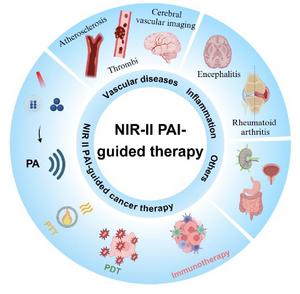
Near-infrared II (NIR-II) photoacoustic imaging (PAI) technology is on the verge of revolutionizing the biomedical imaging landscape, characterized by its unparalleled spatial resolution and ability to penetrate deep into biological tissues. As a next-generation imaging modality, NIR-II PAI offers an exceptional signal-to-noise ratio, allowing for real-time monitoring of complex physiological and pathological processes. This emerging technology serves as a critical tool, anchoring advancements in the fields of life sciences and medicine, particularly in the context of diagnosing and treating diseases.
One of the standout features of NIR-II PAI is its capacity for high-clarity visualization of various biological entities, including tumors, blood vessels, and other tissues. Unlike traditional imaging techniques, which often struggle with either resolution or penetration depth, NIR-II PAI bridges these gaps effectively. This results in images that not only capture minute details but do so in a non-invasive manner, vital for both patient outcomes and comfort. The recent leaps made in the development of NIR-II PAI probes have paved the way for their application in detecting diseases at their nascent stages, enhancing the potential for early diagnosis.
The implications of NIR-II PAI technology extend beyond mere visualization. Its specific strengths render it extraordinarily valuable in disease diagnosis and treatment, particularly in oncology. With this imaging capability, clinicians can achieve precise localization of tumors, delineating their boundaries more effectively than ever before. This is crucial because accurately identifying tumor margins can significantly improve surgical outcomes and reduce recurrence rates, making NIR-II PAI a game-changer in cancer care.
When combined with multimodal or diagnostic-therapeutic integrated molecular probes, NIR-II PAI technology offers even greater promise. These advanced probes facilitate accurate disease localization, providing clinicians with enhanced guidance during treatment procedures. This synergistic approach is pivotal in ensuring that therapies are administered with precision, optimizing their efficacy while minimizing potential side effects. As the technology continues to evolve, the integration of these novel probes into clinical practice appears increasingly feasible and promising.
Research surrounding NIR-II PAI probes has rapidly advanced, demonstrating an array of applications in both the diagnosis and treatment of various conditions. For instance, the technology has been employed in the monitoring of cerebrovascular systems, enabling the visualization of blood flow in real time. This capability could drastically improve our understanding of various vascular disorders and their implications for broader health concerns. Inflammation, which often eludes detection until it reaches advanced stages, can also be effectively visualized with NIR-II PAI, allowing for timely interventions.
A pivotal aspect of ongoing research is the optimization of NIR-II PAI probes for enhanced performance. Investigators are examining various materials and designs to produce probes that maximize both imaging resolution and tissue penetration. Each advancement in probe technology not only enhances image quality but also expands the range of biological processes that can be monitored effectively. The iterative nature of this research is crucial, with each breakthrough leading to more sophisticated probes that offer greater functionality and adaptability in clinical settings.
Despite the numerous advancements already made, there remain challenges to be addressed before NIR-II PAI can achieve its full potential in clinical practice. Issues such as probe stability, biosafety, and the development of standardized imaging protocols require focused research efforts. Researchers are diligently exploring ways to enhance the durability of these probes within the biological environment while ensuring patient safety and comfort during imaging procedures. Additionally, establishing clear guidelines for the operational use of NIR-II PAI will be essential to maximize its benefits in clinical contexts.
The future of NIR-II PAI technology appears bright, with increasing attention directed towards its incorporation into routine clinical practice. As researchers work tirelessly to develop new probes and refine imaging processes, it is clear that this technology offers vast potential for transforming how we diagnose and treat diseases. With advancements in machine learning and image analysis methodologies, the integration of NIR-II PAI in medical diagnostics may lead to earlier and more accurate disease detection.
In summary, the contributions of NIR-II PA imaging to the biomedical field cannot be overstated. Its unique characteristics, coupled with the developments in probe technology, make it an invaluable asset in the pursuit of improved patient care. As the research community continues to innovate and address existing challenges, the application of NIR-II PAI is set to expand, changing the landscape of medical imaging and treatment strategies in profound ways. The road ahead is promising, with countless opportunities to harness the potential of NIR-II PAI in advancing healthcare.
The profound impact of NIR-II PAI reaches beyond strictly medical applications, heralding new opportunities for interdisciplinary collaborations in research. The ability to visualize biological processes smoothly and accurately encourages partnerships between engineers, biologists, and clinicians. By fostering such interdisciplinary efforts, the field is more likely to adapt and respond dynamically to emerging challenges, ultimately benefitting patient outcomes and enhancing the efficacy of healthcare practices.
As this technology progresses, education and training for medical professionals will also be imperative. The successful integration of NIR-II PAI into clinical workflows necessitates an informed proprietary understanding of imaging technologies alongside robust diagnostic acumen. Enhanced training and educational resources will equip healthcare providers with the tools necessary to utilize this imaging modality effectively, ensuring they can interpret results accurately and implement timely interventions in patient care.
Collectively, the narrative surrounding NIR-II PAI technology has only begun to unfold, inviting further exploration and innovation. Ensuring that this incredible tool becomes a mainstay in modern medicine requires sustained investment in research, collaboration across disciplines, and ongoing commitment to training. In doing so, we can unlock its full potential, moving closer to a healthcare landscape that prioritizes early detection, targeted treatment, and ultimately, enhanced patient outcomes.
Cite Scienmag News
Ophelia Keating. (December 24, 2024). NIR-II Photoacoustic Imaging: A Breakthrough in Early Diagnosis and Treatment of Inflammatory and Cancerous Diseases. Scienmag. https://scienmag.com/nir-ii-photoacoustic-imaging-a-breakthrough-in-early-diagnosis-and-treatment-of-inflammatory-and-cancerous-diseases/
Ophelia Keating. "NIR-II Photoacoustic Imaging: A Breakthrough in Early Diagnosis and Treatment of Inflammatory and Cancerous Diseases." Scienmag, 24 December 2024, https://scienmag.com/nir-ii-photoacoustic-imaging-a-breakthrough-in-early-diagnosis-and-treatment-of-inflammatory-and-cancerous-diseases/. Accessed 8 September 2026.
Ophelia Keating. "NIR-II Photoacoustic Imaging: A Breakthrough in Early Diagnosis and Treatment of Inflammatory and Cancerous Diseases." Scienmag. December 24, 2024. https://scienmag.com/nir-ii-photoacoustic-imaging-a-breakthrough-in-early-diagnosis-and-treatment-of-inflammatory-and-cancerous-diseases/


