Wednesday, October 28, 2026
Science
No Result
View All Result
  • Login
  • HOME
  • SCIENCE NEWS
  • CONTACT US
  • HOME
  • SCIENCE NEWS
  • CONTACT US
No Result
View All Result
Scienmag
No Result
View All Result
Home Science News Social Science

Nighttime tweets offer a social sensing window on US sleeplessness during the pandemic

October 28, 2026
in Social Science
Kristina Jarvis
By Kristina Jarvis Scienmag Editorial Profile - Infectious Disease Medicine
Reading Time: 3 mins read
0
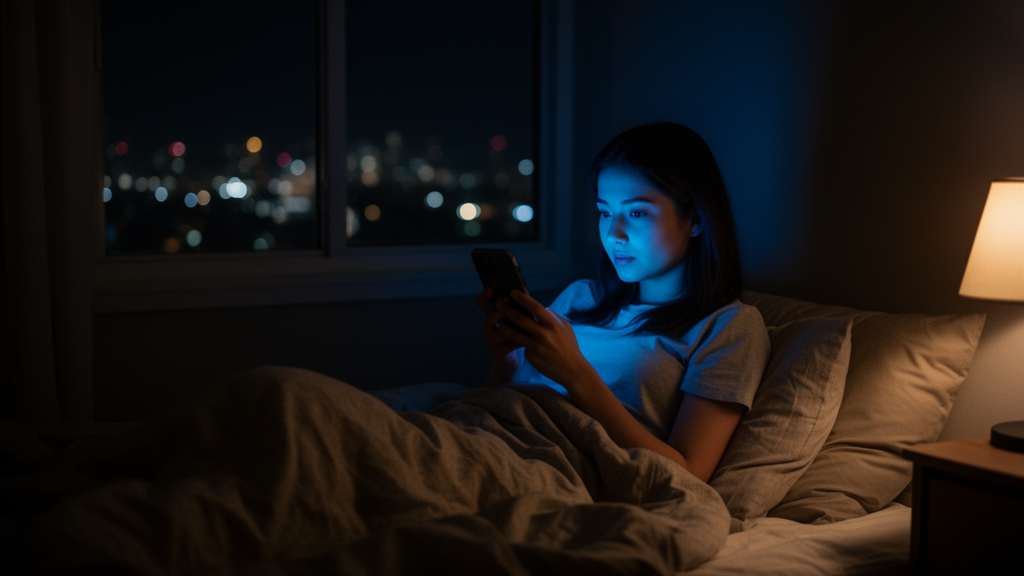
Nighttime tweets offer a social sensing window on US sleeplessness during the pandemic

Nighttime tweets offer a social sensing window on US sleeplessness during the pandemic

65
SHARES
587
VIEWS
Share on FacebookShare on Twitter
ADVERTISEMENT

Researchers have demonstrated a “social sensing” approach that uses nighttime social media posts to track sleeplessness across the United States, applying the method to the COVID-19 pandemic period. The study, titled “Sleepless in America: A social sensing study of pandemic-era sleeplessness using nighttime social media data,” was published in the peer-reviewed journal PLOS One on 9 September 2026.

The work is indexed under DOI 10.1371/journal.pone.0356547, and the authors report affiliations in the USA. According to the release accompanying the publication, the approach rests on a simple premise: when people are awake during typical sleeping hours and turn to social media, those nighttime posts can serve as signals of the state of sleeplessness across the country.

The study’s data window spans March 2020 to June 2021, a period covering the first year and a half of the COVID-19 pandemic in the United States. An accompanying figure from the paper shows daily geotagged tweet quantities during daytime and nighttime in U.S. states across that span, illustrating how the researchers separated activity posted during the day from activity posted at night.

Geotagged tweets carry location information, which allowed the analysis to be organized at the level of U.S. states. By comparing the volume of posts published during nighttime hours with the volume published during daytime hours, the method treats the balance of overnight posting as a measurable indicator rather than relying on self-reported sleep surveys alone.

The authors describe this as a social sensing approach, a term used in computational social science for methods that draw on the digital traces people leave online to infer conditions in the population. In this case, the digital traces are the timestamps and locations of social media posts, and the condition being sensed is pandemic-era sleeplessness.

The research was supported by several University of New Mexico programs, including the Office of the Vice President for Research, the WeR1 Faculty Success Program, Research Allocations Committee awards, the FRESSH Pilot Program, and a College of Arts & Sciences Interdisciplinary Science Cooperative award, along with a Rising Researcher Award from the Penn State Institute for Computational and Data Sciences. The funding statement notes that the funders had no role in study design, data collection and analysis, decision to publish, or preparation of the manuscript.

The authors declared that no competing interests exist. The article was published as a peer-reviewed contribution in PLOS One, with the release distributed through EurekAlert!, which notes that it is not responsible for the accuracy of news releases posted by contributing institutions.

As with any study based on social media data, the method reflects the population of users who post geotagged content at night, and the published figure presents daily posting quantities rather than clinical sleep measurements. Readers can consult the full open-access article, published under a CC-BY 4.0 license, for the complete methods and findings of the analysis.

Subject of Research: Using nighttime geotagged social media posts as a social sensing measure of sleeplessness in the United States during the COVID-19 pandemic

Article Title: Nighttime social media posts can reveal the state of sleeplessness across the country, with new "social sensing approach" demonstrated by researchers in analyzing US sleep trends during the COVID-19 pandemic

Article References: Nighttime social media posts can reveal the state of sleeplessness across the country, with new "social sensing approach" demonstrated by researchers in analyzing US sleep trends during the COVID-19 pandemic. Original publication (Bibliographic details unavailable.)

Image Credits: AI Generated

DOI: Not provided

Keywords: sleeplessness, social sensing, social media, Twitter, geotagged tweets, COVID-19 pandemic, United States, PLOS One, computational social science, public health, nighttime posting, sleep research

Cite Scienmag News

Kristina Jarvis. (October 28, 2026). Nighttime tweets offer a social sensing window on US sleeplessness during the pandemic. Scienmag. https://scienmag.com/nighttime-tweets-offer-a-social-sensing-window-on-us-sleeplessness-during-the-pandemic/


Kristina Jarvis. "Nighttime tweets offer a social sensing window on US sleeplessness during the pandemic." Scienmag, 28 October 2026, https://scienmag.com/nighttime-tweets-offer-a-social-sensing-window-on-us-sleeplessness-during-the-pandemic/. Accessed 28 October 2026.

Kristina Jarvis. "Nighttime tweets offer a social sensing window on US sleeplessness during the pandemic." Scienmag. October 28, 2026. https://scienmag.com/nighttime-tweets-offer-a-social-sensing-window-on-us-sleeplessness-during-the-pandemic/
Tags: computational social scienceCOVID-19 pandemicCOVID-19 pandemic sleep patternsdigital epidemiology methodsgeographic analysis of sleep patternsgeotagged tweetsgeotagged tweets for health surveillancenighttime activity analysisnighttime postingnighttime social media monitoringpandemic-era mental health monitoringPLOS OnePublic healthreal-time public health datasleep disturbance detection through social mediasleep researchsleeplessnesssocial mediasocial media as sleep indicatorsocial sensingsocial sensing approachTwitterUnited StatesUS sleeplessness during pandemic
Share26Tweet16
Previous Post

Fluid-Filled Cadaver Model Keeps Ventricles Realistic for Endoscopic Surgery Training

Next Post

Fatal Gastric Ischemia in a 12-Year-Old After Accidental Substance Exposure

Related Posts

Polysulfides revealed as drivers of pyrite formation in marine sediments
Social Science

Polysulfides revealed as drivers of pyrite formation in marine sediments

October 28, 2026
Shape grammar rules decode traditional Mosul house design
Technology and Engineering

Shape grammar rules decode traditional Mosul house design

October 28, 2026
Turkic states integrate migrants on paper but stop short of building real institutions, study finds
Social Science

Turkic states integrate migrants on paper but stop short of building real institutions, study finds

October 28, 2026
Urban–rural integration decoded: 44 global cases reveal a three-tier governance engine
Technology and Engineering

Urban–rural integration decoded: 44 global cases reveal a three-tier governance engine

October 28, 2026
Women Offer More Sympathy Than Men in Arabic Facebook Comments After Suicide, Study Finds
Social Science

Women Offer More Sympathy Than Men in Arabic Facebook Comments After Suicide, Study Finds

October 28, 2026
Open-source tool turns cadastral maps into orientation-specific building envelope data for urban energy modeling
Technology and Engineering

Open-source tool turns cadastral maps into orientation-specific building envelope data for urban energy modeling

October 28, 2026
Next Post
Fatal Gastric Ischemia in a 12-Year-Old After Accidental Substance Exposure

Fatal Gastric Ischemia in a 12-Year-Old After Accidental Substance Exposure

  • Mothers who receive childcare support from maternal grandparents show more optimized

    Mothers who receive childcare support from maternal grandparents show more parental warmth, finds NTU Singapore study

    27656 shares
    Share 11059 Tweet 6912
  • University of Seville Breaks 120-Year-Old Mystery, Revises a Key Einstein Concept

    1061 shares
    Share 424 Tweet 265
  • Bee body mass, pathogens and local climate influence heat tolerance

    682 shares
    Share 273 Tweet 171
  • Researchers record first-ever images and data of a shark experiencing a boat strike

    546 shares
    Share 218 Tweet 137
  • Groundbreaking Clinical Trial Reveals Lubiprostone Enhances Kidney Function

    531 shares
    Share 212 Tweet 133
Science

Embark on a thrilling journey of discovery with Scienmag.com—your ultimate source for cutting-edge breakthroughs. Immerse yourself in a world where curiosity knows no limits and tomorrow’s possibilities become today’s reality!

RECENT NEWS

  • Systematic review maps end-of-life psychosocial and spiritual needs in physical disability
  • Text Message Campaign Reached Only a Third of Patients Overdue for Colorectal Cancer Screening
  • FOXO1 Emerges as Candidate Regulator and Biomarker in Hip Dysplasia
  • Regulators, developers and clinicians in Shenzhen voice concerns over medical AI governance

Categories

  • Agriculture
  • Anthropology
  • Archaeology
  • Athmospheric
  • Biology
  • Biotechnology
  • Blog
  • Bussines
  • Cancer
  • Chemistry
  • Climate
  • Earth Science
  • Editorial Policy
  • Marine
  • Mathematics
  • Medicine
  • Pediatry
  • Policy
  • Psychology & Psychiatry
  • Science Education
  • Science News
  • Social Science
  • Space
  • Technology and Engineering

Subscribe to Blog via Email

Enter your email address to subscribe to this blog and receive notifications of new posts by email.

Join 5,151 other subscribers

© 2025 Scienmag - Science Magazine

Welcome Back!

Login to your account below

Forgotten Password?

Retrieve your password

Please enter your username or email address to reset your password.

Log In
No Result
View All Result
  • HOME
  • SCIENCE NEWS
  • CONTACT US

© 2025 Scienmag - Science Magazine

Discover more from Science

Subscribe now to keep reading and get access to the full archive.

Continue reading