


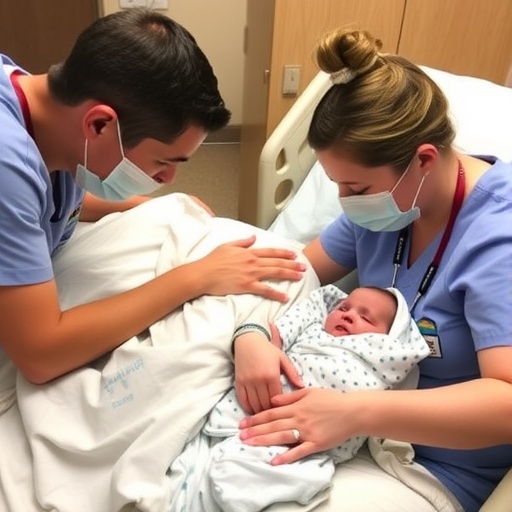
In the intricate and emotionally charged environment of the Neonatal Intensive Care Unit (NICU), much attention has historically been directed toward understanding the experiences of parents navigating the immense stress of having a newborn in critical condition. However, a groundbreaking study published in the Journal of Perinatology challenges this conventional focus by delving into the perceptions of NICU staff themselves, revealing a nuanced and deeply relational understanding of family dynamics and needs. This shift in perspective offers a systemic examination that could revolutionize approaches to care in these specialized units.
For decades, research in neonatal care has predominantly concentrated on parents’ mental health, coping strategies, and satisfaction with hospital services. While immensely valuable, this literature has inadequately addressed how frontline providers—nurses, physicians, and social workers—perceive and interpret the complexities of family experiences. The study authored by Belkin, Lerou, Vranceanu, and colleagues fills this gap by exploring the lived experiences of families through the eyes of NICU staff, providing a lens that accounts for relational dynamics and systemic interdependencies within the clinical setting.
The researchers deployed qualitative methodologies, including in-depth interviews and observational analyses, to gather rich, narrative data from multidisciplinary teams across various NICUs. These narratives illuminate how care providers conceptualize “family” not merely as biological units but as dynamic systems shaped by emotional, social, and psychological factors interacting within the hospital milieu. Such an approach underscores the importance of seeing each family’s story as unique, embedded within broader social contexts and healthcare structures.
Central to the findings is the recognition that NICU staff perceive family experiences as multi-layered and evolving. They report that families oscillate between hope, fear, resilience, and grief, often simultaneously, which profoundly influences how staff tailor their communication and support strategies. This awareness challenges the oversimplified dichotomy of “successful” versus “distressed” families often portrayed in previous literature, highlighting the fluidity and complexity of familial adaptation during neonatal critical care.
Moreover, the study details how NICU providers describe their roles not just as medical experts but as emotional anchors and facilitators of family cohesion. For instance, nurses recount moments when their interventions extend beyond clinical protocols to include comforting parents during devastating prognoses or mediating tensions in family interactions. This relational caregiving model underscores a systemic interdependence whereby staff well-being and family experiences are mutually responsive.
From a systemic standpoint, the research also identifies institutional factors influencing how staff perceive and engage with families. Staffing ratios, time constraints, physical environment, and organizational culture all modulate the quality and depth of relational connections. Some providers express frustration when systemic limitations hinder their ability to respond adequately to families’ psycho-social needs, pointing to a need for structural reforms that support holistic NICU care.
Importantly, the investigation sheds light on the emotional toll that witnessing family suffering exacts on staff themselves. Providers frequently describe experiences of vicarious trauma and professional burnout, which complicate their capacity to be fully present and responsive. Addressing this reciprocal dynamic becomes critical, suggesting interventions that promote resilience and reflective practice among NICU teams as essential complements to family-centered care innovations.
The integration of relational and systemic analysis into NICU care offers potential pathways for enhancing clinical training and policy development. By equipping staff with tools to interpret family distress within broader social frameworks, interventions can become more empathetic and tailored, thereby improving both family satisfaction and health outcomes. This holistic perspective encourages a departure from fragmented approaches toward truly integrated care models.
Furthermore, the study’s implications extend to the design of NICU spaces and workflows. Recognizing the importance of relational encounters calls for environmental adaptations that facilitate comfortable, private, and calming settings for families and providers alike. Such trauma-informed design principles can play a pivotal role in mitigating stress responses and fostering positive relational dynamics.
This new research crystallizes the critical insight that the NICU experience is profoundly relational and contextual. Families do not navigate neonatal crises in isolation; their stories interweave with the values, emotions, and capacities of the staff who support them. Efforts to improve neonatal care must therefore cultivate these reciprocal relationships, ensuring that staff perspectives are not overshadowed but integrated into holistic models of family-centered NICU practice.
As hospital systems move toward greater recognition of psychosocial dimensions in medical care, studies like this provide an evidentiary basis for transformative policies. Embedding staff perspectives into design, training, and support structures acknowledges their indispensable role in shaping family experiences. It also highlights the need for resources that sustain the emotional health of providers, thereby sustaining quality care delivery.
In sum, the investigation into NICU staff perceptions broadens our understanding of what it means to support families in one of the most vulnerable phases of life. It calls for a paradigm shift whereby neonatal care transcends clinical metrics to embrace the relational stories that each family brings. By doing so, the NICU can evolve into a space not only of advanced medical intervention but also of empathetic partnership and systemic synergy.
This emergent perspective aligns with contemporary movements in healthcare emphasizing biopsychosocial models and patient- and family-centered care. It prompts clinicians, administrators, and policymakers to rethink how care environments and professional roles are structured around the interconnectedness of human experience. Ultimately, such reflection promises not only to enhance NICU family well-being but also to enrich the professional fulfillment and sustainability of NICU staff.
With the publication of this study, the neonatal care community is invited to reconsider entrenched paradigms and embrace complexity in its many forms. “Each family has a story,” as the authors poignantly conclude, and understanding these stories from the relational vantage point of staff provides a more comprehensive, humane framework that can inform future research, education, and practice in perinatal medicine.
Cite Scienmag News
Harold Sullivan. (September 21, 2025). NICU Families’ Stories Through Staff Perspectives. Scienmag. https://scienmag.com/nicu-families-stories-through-staff-perspectives/
Harold Sullivan. "NICU Families’ Stories Through Staff Perspectives." Scienmag, 21 September 2025, https://scienmag.com/nicu-families-stories-through-staff-perspectives/. Accessed 4 September 2026.
Harold Sullivan. "NICU Families’ Stories Through Staff Perspectives." Scienmag. September 21, 2025. https://scienmag.com/nicu-families-stories-through-staff-perspectives/


