


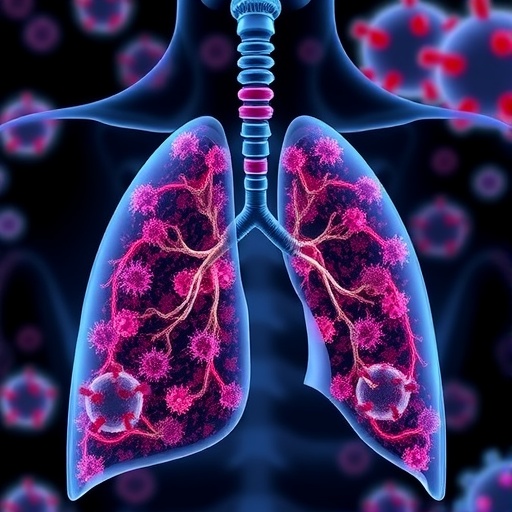
A groundbreaking study has unveiled that a genetic variant present in nearly one-third of the global population may significantly contribute to the risk of severe COVID-19 and lung fibrosis by impairing the function of a previously uncharacterized protein. This discovery highlights a novel molecular mechanism underlying susceptibility to serious respiratory illnesses and opens a new frontier in understanding how genetic diversity influences disease outcomes at a cellular and molecular level.
The research, led by scientists from the University of Edinburgh in collaboration with the University of Sydney, focused on a newly identified enzyme expressed specifically in lung tissue. This enzyme, whose molecular identity was unknown until recently, plays a critical role in lung physiology and pathology. The team found that a common genetic variant modifies the enzyme’s structure and function, thereby altering its biological activity. This disruption in enzyme function is mechanistically linked to heightened vulnerability to lung damage during respiratory infections, including severe manifestations of COVID-19, as well as fibrotic lung diseases that can cause permanent lung scarring and loss of respiratory capacity.
This scientific breakthrough stems from a paradigm shift in genomics research that moves beyond the well-characterized proteins encoded by the human genome’s approximately 20,000 genes to explore a vast repertoire of hitherto unrecognized protein isoforms. Many of these novel proteins arise from alternative splicing events or non-canonical translation products, which have traditionally been difficult to detect and quantify. The uncharted territory of these tissue-specific proteins has potentially harbored numerous genetic variants that subtly yet significantly impact human health, but these have largely escaped detection using conventional genomic and proteomic approaches.
To overcome these challenges, the researchers developed an innovative method that enables the sensitive quantification of these low-abundance protein isoforms within cells, even in complex tissue environments such as the lung. This novel analytical technique permitted the team to perform detailed structural and functional assessments of these proteins, revealing how specific genetic variants induce missense mutations—single amino acid substitutions—that modify protein folding, stability, and interaction with other molecular partners. Such precise insights illustrate how these cryptic genetic variants can influence disease risk at a molecular level previously inaccessible through standard genetic analyses.
Intriguingly, the enzyme of focus is implicated in multiple pathological processes, including inflammatory responses to infection, tumorigenesis in lung cancer, and now, susceptibility to fibrotic remodeling of lung tissue. Genetic variation resulting in altered enzymatic activity was also observed to modulate responsiveness to certain pharmacological agents, suggesting that these variants could affect not only disease predisposition but also individual responses to treatment. This finding underscores the potential for personalized medical interventions targeting these newly discovered proteins, heralding a new era in precision medicine where therapy is tailored to an individual’s unique proteomic and genetic landscape.
Further expanding their scope, the research team identified additional genetic variants affecting other tissue-specific proteins, some of which regulate vitamin D metabolism, and may contribute to the pathogenesis of kidney and cardiovascular diseases. These variants exhibited a spectrum of frequencies in the population, ranging from common alleles present in about half of individuals, whose effects on disease risk are subtle, to ultra-rare variants that, though infrequent, may drive severe manifestations of illness. This demonstrates the complex interplay between common and rare genetic variation in shaping human health and disease susceptibility through proteins that were previously hidden within the genome’s dark matter.
The implications of these findings are profound for the field of genetic medicine. By elucidating the biological consequences of variants in genes encoding tissue- and disease-specific protein isoforms, scientists can now begin to build a more comprehensive map of genetic risk factors that transcend traditional gene-centric approaches. This holistic view of how genetic diversity translates into functional protein variation will enhance diagnostic accuracy and could reveal a new reservoir of molecular targets amenable to therapeutic modulation, particularly for disorders with poorly understood genetic underpinnings.
Dr. Simon Biddie, a senior investigator at the University of Edinburgh’s Institute of Genetics and Cancer, highlighted that for many years, genetic research has been constrained by an incomplete catalog of human proteins. “Our work reveals a new landscape where genetic changes thought to be silent or irrelevant can in fact have meaningful effects through these recently identified protein isoforms,” he explained. He added that this recognition could revolutionize genetic diagnostics and drug discovery, facilitating novel approaches that harness these hidden biological insights to combat disease.
Professor Mark Gorrell, from the Centenary Institute and the University of Sydney, who originally discovered the implicated enzyme, expressed enthusiasm about the translational potential of the study. He emphasized that understanding the enzyme’s altered function in lung disease not only clarifies previous epidemiological associations but also opens opportunities to develop targeted therapies aimed at restoring or compensating for its disrupted activity. Such strategies could prove transformative for patients suffering from chronic lung conditions that currently lack effective treatments.
This pioneering research was recently published in the prestigious journal Nature Communications, providing an authoritative framework for further studies into the functional impacts of genetic variation on cryptic protein isoforms across diverse tissues. Funded by leading agencies including the Medical Research Council, the Scottish Government’s Chief Scientist Office, EU Horizon programs, and the Intensive Care Society, the study represents a collaborative effort to bridge fundamental genomics with clinical relevance.
As researchers continue to chart this once hidden proteomic terrain, it is anticipated that our comprehension of genetic risk factors for myriad diseases will deepen significantly. Unveiling the roles of these novel proteins promises to enhance the precision of genetic diagnoses and pave the way for innovative therapeutic interventions tailored to individual molecular profiles. This advance heralds a new chapter in human genetics where the full complexity of protein isoforms and their interactions with genetic variation is integrated into the quest to understand and treat disease.
News Publication Date: 16-Jun-2026
Web References: http://dx.doi.org/10.1038/s41467-026-74280-w
Cite Scienmag News
Juliet Wilcox. (June 24, 2026). Newly Identified Protein Associated with Increased Risk of Severe COVID-19 and Lung Disease. Scienmag. https://scienmag.com/newly-identified-protein-associated-with-increased-risk-of-severe-covid-19-and-lung-disease/
Juliet Wilcox. "Newly Identified Protein Associated with Increased Risk of Severe COVID-19 and Lung Disease." Scienmag, 24 June 2026, https://scienmag.com/newly-identified-protein-associated-with-increased-risk-of-severe-covid-19-and-lung-disease/. Accessed 4 September 2026.
Juliet Wilcox. "Newly Identified Protein Associated with Increased Risk of Severe COVID-19 and Lung Disease." Scienmag. June 24, 2026. https://scienmag.com/newly-identified-protein-associated-with-increased-risk-of-severe-covid-19-and-lung-disease/


