


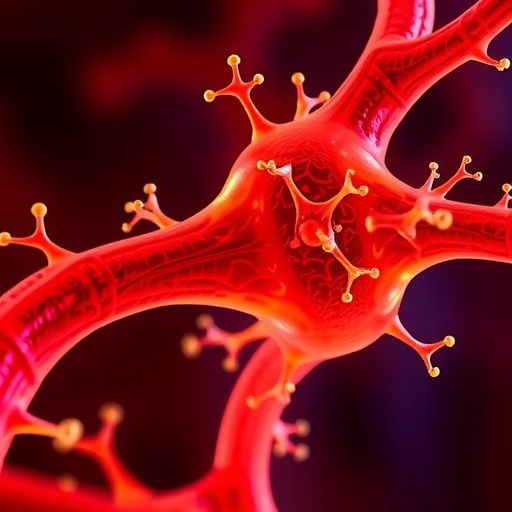
In a groundbreaking discovery that challenges long-held beliefs about the lymphatic system, researchers from Tohoku University have identified a novel anatomical structure within lymph nodes, termed the intranodal lympho-venous shunt (inLVS). This newfound pathway enables lymphatic fluid to flow directly into blood vessels inside the lymph node, overturning the classical understanding that lymph flows unidirectionally through lymphatic vessels into the bloodstream solely via the subclavian vein. This revelation has profound implications for the study of cancer metastasis, immune cell circulation, and the treatment of lymphedema, a debilitating condition often seen in cancer survivors.
The lymphatic system, an intricate network embedded throughout the human body, operates as a crucial component of the immune defense. By transporting immune cells and filtering excess interstitial fluid—known as lymph—the system maintains fluid homeostasis and protects against infections. Traditionally, it was understood that lymphatic vessels transport fluid in a one-way direction, ultimately draining into veins near the heart. The lymph nodes act as biological filters, trapping pathogens and malignant cells before lymph fluid re-enters the bloodstream.
However, the comprehensive research led by Dr. Ariunbuyan Sukhbaatar and colleagues at Tohoku University has illuminated a previously unrecognized reciprocal connection within the lymph nodes themselves. Using cutting-edge imaging technologies such as micro-computed tomography (microCT) and iron nanoparticle-enhanced visualization, the scientists mapped the intricate architecture of all 22 types of lymph nodes throughout the murine model, which closely resembles human lymph node anatomy. Their analysis revealed discrete shunts linking lymphatic sinuses directly to blood veins inside the lymph nodes.
This discovery of the intranodal lympho-venous shunt contrasts sharply with prior assumptions, which held that the high endothelial venules (HEVs) solely functioned as entry points allowing lymph fluid to infiltrate the lymphatic sinus from blood vessels. Instead, Sukhbaatar’s group demonstrated that lymph fluid can bypass typical pathways and exit the lymph node directly into venous circulation through these intranodal shunts. The implications of this bidirectional communication are profound, particularly in understanding mechanisms underlying lymph node metastasis—where cancer cells disseminate from tumors to distant organs via the lymphatic system.
For patients who have undergone surgeries for breast or uterine cancer, lymphedema represents a chronic, often incurable complication characterized by the accumulation of lymph fluid and subsequent swelling, marked by pain and susceptibility to infection. Current treatment options provide symptomatic relief but lack curative potential. The identification of the inLVS opens new avenues to investigate whether modulating this shunt’s function could alleviate lymph stasis and slow disease progression in lymphedema.
Moreover, the research holds promise in oncology for intercepting the early routes of cancer dissemination. Since cancer cells are known to spread through lymph nodes en route to distant metastases, understanding how malignant cells traverse the inLVS could be transformative. Closing or modifying these shunts might effectively block cancer cells from invading the bloodstream, thereby stalling metastatic spread and improving patient survival. This insight also encourages exploration into whether targeted drug delivery systems could capitalize on this lympho-venous interface to selectively ferry therapeutic agents to tumor-draining lymph nodes, optimizing efficacy while minimizing systemic toxicity.
Professor Tetsuya Kodama highlighted the transformative potential of manipulating the inLVS, suggesting that intelligent modulation—either enhancement for lymph drainage or occlusion to prevent cancer escape—may pave the way for novel treatment paradigms. Such precision interventions could revolutionize immunology and regenerative medicine by enabling enhanced control over immune cell trafficking and fluid balance at the microscopic level.
Beyond its medical implications, this discovery challenges foundational textbooks and demands a reevaluation of fluid dynamics within the lymphatic system. Traditionally conceptualized as a closed, one-way network terminating at the subclavian vein, the presence of intranodal shunts suggests lymph circulation is more complex and flexible than previously understood. This nuanced flow may influence immune surveillance, edema resolution, and even systemic inflammation in ways not yet fully explored.
The research team’s multidisciplinary approach, combining advanced imaging with animal models recapitulating human lymphatic anatomy, was key to unveiling these subtle anatomical structures. MicroCT scanning allowed them to visualize fine-scale vascular connections in situ, while iron nanoparticle tracers identified dynamic lymph flow routes in unprecedented detail. Such technological integration exemplifies the power of modern biomedical engineering and pathology in elucidating intricate physiological processes previously hidden from view.
This milestone finding was published in The Journal of Pathology on February 4, 2026, and is poised to stimulate a paradigm shift across various fields including immunology, oncology, and lymphatic biology. The detailed mechanistic insights into lymph flow pathways will invigorate research into cancer metastasis, infectious disease dissemination, and immune cell trafficking, ultimately contributing to the development of innovative therapies.
As researchers continue to explore the functional significance and regulation of the intranodal lympho-venous shunt, future clinical applications may materialize as groundbreaking diagnostic and therapeutic tools. The ability to target specific lymphatic bottlenecks or outflows with precision medicine strategies could redefine patient management in conditions associated with lymphatic dysfunction.
This discovery reminds us that even within well-studied systems like the lymphatic network, hidden complexities await elucidation, offering hope for breakthroughs in disease understanding and treatment. The intranodal lympho-venous shunt represents a remarkable example of how revisiting fundamental anatomy with modern tools can reveal novel physiology that reshapes medical science.
News Publication Date: 4-Feb-2026
Web References: http://dx.doi.org/10.1002/path.70032
Cite Scienmag News
Nathaniel Bowman. (February 10, 2026). Newly Discovered Lymph Node Structure Transforms Understanding of Lymphatic Physiology. Scienmag. https://scienmag.com/newly-discovered-lymph-node-structure-transforms-understanding-of-lymphatic-physiology/
Nathaniel Bowman. "Newly Discovered Lymph Node Structure Transforms Understanding of Lymphatic Physiology." Scienmag, 10 February 2026, https://scienmag.com/newly-discovered-lymph-node-structure-transforms-understanding-of-lymphatic-physiology/. Accessed 4 September 2026.
Nathaniel Bowman. "Newly Discovered Lymph Node Structure Transforms Understanding of Lymphatic Physiology." Scienmag. February 10, 2026. https://scienmag.com/newly-discovered-lymph-node-structure-transforms-understanding-of-lymphatic-physiology/


