


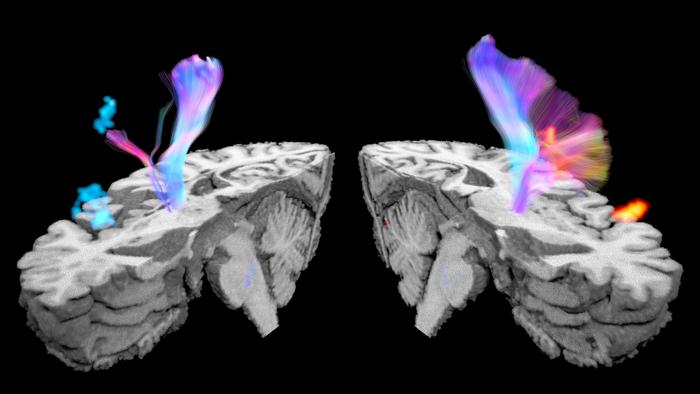
A groundbreaking study led by USC researchers employing functional magnetic resonance imaging (fMRI) has shed light on the intricate neural mechanisms underlying urinary incontinence, a prevalent issue for stroke survivors that profoundly affects their quality of life. Published recently in the esteemed journal Stroke, this interdisciplinary research team comprised urologists, neurosurgeons, and imaging specialists from various distinguished institutions, including the Keck School of Medicine at USC and the Rancho Los Amigos National Rehabilitation Center.
This novel research indicates significant disparities in brain activity when comparing voluntary and involuntary bladder contractions, hinting at potential pathways for more tailored therapeutic strategies. As urinary incontinence complicates the lives of nearly 79% of stroke patients in the initial recovery phase, with a persistently troubling presence for about 40% one year later, understanding its neurobiological foundations becomes critical for developing effective treatments.
The physiological basis for urinary incontinence often ties back to the brain’s role in managing various bodily functions, including bladder control. Stroke, which disrupts the normal neural pathways that facilitate this control, often leaves survivors grappling with uncontrolled bladder contractions and a loss of bladder awareness. While the brain’s influence in regulating urinary functions is documented, the specific neuroanatomical changes responsible for this dysfunction among stroke survivors have remained enigmatic until now.
Evgeniy Kreydin, MD, who served as the lead author, emphasized that the damage inflicted by strokes impairs the essential connections in the brain necessary for bladder regulation. The research investigates how different areas of the brain are activated during various bladder-related actions, providing a significant leap in our understanding of post-stroke complications and the implications for patient treatment.
The groundbreaking recognition of Kreydin’s work through the McGuire-Zimskind Award from the Society of Urodynamics signifies the foundational importance of this discovery. The award celebrates early-career professionals who have demonstrated significant contributions to their fields through innovative research. The unique methodology of repeatedly filling and emptying the bladder while participants were scanned using MRI allowed researchers to quantify and visualize brain function during these critical actions comprehensively.
Traditional studies that required catheterization presented challenges in observing bladder function actively. The innovative approach used in this research permitted a more nuanced observation of both voluntary and involuntary urination, revealing critical differences in brain activity between healthy individuals and stroke survivors. Drawing from this wealth of information, the researchers could delineate how stroke impacts the engagement of essential brain networks responsible for voluntary urination.
Significant findings reveal that participants who voluntarily initiated urination exhibited marked activation in brain networks linked to sensorimotor control and executive functioning. Conversely, involuntary bladder emptying associated with incontinence in stroke survivors displayed minimal cortical activity, highlighting the stark contrast in brain engagement during these disparate control processes.
Moreover, the research identified the salience network of the brain, known for evaluating the importance of internal stimuli, as a crucial player in bladder control. In healthy participants, bladder filling before voluntary emptying triggered significant activation in this network. Yet, for stroke survivors suffering from incontinence, this network failed to activate during similar circumstances. This observation suggests a possible core pathological mechanism of urinary incontinence stemming from post-stroke neural alterations.
The implications of these findings are vast, as they open avenues for developing targeted therapies aimed at restoring bladder function in stroke patients. Non-invasive brain stimulation techniques, such as transcranial magnetic stimulation (TMS), may have the potential to engage and activate the salience network more effectively. Additionally, refining pharmacological approaches to enhance neural activation in key regions implicated in urinary control could prove instrumental in treating the debilitating impacts of urinary incontinence.
Innovative cognitive training and biofeedback therapies aimed at improving bladder awareness and voluntary control could also emerge as promising interventions based on the study’s findings. As the researchers noted, these therapeutic avenues could represent not just incremental improvements in care, but revolutionary shifts in treating a common yet overlooked consequence of strokes.
Despite the significant strides represented by this study, Kreydin and co-authors maintain a cautious approach, underscoring the imperative for further research to elucidate how diverse types of strokes might uniquely influence urinary control. Future investigation may also determine whether timely interventions focusing on the salience network can mitigate the likelihood of developing chronic incontinence among stroke survivors, ultimately preserving their quality of life.
The implications of this pioneering research extend beyond clinical practice; they touch upon the fundamental understanding of the intricate interplay between neurological processes and physiological functions. Charles Liu, MD, PhD, the senior author and director of the USC Neurorestoration Center, articulates the promising horizon of future research opportunities that this study has unveiled. He is optimistic that more nuanced explorations into the neurological underpinnings of adulthood urinary management will foster advancements not only in treating complications following strokes, but also in enhancing the overall well-being of millions worldwide affected by this condition.
As the journey unfolds toward a deeper understanding of urinary incontinence and its relations with stroke, the stakes remain high. Each avenue of investigation promises not only scientific enrichment but also a more profound hope for patients enduring a diminished quality of life due to debilitating remnants of their stroke experience.
Cite Scienmag News
Cassandra Pierce. (April 10, 2025). New USC Research Reveals Crucial Brain Networks Linked to Post-Stroke Urinary Incontinence. Scienmag. https://scienmag.com/new-usc-research-reveals-crucial-brain-networks-linked-to-post-stroke-urinary-incontinence/
Cassandra Pierce. "New USC Research Reveals Crucial Brain Networks Linked to Post-Stroke Urinary Incontinence." Scienmag, 10 April 2025, https://scienmag.com/new-usc-research-reveals-crucial-brain-networks-linked-to-post-stroke-urinary-incontinence/. Accessed 5 September 2026.
Cassandra Pierce. "New USC Research Reveals Crucial Brain Networks Linked to Post-Stroke Urinary Incontinence." Scienmag. April 10, 2025. https://scienmag.com/new-usc-research-reveals-crucial-brain-networks-linked-to-post-stroke-urinary-incontinence/


