


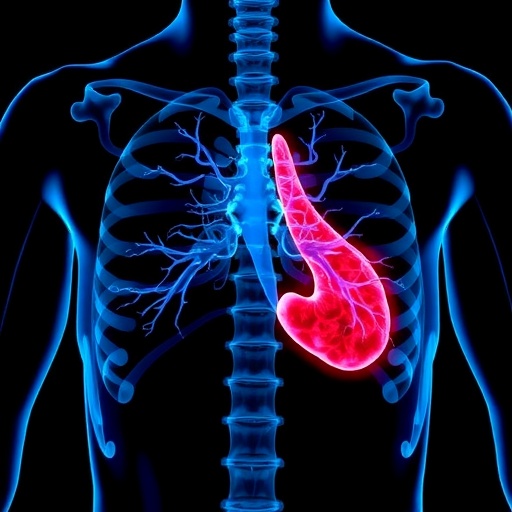
In a groundbreaking advancement in thoracic oncology, a recent phase II clinical investigation has illuminated the potential of combining cytoreductive surgery with hyperthermic intrathoracic chemotherapy (HITOC) as a transformative therapeutic strategy for thymic epithelial tumors (TETs) exhibiting pleural dissemination or recurrence. The investigation, conducted by Wang, S., Yang, X., Jiang, J., and colleagues, presents compelling evidence that this integrated approach not only extends the clinical spectrum of treatable thymic malignancies but also challenges existing paradigms that have historically limited therapeutic interventions for advanced pleural involvement.
Thymic epithelial tumors, originating from the epithelial cells of the thymus gland, are rare neoplasms that pose significant clinical challenges, especially when metastasis or local recurrence affects the pleural cavity. Conventional therapies often fall short due to the complexity of tumor spread within the delicate thoracic environment. This new research delineates a methodical approach whereby the tumor burden is surgically reduced, followed immediately by localized chemotherapy administered at hyperthermic temperatures, aimed at eradicating microscopic residual disease and improving oncological outcomes. The dual intent is to maximize cytoreduction while leveraging hyperthermia to potentiate chemotherapeutic efficacy.
The study meticulously enrolled a cohort of patients diagnosed with advanced-stage thymic epithelial tumors characterized by pleural seeding or recurrent disease after initial treatment modalities. The cohort underwent a standardized cytoreductive surgical regimen tailored to excise visible tumor nodules within the thoracic cavity. Subsequent delivery of HITOC involved the circulation of heated chemotherapeutic agents within the pleural space, achieving a targeted thermal dose that enhances drug penetration and tumor cytotoxicity while sparing systemic toxicity that typically accompanies intravenous chemotherapy.
One of the pivotal technical aspects underscored in the paper involves the optimization of intrathoracic hyperthermia parameters. Maintaining a consistent temperature range, typically between 41 to 43 degrees Celsius, was found critical to augmenting the cytotoxic effects of chemotherapeutic agents such as cisplatin, commonly utilized in the perfusate. The thermally enhanced permeability and retention effect facilitates deeper diffusion of the drug into residual tumor tissues, a pharmacodynamic advantage critical for treating microscopic disease that conventional techniques might overlook.
Furthermore, the single-arm, prospective design of this phase II trial allowed for a focused evaluation of safety, tolerability, and preliminary efficacy without the confounding influence of comparison arms. Detailed postoperative metrics documented the complications associated with the invasive procedure, highlighting acceptable morbidity rates that affirm the technique’s feasibility in selected patient populations. Importantly, this data lays a vital foundation for future randomized studies aimed at establishing definitive survival benefits.
From a mechanistic perspective, the team provided insightful analyses into the biological response of thymic epithelial tumor cells to the cytoreductive HITOC approach. Hyperthermia induces protein denaturation, disrupts DNA repair processes, and enhances apoptosis when combined with chemotherapy, collectively contributing to a synergistic tumoricidal effect. This mechanistic synergy underscores why localized chemohyperthermia achieves superior cytotoxic outcomes compared to chemotherapy alone.
The researchers also discuss the intricate surgical challenges inherent in pleural disease management, where multifocal tumor nodules intersperse critical structures such as the lung parenchyma, diaphragm, and mediastinum. Precision in surgical resection is paramount to avoid compromising respiratory function, with intraoperative adjuncts including thoracoscopic visualization aiding complete cytoreduction. The surgical team’s expertise directly correlates with postoperative outcomes, emphasizing the importance of multidisciplinary collaboration in treating complex thoracic malignancies.
Moreover, the investigation hints at immunomodulatory effects induced by the combined treatment. Hyperthermia and localized chemotherapy can modulate the tumor microenvironment by enhancing antigen presentation and facilitating infiltration of immune effector cells. Although not the primary endpoint, preliminary immunological assessments suggest this approach may potentiate systemic antitumor immunity, an exciting avenue for future exploration, particularly when integrated with emerging immunotherapeutic agents.
Clinically, patient-reported outcomes were favorable, with many participants experiencing symptomatic relief from pleural effusions and chest pain commonly associated with tumor burden in the pleural cavity. These improvements significantly enhance quality of life, validating the therapeutic value beyond the measurable oncologic endpoints. Such multidimensional benefits reflect the holistic potential of this combined modality within personalized cancer care frameworks.
The study’s findings challenge the historical nihilism surrounding pleural dissemination of thymic tumors, which traditionally portended poor prognosis and limited intervention options. By demonstrating not only technical feasibility but also promising oncological control, this research rekindles hope for durable disease management and potential long-term remission in a subset of patients previously deemed inoperable or relegated to palliative care.
Looking ahead, the authors underscore the necessity for multi-institutional collaborations to validate these promising results in larger, controlled clinical trials. Refinements in chemotherapeutic regimens, optimization of hyperthermia delivery systems, and integration with systemic therapies like immune checkpoint inhibitors are earmarked as strategic priorities. Such advances could precipitate a paradigm shift in thoracic oncology protocols for thymic epithelial tumors and beyond.
Furthermore, this study adds to a growing corpus of evidence supporting the localized, combinatorial approach to managing cancers characterized by serosal spread, such as pleural mesothelioma and metastatic lung cancers. The translational potential of cytoreductive surgery paired with hyperthermic chemotherapy could catalyze innovations across thoracic oncology disciplines, fostering cross-disease treatment algorithms grounded in precision medicine.
In conclusion, this pioneering research spearheaded by Wang et al. represents a significant leap in treating challenging thymic epithelial tumors with pleural involvement. Their approach elucidates how combining meticulous surgical techniques with intrathoracic chemohyperthermia can surmount previously insurmountable barriers, offering patients improved survival prospects and enhanced quality of life. As the oncology community digests these findings, a new horizon of therapeutic possibility unfolds, promising impactful changes in the management of thoracic malignancies.
Cite Scienmag News
Ophelia Keating. (June 4, 2025). New Surgery-Chemotherapy Trial Targets Thymic Tumors. Scienmag. https://scienmag.com/new-surgery-chemotherapy-trial-targets-thymic-tumors/
Ophelia Keating. "New Surgery-Chemotherapy Trial Targets Thymic Tumors." Scienmag, 4 June 2025, https://scienmag.com/new-surgery-chemotherapy-trial-targets-thymic-tumors/. Accessed 5 September 2026.
Ophelia Keating. "New Surgery-Chemotherapy Trial Targets Thymic Tumors." Scienmag. June 4, 2025. https://scienmag.com/new-surgery-chemotherapy-trial-targets-thymic-tumors/


