


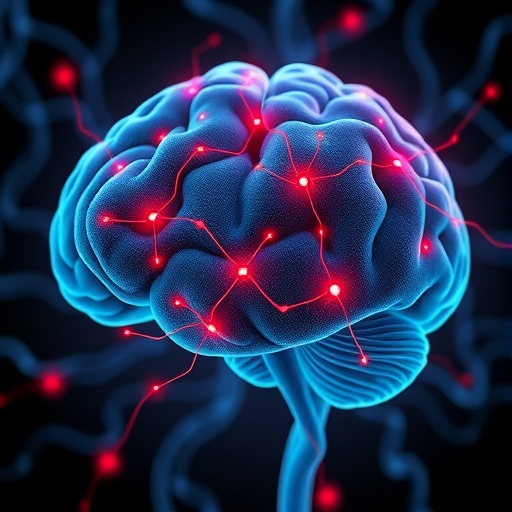
A groundbreaking study spearheaded by researchers at The Ohio State University Wexner Medical Center and College of Medicine has unveiled novel insights into the intricate communication networks of brain cells, shedding new light on the pathological progression of Alzheimer’s disease. This pioneering research utilizes cutting-edge imaging modalities combined with sophisticated computational modeling to investigate the molecular dialogues between neurons and their glial counterparts—a dynamic interplay that underpins brain health and disease.
The research challenges longstanding paradigms that primarily attribute Alzheimer’s pathology to amyloid plaques and tau protein tangles. Instead, it illuminates a more nuanced mechanism involving a failure in cellular crosstalk that disrupts neural homeostasis. By dissecting these intercellular signaling pathways, the study identifies critical molecular conduits, notably the interaction between the semaphorin family protein SEMA6D and the triggering receptor expressed on myeloid cells 2 (TREM2), which regulates microglial function—a type of immune cell pivotal in maintaining brain clearance mechanisms.
Advanced multiplex imaging techniques, including high-resolution spatial transcriptomics and proteomics, were deployed on human brain tissue samples to map the spatial and functional relationships of various cell types within Alzheimer’s disease-affected regions. Computational frameworks enabled the reconstruction of these cellular networks, allowing researchers to discern how disruptions in membrane protein signaling cascade into broader neurodegenerative changes. This integrative approach marks a significant stride in neurobiology, providing a systems-level view of Alzheimer’s pathophysiology.
Oscar Harari, PhD, a leading neuroscientist and director of the Division of Neurogenetics and the Center for Neurobiology of Aging and Resiliency at Ohio State, emphasized the transformative potential of this work. “Our molecular maps reveal previously unappreciated pathways of communication that influence microglial activation states and amyloid clearance,” he notes. These findings underscore the prospect that targeting membrane-associated proteins such as SEMA6D and TREM2 could modulate microglial responses, potentially arresting or reversing disease progression.
The study’s collaborative nature brought together expertise from global institutions including Columbia University, Harvard Medical School, Massachusetts General Hospital, and several international neurodegenerative research centers. This multidisciplinary effort combined neuropathology, cell biology, immunology, and computational neuroscience to ensure a comprehensive analysis of Alzheimer’s complexity. Tae-Wan Kim, PhD, associate professor at Columbia University, highlighted the significance of uncovering the SEMA6D–TREM2 signaling axis. “Interventions aimed at enhancing this pathway may amplify the brain’s innate ability to clear amyloid deposits, providing a promising therapeutic avenue,” he explained.
These discoveries sit within a larger context of evolving Alzheimer’s research that recognizes the brain as an ecosystem where neurons and glia dynamically interact. Microglia, the brain’s resident immune cells, perform essential roles in clearing toxic proteins and maintaining synaptic health. Dysfunctional microglial activity driven by impaired signaling pathways culminates in exacerbated neuroinflammation and neuronal loss, spearheading cognitive decline.
The research leverages an unprecedented combination of experimental methods, including fluorescent in situ hybridization and live-cell imaging coupled with machine-learning algorithms capable of parsing complex data sets. This methodological synergy allowed precise identification of cell-specific signaling molecules and their spatial distributions which, in turn, clarified how aberrant crosstalk may trigger or accelerate neurodegenerative cascades.
Funding for this expansive project was garnered from numerous prestigious sources such as the National Institute on Aging, the Chan Zuckerberg Initiative, and the Michael J. Fox Foundation, reflecting broad recognition of the study’s potential impact. The collaboration also benefitted from international partnerships with researchers in Australia, South Korea, Germany, Spain, Canada, and Japan, highlighting a global commitment to tackling Alzheimer’s disease.
Understanding the SEMA6D-TREM2 mediated crosstalk contributes critically to developing next-generation therapies that go beyond symptomatic treatment to address underlying cellular dysfunction. Whereas previous drug development efforts have often focused on amyloid and tau proteins in isolation, this study advocates for a paradigm shift toward interventions targeting cellular communication networks that orchestrate immune responses and neural integrity.
This research also exemplifies the advances in translational medicine that bridge molecular neuroscience and clinical application. By applying knowledge gained from human tissue studies, investigators aim to inform clinical trial designs that incorporate biomarkers reflecting microglial activation and cellular crosstalk efficacy, thus refining patient stratification and treatment monitoring.
Importantly, the insights garnered open new avenues for early diagnosis, as alterations in microglial communication pathways could serve as sensitive indicators of preclinical Alzheimer’s changes. Early intervention strategies can thus be tailored to restore or enhance cellular dialogues before irreversible neurodegeneration occurs.
In sum, the systematic analysis of cellular crosstalk in Alzheimer’s disease undertaken by Ohio State and its collaborators reframes how the scientific and medical communities understand and approach this multifaceted neurodegenerative disorder. By focusing on the molecular conversation between neurons and glial cells, particularly through the SEMA6D-TREM2 pathway, this research illuminates promising therapeutic targets poised to transform patient outcomes in the coming decades.
Cite Scienmag News
Cassandra Pierce. (September 18, 2025). New Study Uncovers How Brain Cells ‘Crosstalk’ to Communicate. Scienmag. https://scienmag.com/new-study-uncovers-how-brain-cells-crosstalk-to-communicate/
Cassandra Pierce. "New Study Uncovers How Brain Cells ‘Crosstalk’ to Communicate." Scienmag, 18 September 2025, https://scienmag.com/new-study-uncovers-how-brain-cells-crosstalk-to-communicate/. Accessed 5 September 2026.
Cassandra Pierce. "New Study Uncovers How Brain Cells ‘Crosstalk’ to Communicate." Scienmag. September 18, 2025. https://scienmag.com/new-study-uncovers-how-brain-cells-crosstalk-to-communicate/


