


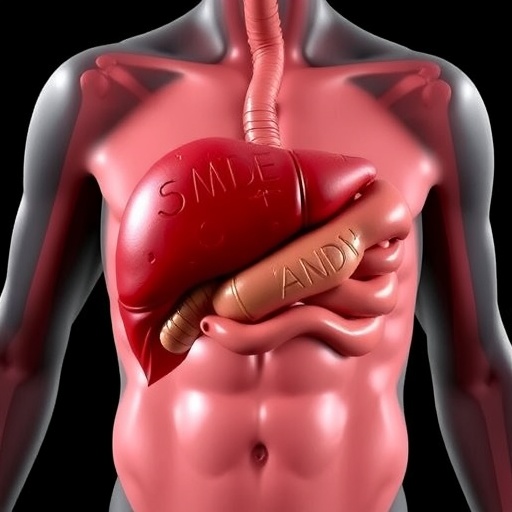
Recent advancements in medical imaging have provided a new lens through which we can interpret complex physiological conditions. In a groundbreaking commentary published by T. Fraum in the journal Pediatr Radiol, the author delves into the interpretation of liver stiffness values among patients who have undergone the Fontan procedure. This surgical intervention, often necessitated by congenital heart defects, has long been a topic of considerable interest due to its implications for patient health and management.
The Fontan procedure, performed in patients with univentricular heart physiology, redirects venous blood to the pulmonary arteries without passing through the heart. This alteration in hemodynamics often leads to various postoperative complications, including hepatic dysfunction and liver-related morbidity. As patients with Fontan circulation age, understanding the changes in liver stiffness becomes critical for timely interventions and improved quality of care.
Fraum’s commentary highlights the significance of liver stiffness measurements (LSM) as a non-invasive tool to assess hepatic congestion and potential liver damage. Traditionally, liver biopsy has been the gold standard for evaluating liver pathology, but it is invasive and comes with risks. LSM, on the other hand, provides real-time assessments, allowing clinicians to monitor liver health without subjecting patients to unnecessary risks. Fraum’s insights underscore the potential for LSM to guide clinical decision-making for this uniquely vulnerable population.
The commentary discusses a recent study that investigated the relationship between liver stiffness values and clinical outcomes in Fontan patients. This research presents compelling evidence suggesting that increased liver stiffness correlates with adverse outcomes, such as the development of portal hypertension and liver fibrosis. Such findings underscore the necessity for regular monitoring of liver health in Fontan patients as they navigate life into adulthood.
Fraum also emphasizes the importance of refining the techniques used to measure liver stiffness. The study addressed potential variances in measurements based on the age of the patient, the timing of the evaluations, and the methodologies employed during the imaging procedure. By standardizing LSM techniques, clinicians can ensure that the data collected is both accurate and applicable across diverse patient demographics.
The commentary notes that while advancements in imaging technology have significantly enhanced our understanding of liver conditions, the challenge lies in translating these discoveries into clinical practice. It calls for collaborative efforts among researchers, clinicians, and imaging specialists to establish consensus guidelines for the interpretation of liver stiffness values in this specific patient population.
Moreover, Fraum’s work encourages more extensive longitudinal studies to confirm the findings regarding liver stiffness and its implications for Fontan patients. As the cohort continues to age, there is an urgent need for ongoing research to identify the long-term effects of the Fontan procedure on liver health, enabling targeted interventions to mitigate risks associated with liver disease.
One of the standout points in Fraum’s commentary is the call for increased awareness among healthcare providers regarding the nuances of liver health in patients with congenital heart defects. The unique physiology of these patients necessitates tailored approaches to care, and understanding how liver stiffness interacts with their condition can lead to better overall management.
In conclusion, T. Fraum’s commentary presents a pivotal step forward in interpreting liver stiffness values in Fontan patients. By highlighting the importance of non-invasive measurement, standardized techniques, and the correlation of LSM with clinical outcomes, it paves the way for better strategies in monitoring liver health for vulnerable patients. As we strive to enhance patient care, the insights from this work could significantly influence future research and clinical practices.
As the medical community continues to unravel the complexities surrounding the health of Fontan patients, it is critical to embrace innovations in imaging and analytics. This commentary serves as a critical reminder of the significant impact that comprehensive liver monitoring can have, potentially altering the course of patient management and improving life quality for those affected.
In summation, the implications of this research extend far beyond simple numbers. It offers hope for improved frameworks in managing complications associated with the Fontan procedure, ultimately contributing to better health outcomes and longer, healthier lives for patients who confront the challenges of congenital heart disease.
With ongoing research and dialogue, it is indeed an exciting time in the realm of pediatric cardiology and hepatology. The intersection of these fields holds the promise of enhanced care and a brighter outlook for affected patients.
Cite Scienmag News
Ophelia Keating. (September 18, 2025). Advancing Liver Stiffness Interpretation in Fontan Patients. Scienmag. https://scienmag.com/advancing-liver-stiffness-interpretation-in-fontan-patients/
Ophelia Keating. "Advancing Liver Stiffness Interpretation in Fontan Patients." Scienmag, 18 September 2025, https://scienmag.com/advancing-liver-stiffness-interpretation-in-fontan-patients/. Accessed 3 September 2026.
Ophelia Keating. "Advancing Liver Stiffness Interpretation in Fontan Patients." Scienmag. September 18, 2025. https://scienmag.com/advancing-liver-stiffness-interpretation-in-fontan-patients/


