


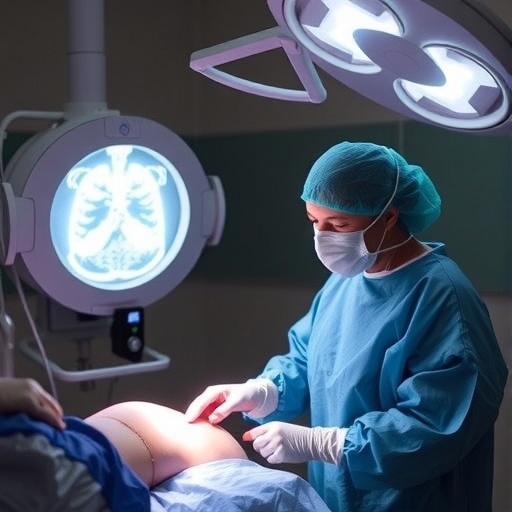
A groundbreaking international clinical trial has revealed that radiotherapy may be safely omitted for many patients with early-stage breast cancer who have undergone a mastectomy and are receiving modern anti-cancer drug treatments. This finding challenges longstanding clinical protocols and suggests a potential paradigm shift in post-mastectomy treatment, aimed at minimizing unnecessary interventions while maintaining survival outcomes.
Historically, radiation therapy targeting the chest wall after mastectomy has been standard practice to eradicate residual cancer cells and to reduce the risk of local recurrence. These recommendations were primarily informed by trials conducted in the 1980s. However, those earlier studies predate the introduction of contemporary systemic therapies and advanced surgical techniques, raising questions about the ongoing necessity of chest wall radiotherapy in current clinical contexts.
The SUPREMO trial, an acronym for Selective Use of Postoperative Radiotherapy after Mastectomy, spearheaded by researchers at the University of Edinburgh and involving collaborators from 17 countries, was designed to address this uncertainty. It enrolled 1,607 women with intermediate-risk breast cancer characterized either by one to three positive lymph nodes or specific pathological features indicative of aggressive tumors without lymph node involvement.
Participants underwent mastectomy and axillary surgery, with lymph node dissection performed to assess nodal involvement. All received modern systemic anti-cancer therapies that reflect current standards of care, including chemotherapy, hormone therapy, and targeted agents as appropriate. Patients were then randomized to receive either chest wall radiotherapy or no further radiation treatment, with the trial following their outcomes over a decade.
After ten years of surveillance, data demonstrated no statistically significant difference in overall survival between the radiotherapy and no-radiotherapy groups: survival rates stood closely matched at 81.4% versus 81.9%, respectively. Furthermore, radiation therapy did not confer measurable benefits in disease-free survival or in preventing distant metastases, outcomes that are crucial indicators of cancer recurrence and progression.
Local recurrence on the chest wall, a traditional metric used to justify postoperative radiotherapy, was infrequent in both cohorts. Importantly, the trial observed only a modest reduction in local recurrences among women receiving radiotherapy—9 cases versus 20 in the control group. Side effects from radiation were generally mild, and no increase in treatment-related cardiac mortality was detected, alleviating some concerns regarding potential long-term cardiac toxicity.
Researchers attribute these findings to the profound advancements in systemic therapies, which have significantly decreased the likelihood of cancer recurrence beyond what radiation alone can achieve. These enhancements in pharmacologic treatment modalities have effectively improved distant disease control and survival, thereby modulating the relative benefit of adding chest wall radiotherapy.
While the SUPREMO trial focused exclusively on patients with intermediate-risk profiles, its insights prompt careful consideration of individualized treatment planning. High-risk patients—characterized by extensive lymph node involvement or other aggressive clinical features—were not included in the study population and might still derive meaningful benefit from post-mastectomy radiotherapy.
This study, published in the prestigious New England Journal of Medicine, leverages robust randomized controlled trial methodology to deliver compelling evidence that could reshape clinical guidelines worldwide. It underscores the necessity to continuously reevaluate entrenched treatment practices in the context of evolving therapeutic landscapes.
Clinical experts emphasize that omission of radiotherapy may reduce treatment burden for patients, sparing them from the acute and chronic toxicities associated with radiation, such as skin changes, fibrosis, fatigue, and the potential compromise of reconstructive surgical outcomes. Also, the reduction in health system resource utilization aligns with broader objectives of delivering cost-effective cancer care without compromising quality.
The trial was conducted with collaborative efforts across multiple academic institutions and supported by notable funding bodies including the Medical Research Council and the National Institute for Health and Care Research. This international partnership exemplifies the critical role of coordinated research networks in answering pivotal clinical questions.
Key opinion leaders advocate that these findings should be integrated into multidisciplinary discussions to tailor therapies to individual risk profiles and patient preferences. Avoiding unnecessary radiotherapy may not only enhance patients’ quality of life but also optimize therapeutic sequences in complex breast cancer management.
Professor Ian Kunkler of the University of Edinburgh remarked on the trial’s significance, stating that no evidence supports continued routine radiotherapy for intermediate-risk mastectomy patients receiving modern systemic therapies. Complementing this, Dr. Nicola Russell of the Netherlands Cancer Institute highlighted the importance of reducing unnecessary irradiation to minimize side effects and preserve reconstructive options.
In summation, the SUPREMO trial illuminates a transformative direction for breast cancer treatment post-mastectomy, advocating for a nuanced approach that leverages systemic therapy advances to potentially forgo radiotherapy in selected patients, thereby refining care protocols toward precision and patient-centric medicine.
Web References: http://dx.doi.org/10.1056/NEJMoa2412225
References: SUPREMO trial publication in New England Journal of Medicine
Cite Scienmag News
Nathaniel Bowman. (November 5, 2025). New Study Suggests Radiotherapy May Be Unnecessary After Mastectomy. Scienmag. https://scienmag.com/new-study-suggests-radiotherapy-may-be-unnecessary-after-mastectomy/
Nathaniel Bowman. "New Study Suggests Radiotherapy May Be Unnecessary After Mastectomy." Scienmag, 5 November 2025, https://scienmag.com/new-study-suggests-radiotherapy-may-be-unnecessary-after-mastectomy/. Accessed 4 September 2026.
Nathaniel Bowman. "New Study Suggests Radiotherapy May Be Unnecessary After Mastectomy." Scienmag. November 5, 2025. https://scienmag.com/new-study-suggests-radiotherapy-may-be-unnecessary-after-mastectomy/


