


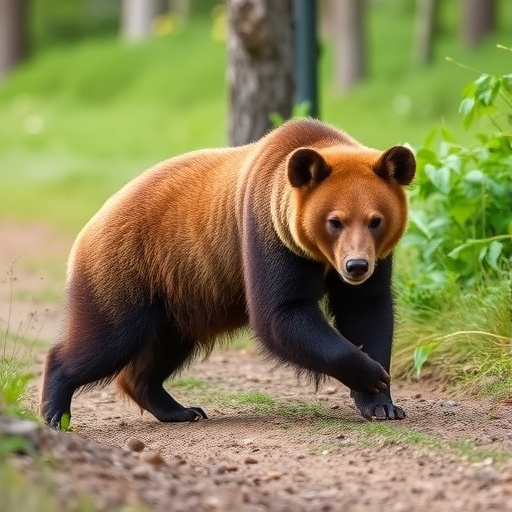
As human activity relentlessly encroaches upon natural habitats, the interaction frequency between wildlife and humans is increasingly raising concerns about safety and coexistence. A recent comprehensive study conducted by researchers at the University of York and published in Frontiers in Conservation Science reveals the nuanced dynamics behind aggressive encounters between humans and large mammals in Canadian national parks. By meticulously analyzing nearly 3,500 reported incidents from 2010 to 2023, the research sheds light on which animals are most frequently involved in potentially dangerous encounters, the activities during which these interactions occur, and the combinations thereof that pose the highest risk to both humans and wildlife.
This investigation primarily focuses on five animal species notorious for their involvement in aggressive episodes: elk, black bears, grizzly bears, coyotes, and mule deer. These species were selected due to their predominance in the reported incident database maintained by Parks Canada. The study’s novel approach lies in its categorization of human activities into seven distinct types ranging from low-impact pursuits such as hiking and wildlife observation, to more extreme sporting activities like kayaking and climbing, as well as dog-walking, horseback riding, camping, transport-related activities, townsite-associated activities including golfing, and park operational duties.
One of the pivotal findings of this analysis is the disproportionately high number of aggressive encounters linked to what are typically considered low-impact activities. Despite the seemingly benign nature of hiking or quietly observing wildlife, these activities corresponded to approximately 25% of all recorded incidents. This counterintuitive result can be partly explained by the stealth and silence inherent in such activities, which often lead to surprise encounters with species like grizzly and black bears—both of which showed a high tendency to react defensively when unexpectedly encountered in forested areas.
In stark contrast, activities conducted within or near townsite environments, encompassing around 22% of aggressive encounters, represent a different kind of challenge. Wildlife such as elk, mule deer, and coyotes, when venturing closer to human habitations or recreational hubs, face unfamiliar stressors and are more likely to exhibit aggression. Elk, intriguingly, dominate these townsite-related incidents, implicated in over 73% of such encounters. Their complex ecological strategy—wherein they sometimes seek human presence as a refuge from predators—adds a layer of unpredictability that complicates risk assessment.
Additionally, the study demonstrates that animal-activity pairings profoundly influence the likelihood and nature of aggressive interactions. Elk are prominent not only in townsite scenarios but also in more physically demanding adventure sports, accounting for 57% of incidents in such contexts. In contrast, mule deer showed heightened aggression in the presence of domestic dogs, an insight underscored by the behavioral resemblance dogs bear to natural predators from the perspective of the deer. This behavioral mimicry triggers defensive responses, particularly during dog-walking activities, underscoring the subtle ecological complexities at play.
The frequency distribution of involvement across species underscores the ecological roles and behavioral responses shaping these encounters. Elk top the list with 62% of aggressive incidents, followed by grizzly bears (14%) and black bears (13%), while mule deer and coyotes contribute 7% and 3%, respectively. These statistics hint at the interplay between species-specific traits and environmental contexts, emphasizing the importance of species ecology in understanding human-wildlife conflict.
From a technical standpoint, the researchers utilized rigorous statistical analyses to evaluate incident data, while acknowledging inherent limitations. Notably, the dataset only comprises incidents officially reported to Parks Canada personnel, suggesting potential underreporting, particularly of non-harmful encounters. Moreover, crucial variables such as the sex of the animal, group sizes of people involved, and the duration of human activity were unavailable, restricting the capacity to infer direct causality. Despite these constraints, the study’s methodological framework offers a robust foundation for framing future research hypotheses and park management strategies.
In practical terms, these insights advocate for targeted risk mitigation strategies tailored to specific animal-activity contexts. For example, visitors engaging in low-impact activities are encouraged to announce their presence audibly—through talking, making noise, or using whistles—to reduce the likelihood of startling bears. Group hiking is also recommended to mitigate surprise encounters. During activities involving pets, particularly dog-walking, keeping leashes short in areas with high wildlife density emerges as a simple but effective precaution, especially near mule deer herds.
Furthermore, the findings reiterate the utility of dynamic information dissemination through park bulletins, which provide real-time updates on animal sightings and trail conditions. Such tools are integral to enhancing visitor preparedness and enabling informed decision-making during park excursions. Equally, park infrastructure improvements—like enhanced and strategically placed signage—are vital components of comprehensive management plans designed to reduce conflict opportunities without restricting affordable and sustainable park visitation.
The broader implications of this research extend beyond Canadian borders, offering transferable principles for national parks worldwide grappling with the dual challenges of wildlife conservation and human safety. As urban expansion continues to infringe upon natural spaces, understanding the nuanced interplay between species-specific behavior and human activities is paramount to fostering coexistence. Effective conservation management, combined with conscientious human practices, can help preserve biodiversity while safeguarding the well-being of park visitors.
Ultimately, the study advocates a paradigm shift from reactive conflict response to proactive risk reduction, emphasizing that aggressive encounters represent a lose-lose scenario for both humans and animals. Through scientifically grounded strategies, increased public awareness, and cooperative efforts between park authorities and visitors, it is possible to diminish these confrontations. This promotes not only safety but also the ethical stewardship of wildlife, ensuring that pristine natural areas remain havens for biodiversity and recreation for generations to come.
The research presented here marks a significant step forward in unraveling the ecological and social intricacies underpinning human-wildlife interactions. By coupling detailed incident analysis with behavioral ecology, the work provides a valuable blueprint for future studies and conservation initiatives. In the face of global environmental change, such interdisciplinary approaches are indispensable for harmonizing human presence with the natural world.
News Publication Date: 2-Jul-2026
Web References: http://dx.doi.org/10.3389/fcosc.2026.1764328
Cite Scienmag News
Margaret Porter. (July 2, 2026). New Study Reveals How to Reduce Risk of Dangerous Wildlife Encounters This Summer. Scienmag. https://scienmag.com/new-study-reveals-how-to-reduce-risk-of-dangerous-wildlife-encounters-this-summer/
Margaret Porter. "New Study Reveals How to Reduce Risk of Dangerous Wildlife Encounters This Summer." Scienmag, 2 July 2026, https://scienmag.com/new-study-reveals-how-to-reduce-risk-of-dangerous-wildlife-encounters-this-summer/. Accessed 3 September 2026.
Margaret Porter. "New Study Reveals How to Reduce Risk of Dangerous Wildlife Encounters This Summer." Scienmag. July 2, 2026. https://scienmag.com/new-study-reveals-how-to-reduce-risk-of-dangerous-wildlife-encounters-this-summer/


