


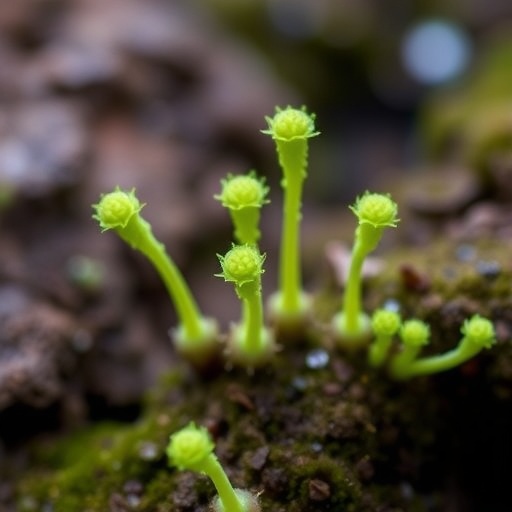
A groundbreaking scholarly article has emerged in the realm of forensic science, shedding unprecedented light on the overlooked potential of bryophytes—mosses, liverworts, and hornworts—as vital forensic evidence. Published in the renowned journal Forensic Sciences Research, the paper titled Green Clues: Unveiling the Role of Bryophytes in Forensic Science pioneers a comprehensive review that amalgamates historical insights, contemporary applications, and pivotal case studies, decisively positioning bryophytes within the framework of criminal investigations.
Historically, forensic botany has predominantly centered on flowering plants and pollen analyses, neglecting bryophytes despite their omnipresence and unique morphological traits. This article challenges that paradigm by demonstrating how bryophytes’ durability and their propensity to cling to footwear, clothing, and vehicles render them invaluable trace evidence. Their distinctive cellular structures and the ecological specificity of various bryophyte species can intimately link persons or objects to precise crime scene locations, thereby enhancing investigative accuracy.
The authors compiled and synthesized an extensive corpus of documented cases, media reports, and direct communications with bryologists worldwide. This exhaustive approach not only underscores bryophytes’ forensic utility but also establishes an analytical framework to guide future investigations. Bryophytes’ resilience enables their survival through harsh environmental conditions, making their forensic application viable across diverse geographic and climatic contexts.
Among the array of documented uses, the article elucidates bryophytes’ critical role in homicide cases, suicide determinations, missing persons investigations, and refining post-mortem interval estimations. Notably, the review contains the first peer-reviewed formal account of the Michigan “Baby Kate” case. Here, bryophyte fragments recovered from a suspect’s shoe were analyzed alongside diatoms and seed plants. The botanical evidence indicated highly specific wetland ecosystems, sharply constraining the search area even though the victim’s remains were never recovered, thus dramatically advancing investigative efforts.
The distinctive physiology of bryophytes, characterized by their non-vascular structure and unique reproductive mechanisms, affords forensic scientists microhabitat specificity unparalleled by other plant groups. Their spores and gametophyte tissues possess morphological markers that can be taxonomically classified with increasing precision thanks to advancements in high-resolution imaging and genetic barcoding. These innovations greatly enhance the reliability and speed of forensic botanical identification.
Despite these promising attributes, bryophytes have remained marginal in forensic methodologies chiefly due to the lack of systematic study and formalized protocols. The article emphasizes the urgent need for method standardization, comprehensive training, and broader integration of bryophyte analysis into forensic curricula. Doing so can empower forensic practitioners to exploit the ecological and biological nuances bryophytes offer, transforming crime scene reconstruction and suspect-victim linkage.
This paper is the product of a collaborative scholarly endeavor spearheaded by experts such as Jenna Merkel and Matthew von Konrat, the latter being the Head of Botanical Collections at The Field Museum in Chicago. Von Konrat’s extensive background in bryophyte taxonomy, conservation, and digitization integrates cutting-edge bioinformatics with traditional herbarium research, enabling vast biodiversity datasets to be leveraged in forensic contexts. Their work also highlights how digitized bryophyte specimens facilitate remote analysis, cross-referencing, and verification by forensic teams around the world.
By documenting bryophytes’ forensic applications and cataloguing gaps in current knowledge, the article sets a foundation for future research that could revolutionize forensic botany. It invites interdisciplinary partnerships among botanists, forensic scientists, ecologists, and law enforcement to build methodological rigor and practical expertise. Furthermore, it underscores the promise of public engagement and citizen science in collecting diverse bryological specimens key to forensic databases.
In tandem with its forensic relevance, bryophyte research opens new frontiers in environmental monitoring and ecological change detection. The article posits that overlapping applications in conservation biology and forensic science could foster innovation in both fields, enhancing the understanding of bryophyte systematics and evolutionary dynamics while solving crimes with greater precision.
The publication’s implications are profound, extending beyond academic curiosity to practical, impactful forensic usage. As forensic methodologies evolve, incorporating bryophytes provides a novel, sustainable tool to augment existing botanical evidence frameworks. Their strategic analysis could dramatically improve forensic resolution, particularly in complex cases involving wetlands, forests, and other bryophyte-rich habitats.
Ultimately, Green Clues serves as a clarion call to both the forensic and bryological communities, advocating for the formal recognition and systematic inclusion of bryophytes. This shift from marginalization to mainstream forensic application promises to unlock a hitherto untapped reservoir of botanical information with real-world consequences for justice, identity resolution, and crime solving.
News Publication Date: [Not specified in the provided content].
Web References: [Not specified in the provided content].
References: Merkel, J., Konrat, M., Stark, L., et al. Forensic Sciences Research, Volume 10, Issue 3, September 2025.
Cite Scienmag News
Ophelia Keating. (November 14, 2025). New Study Identifies Bryophytes as Valuable Tools in Forensic Science. Scienmag. https://scienmag.com/new-study-identifies-bryophytes-as-valuable-tools-in-forensic-science/
Ophelia Keating. "New Study Identifies Bryophytes as Valuable Tools in Forensic Science." Scienmag, 14 November 2025, https://scienmag.com/new-study-identifies-bryophytes-as-valuable-tools-in-forensic-science/. Accessed 6 September 2026.
Ophelia Keating. "New Study Identifies Bryophytes as Valuable Tools in Forensic Science." Scienmag. November 14, 2025. https://scienmag.com/new-study-identifies-bryophytes-as-valuable-tools-in-forensic-science/


