

Saturday, November 7, 2026
Science
No Result
View All Result
  • Login
  • HOME
  • SCIENCE NEWS
  • CONTACT US
  • HOME
  • SCIENCE NEWS
  • CONTACT US
No Result
View All Result
Scienmag
No Result
View All Result
Home Science News Medicine

New Statistical Model Improves Microbiome Causal Analysis

November 7, 2026
in Medicine
Morgan Morrow
By Morgan Morrow Scienmag Editorial Profile - Bacteriology
Reading Time: 2 mins read
0
New Statistical Model Improves Microbiome Causal Analysis

New Statistical Model Improves Microbiome Causal Analysis

65
SHARES
587
VIEWS
Share on FacebookShare on Twitter
ADVERTISEMENT

Researchers from the Icahn School of Medicine at Mount Sinai and the University of Florida have proposed a new statistical method designed to address specific challenges in analyzing the role of the microbiome in disease pathogenesis. The study, published in Frontiers in Cellular and Infection Microbiology, introduces a zero-inflated beta mixture (ZIBM) method for mediation analysis involving compositional microbiome mediators. This approach aims to provide a more flexible and robust framework for understanding how microbial communities may mediate causal effects in health and disease contexts.

The role of the microbiome in disease pathogenesis is an emerging field, with strong evidence suggesting that dysbiosis is associated with precancerous and cancerous states. However, microbiome data present substantial challenges for causal mediation analysis. These challenges include sparsity, compositional constraints, and latent heterogeneity, which complicate the accurate estimation of causal effects. The proposed ZIBM method is specifically designed to accommodate these data characteristics that often hinder existing statistical approaches.

The ZIBM method accommodates excess zeros in the data through a zero-inflation component. Additionally, it captures heterogeneity in non-zero relative abundances using a beta mixture distribution. Within the potential-outcomes framework, the ZIBM provides estimates of marginal microbiome-mediated causal effects.

Simulation studies demonstrate that the ZIBM yields more accurate estimation and reliable inference under conditions commonly observed in microbiome data, compared with existing approaches. The results indicate that the proposed method provides a more flexible and robust statistical framework for mediation analysis involving compositional microbiome data.

An application to a real microbiome study further illustrates the practical utility of the ZIBM method.

The authors, Seungjun Ahn, Quran Wu, Alicia Yang, and Zhigang Li, represent departments at both the Icahn School of Medicine at Mount Sinai and the University of Florida.

The ZIBM method represents a step forward in this direction, offering a robust framework for mediation analysis with compositional microbiome mediators.

Subject of Research: A zero-inflated beta mixture model for marginal mediation analysis with compositional microbiome mediators

Article Title: A zero-inflated beta mixture model for marginal mediation analysis with compositional microbiome mediators

Article References: Ahn, S., Wu, Q., Yang, A., Porchia, D., Fu, W., & Li, Z. (2026). A zero-inflated beta mixture model for marginal mediation analysis with compositional microbiome mediators. Frontiers in Cellular and Infection Microbiology, 16, Article 1877170. https://doi.org/10.3389/fcimb.2026.1877170

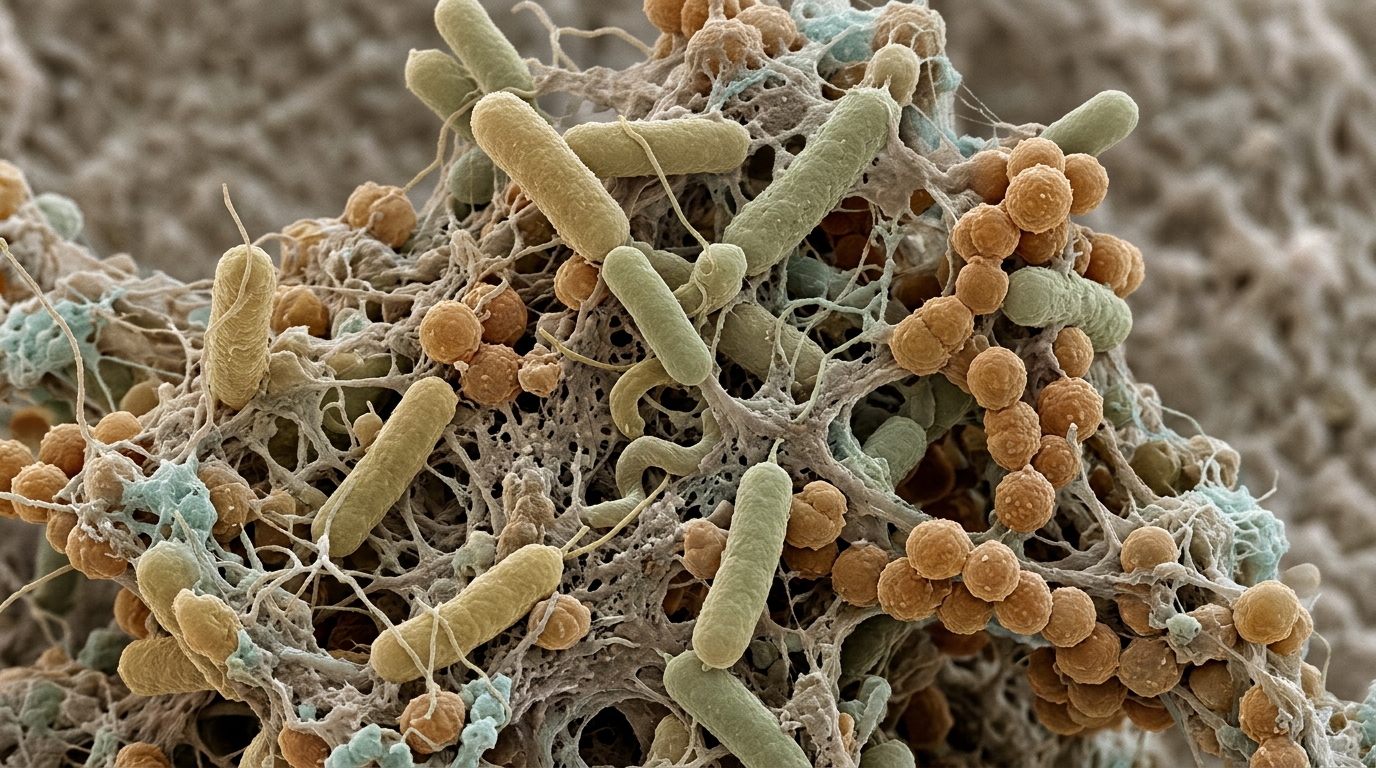
Image Credits: AI Generated

DOI: 10.3389/fcimb.2026.1877170

Keywords: zero-inflated, beta, mixture, model, marginal, mediation, analysis, compositional, microbiome, mediators, scientific research

Cite Scienmag News

Morgan Morrow. (November 7, 2026). New Statistical Model Improves Microbiome Causal Analysis. Scienmag. https://scienmag.com/new-statistical-model-improves-microbiome-causal-analysis/

Morgan Morrow. "New Statistical Model Improves Microbiome Causal Analysis." Scienmag, 7 November 2026, https://scienmag.com/new-statistical-model-improves-microbiome-causal-analysis/. Accessed 7 November 2026.

Morgan Morrow. "New Statistical Model Improves Microbiome Causal Analysis." Scienmag. November 7, 2026. https://scienmag.com/new-statistical-model-improves-microbiome-causal-analysis/

Tags: analysisbetaCompositionalmarginalmediationmediatorsmicrobiomemixturemodelScientific Researchzero-inflated
Share26Tweet16
Previous Post

Bayesian Survival Analysis Details Under-Five Child Mortality Patterns Across Ethiopia

Next Post

Motivational Interviewing Improves Dyadic Stroke Self-Care in Randomised Controlled Trial

Related Posts

Research report: Neuroimmune buffering reserve at the neurovascular unit: a CLDN5- and microglia-centred view of recurrent peripheral inflammation
Medicine

Research report: Neuroimmune buffering reserve at the neurovascular unit: a CLDN5- and microglia-centred view of recurrent peripheral inflammation

November 7, 2026
Evidence-Based Health Information Reaches More Patients When Primary Care Teams Talk Directly, Austrian Evaluation Finds
Medicine

Evidence-Based Health Information Reaches More Patients When Primary Care Teams Talk Directly, Austrian Evaluation Finds

November 7, 2026
Botswana HIV Study Finds High Pre-Frailty Rates
Medicine

Botswana HIV Study Finds High Pre-Frailty Rates

November 7, 2026
Probable Chlamydia abortus infection linked to severe pneumonia
Medicine

Probable Chlamydia abortus infection linked to severe pneumonia

November 7, 2026
KRAS Status Unlinked to Nutrition and Inflammation in Colorectal Cancer
Cancer

KRAS Status Unlinked to Nutrition and Inflammation in Colorectal Cancer

November 7, 2026
Screening Tool Evaluates Paternal Perinatal Affective Symptoms in Polish Fathers
Medicine

Screening Tool Evaluates Paternal Perinatal Affective Symptoms in Polish Fathers

November 7, 2026
Next Post
Motivational Interviewing Improves Dyadic Stroke Self-Care in Randomised Controlled Trial

Motivational Interviewing Improves Dyadic Stroke Self-Care in Randomised Controlled Trial

  • Mothers who receive childcare support from maternal grandparents show more optimized

    Mothers who receive childcare support from maternal grandparents show more parental warmth, finds NTU Singapore study

    27656 shares
    Share 11059 Tweet 6912
  • University of Seville Breaks 120-Year-Old Mystery, Revises a Key Einstein Concept

    1061 shares
    Share 424 Tweet 265
  • Bee body mass, pathogens and local climate influence heat tolerance

    682 shares
    Share 273 Tweet 171
  • Researchers record first-ever images and data of a shark experiencing a boat strike

    546 shares
    Share 218 Tweet 137
  • Groundbreaking Clinical Trial Reveals Lubiprostone Enhances Kidney Function

    531 shares
    Share 212 Tweet 133
Science

Embark on a thrilling journey of discovery with Scienmag.com—your ultimate source for cutting-edge breakthroughs. Immerse yourself in a world where curiosity knows no limits and tomorrow’s possibilities become today’s reality!

RECENT NEWS

  • Study Assesses Sustainability of Indonesia Rojolele Srinuk Rice Across Five Farming Dimensions
  • University student caregivers in Italy face invisible, unequal academic paths
  • Smartphones dominate learning for 3,290 Indonesian students, but weak internet holds them back
  • Research report: Neuroimmune buffering reserve at the neurovascular unit: a CLDN5- and microglia-centred view of recurrent peripheral inflammation

Categories

  • Agriculture
  • Anthropology
  • Archaeology
  • Athmospheric
  • Biology
  • Biotechnology
  • Blog
  • Bussines
  • Cancer
  • Chemistry
  • Climate
  • Earth Science
  • Editorial Policy
  • Marine
  • Mathematics
  • Medicine
  • Pediatry
  • Policy
  • Psychology & Psychiatry
  • Science Education
  • Science News
  • Social Science
  • Space
  • Technology and Engineering

Subscribe to Blog via Email

Enter your email address to subscribe to this blog and receive notifications of new posts by email.

Join 5,150 other subscribers

© 2025 Scienmag - Science Magazine

Welcome Back!

Login to your account below

Forgotten Password?

Retrieve your password

Please enter your username or email address to reset your password.

Log In
No Result
View All Result
  • HOME
  • SCIENCE NEWS
  • CONTACT US

© 2025 Scienmag - Science Magazine

Discover more from Science

Subscribe now to keep reading and get access to the full archive.

Continue reading

