


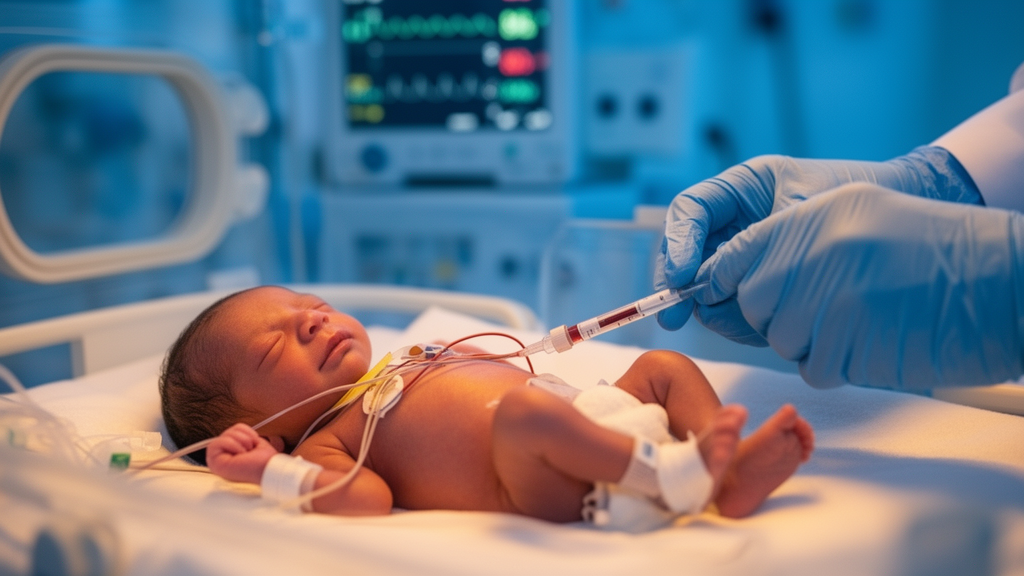
In the hushed environment of a neonatal intensive care unit, few threats are as insidious as acute kidney injury. The kidneys of extremely premature infants are immature, fragile, and extraordinarily vulnerable to the physiological storms that follow birth. Now, a commentary published in Pediatric Research by Joy Owens and Meredith P. Schuh shines a spotlight on the STARZ scoring system, a bedside tool designed to identify which very low birth weight neonates are most likely to develop acute kidney injury during their first days of life, before laboratory values confirm the damage has already begun.
Acute kidney injury, often abbreviated AKI, is far from rare in this population. Among infants born at less than 29 weeks of gestation, studies have reported incidence figures reaching as high as 38 to 48 percent. That staggering prevalence reflects the convergence of multiple hazards: immature nephrons that have not completed their developmental program, hemodynamic instability in the transitional period after delivery, and frequent exposure to medications that the developing kidney handles poorly. The consequences are not trivial. Neonates who experience early kidney injury face roughly threefold higher mortality and require substantially longer hospital stays than their peers who escape renal harm.
The clinical challenge has always been timing. Standard definitions of acute kidney injury rely on serum creatinine, a waste molecule that accumulates only after renal function has already deteriorated. In newborns, this creates a diagnostic lag of a day or more, because maternal creatinine must first clear from the infant’s circulation before the baby’s own values become interpretable. By the time a creatinine rise crosses the diagnostic threshold, the window for preventive intervention may have closed. This is precisely the gap that the STARZ score, first described by Schuh and colleagues in the Assessment of Worldwide Acute Kidney Injury Epidemiology in Neonates, or AWAKEN, dataset, was designed to close.
STARZ is an acronym that encodes its six components: Sex, birth weight Z-score, Risk of infection, and Zygosity, with each element contributing points toward a composite risk estimate. The score draws exclusively on information available within the first hours after birth, including whether the infant is male, how small the baby is relative to gestational age norms, the presence of maternal chorioamnionitis or other infection risk factors, and whether the infant is one of a multiple gestation. None of these variables requires a laboratory measurement of renal function, which means clinicians can calculate a risk category long before creatinine becomes informative.
In its original derivation, the STARZ score stratified neonates into low, medium, and high-risk categories with meaningful separation in observed AKI rates. The new commentary by Owens and Schuh addresses a question that determines whether such a tool can leave the research setting: does STARZ hold up when applied to fresh cohorts beyond the dataset in which it was born? Validation studies in very low birth weight populations, the authors note, are the essential next step, and the accumulating evidence suggests the score performs credibly when tested in independent samples of preterm infants.
The significance of external validation cannot be overstated. Prediction models are notoriously prone to optimism when evaluated on the very data used to build them, a phenomenon statisticians call overfitting. A score that discriminates beautifully in its derivation cohort may falter when confronted with patients from a different hospital, era, or case mix. For STARZ, the demonstration that its risk strata remain informative in very low birth weight neonates treated in the United States provides reassurance that the underlying physiology it captures, namely the interplay of developmental vulnerability, inflammatory stress, and perinatal compromise, is not an artifact of a single dataset.
What would change in practice if STARZ were adopted widely? The most immediate application is triage. Infants flagged as high risk on the first day of life could be targeted for intensified monitoring, including earlier and more frequent assessment of urine output, serum creatinine, and novel biomarkers such as urinary cystatin C or NGAL. Nephrotoxic medication regimens, particularly aminoglycosides and nonsteroidal anti-inflammatory drugs used to close patent ductus arteriosus, could be reviewed and adjusted in high-risk infants before renal injury becomes established. Fluid management strategies, which balance the dangers of dehydration against those of volume overload, could be calibrated to the individual infant’s renal risk profile rather than applied uniformly.
The commentary also situates STARZ within a broader movement toward precision neonatology. The AWAKEN registry, a multinational study that enrolled hundreds of neonates across dozens of centers, revealed that neonatal AKI is both common and underrecognized, with most cases missed by clinical teams relying on creatinine alone. Tools like STARZ represent the first generation of risk stratification instruments built specifically for this population, in contrast to adult-derived scores that translate poorly to the neonatal context. The authors emphasize that the score is intended to complement, not replace, clinical judgment and ongoing biochemical surveillance.
Limitations remain, and the commentary is candid about them. STARZ was derived from data collected in the 2010s, and neonatal care has evolved since then, with shifts in surfactant protocols, ventilation strategies, and antibiotic stewardship that could alter baseline AKI risk. The score also predicts risk at a population level rather than certifying certainty for any individual infant; a high-risk designation indicates elevated probability, not destiny. Furthermore, the components of STARZ capture perinatal and demographic factors but do not directly measure dynamic physiological variables such as evolving blood pressure trends or cumulative nephrotoxic exposure, which may refine prediction further in future iterations.
Nevertheless, the trajectory is clear and encouraging. A simple bedside calculation, performable within hours of birth using information already recorded in the chart, offers clinicians a head start against a complication that has historically been diagnosed only in retrospect. For the smallest and sickest infants, whose kidneys teeter between recovery and injury in their first week of life, that head start could translate into earlier interventions, fewer missed diagnoses, and ultimately improved survival. As validation evidence accumulates, STARZ may well become a standard element of the admission assessment for very low birth weight neonates, marking a quiet but consequential shift in how neonatal kidney disease is anticipated rather than merely treated.
Subject of Research: Risk prediction of acute kidney injury in very low birth weight preterm neonates using the STARZ scoring system
Article Title: STARZ Scoring in Very Low Birth Weight (VLBW) neonates: validation and risk-stratification for neonatal acute kidney injury
Article References: Owens, J., & Schuh, M. P. (2026). STARZ Scoring in Very Low Birth Weight (VLBW) neonates: validation and risk-stratification for neonatal acute kidney injury. Pediatric Research. https://doi.org/10.1038/s41390-026-05557-5
Image Credits: AI Generated
DOI: 10.1038/s41390-026-05557-5
Keywords: neonatal acute kidney injury, STARZ score, very low birth weight, preterm infants, AWAKEN study, risk prediction, serum creatinine, nephrotoxic medications, neonatal intensive care, kidney biomarkers, precision neonatology, external validation
Cite Scienmag News
Denise Maddox. (October 16, 2026). New STARZ Score Predicts Kidney Injury in Fragile Preterm Infants Within Hours of Birth. Scienmag. https://scienmag.com/new-starz-score-predicts-kidney-injury-in-fragile-preterm-infants-within-hours-of-birth/
Denise Maddox. "New STARZ Score Predicts Kidney Injury in Fragile Preterm Infants Within Hours of Birth." Scienmag, 16 October 2026, https://scienmag.com/new-starz-score-predicts-kidney-injury-in-fragile-preterm-infants-within-hours-of-birth/. Accessed 16 October 2026.
Denise Maddox. "New STARZ Score Predicts Kidney Injury in Fragile Preterm Infants Within Hours of Birth." Scienmag. October 16, 2026. https://scienmag.com/new-starz-score-predicts-kidney-injury-in-fragile-preterm-infants-within-hours-of-birth/


