


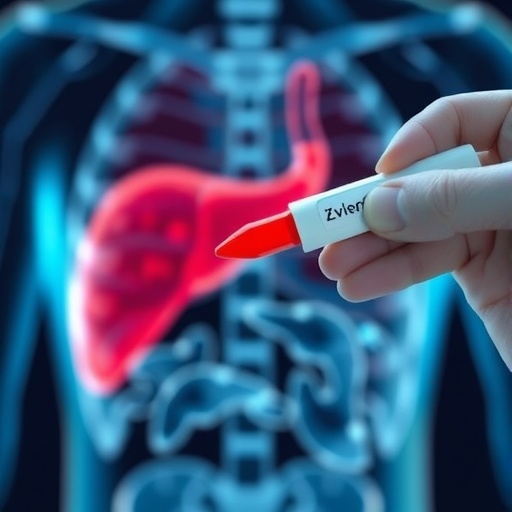
A groundbreaking study spearheaded by researchers at Karolinska Institutet has unveiled a transformative approach for predicting the risk of severe liver diseases using a simple and accessible blood test. Published in the prestigious journal The BMJ, this research introduces the CORE risk score, a highly accurate predictive model capable of identifying individuals at risk of liver cirrhosis and liver cancer within a decade. This advancement promises to revolutionize early diagnosis and intervention, particularly in primary care settings where initial medical consultations are most frequent.
The escalating prevalence of liver diseases globally has long posed challenges for healthcare providers, predominantly due to the silent progression of conditions like liver cirrhosis and hepatocellular carcinoma until they reach advanced stages. Traditional detection methods have been neither affordable nor sufficiently prompt, often relegating diagnoses to later stages when treatment options are limited and prognoses poor. Addressing this critical gap, the team led by Rickard Strandberg and Hannes Hagström developed the CORE model incorporating routine biochemical markers to stratify risk efficiently.
The CORE risk score is fundamentally built on five key variables: demographic factors—age and sex—and biochemical readings of three liver-specific enzymes measured routinely during standard health evaluations: aspartate aminotransferase (AST), alanine aminotransferase (ALT), and gamma-glutamyl transferase (GGT). These enzymes are biomarkers reflective of hepatocellular injury and cholestasis, central to liver function and indicative of underlying pathology when elevated. By integrating these parameters through sophisticated statistical modeling, the researchers crafted a robust predictive algorithm tailored for use in general populations.
At the heart of this innovation is the intent to facilitate early detection within primary healthcare frameworks. To this end, the team has made available an intuitive web-based calculator, accessible through www.core-model.com, designed for healthcare professionals to rapidly estimate a patient’s 10-year risk of developing severe liver disease. This digital tool stands to empower practitioners with an evidence-based method that complements conventional diagnostics, thus enabling proactive management and timely referrals.
The CORE model’s development drew upon longitudinal data encompassing over 480,000 individuals from Stockholm who underwent routine health assessments between 1985 and 1996. The extensive follow-up period of up to three decades allowed for a comprehensive evaluation of the model’s predictive capacity, revealing that approximately 1.5% of the population progressed to advanced liver disease or required liver transplantation within the monitored timeframe. Such a vast dataset underscored the model’s reliability and potential for widespread applicability.
Comparatively, the CORE risk score demonstrated superior predictive performance to existing tools, notably outperforming the widely used FIB-4 index. While FIB-4, which also incorporates liver enzymes and platelet counts, has been employed as a fibrosis marker, its efficacy for forecast risk in unselected populations has been limited. The CORE model’s capacity to distinguish at-risk individuals with an accuracy rate of 88% marks a significant leap forward, addressing prior limitations and reinforcing its clinical utility.
To validate these findings beyond the Swedish cohort, external validation studies were conducted across population samples in Finland and the United Kingdom. The model retained high predictive accuracy within these varied demographics, attesting to the robustness and adaptability of the CORE score across different healthcare contexts and ethnic backgrounds. However, further investigation is warranted in specific subgroups known to be at elevated risk, such as individuals with type 2 diabetes mellitus or obesity, to tailor the model’s precision in these vulnerable populations.
In the broader context of therapeutic advancements, this early risk stratification approach aligns with emerging pharmacological interventions targeting liver fibrosis and carcinogenesis. The availability of drug treatments capable of arresting or reversing liver damage is an evolving landscape, and timely identification of candidates through CORE facilitates optimal treatment initiation. Such integration of predictive diagnostics with targeted therapies could shift the paradigm from reactive to preventive hepatology.
Moreover, for the CORE model to achieve maximal impact in routine clinical practice, seamless integration with electronic health record (EHR) systems remains a crucial step. Automation of risk score calculations during standard blood test reviews would alleviate the burden on clinicians and improve adherence to screening recommendations. Efforts toward embedding this tool within digital health infrastructures are anticipated to enhance clinical workflow and patient outcomes.
The collaboration underpinning this research unitizes expertise from institutions in Sweden and Finland, including Karolinska Institutet, Helsinki University Hospital, Helsinki University, and the Finnish Institute for Health and Welfare. Financial support from the Swedish Research Council, Region Stockholm’s CIMED initiative, and the Swedish Cancer Society facilitated this high-impact study. Notably, the lead investigators maintain transparency regarding potential conflicts of interest, with no direct pharmaceutical ties influencing the present work.
This major scientific milestone holds promise not only for reducing the morbidity and mortality associated with advanced liver diseases but also for alleviating the economic burden on healthcare systems through earlier interventions. As the global health community grapples with liver disease epidemics fueled by metabolic and viral etiologies, innovations like CORE represent a beacon of hope toward effective preventive care.
Looking ahead, the adoption of the CORE risk score in primary care protocols could transform liver disease management paradigms. Coupled with public health initiatives promoting liver health awareness and lifestyle modifications, this diagnostic advancement underscores the importance of integrating precision medicine principles into everyday clinical practice, ultimately improving patient prognoses and quality of life.
News Publication Date: 29-Sep-2025
Web References:
www.core-model.com
https://doi.org/10.1136/bmj-2024-083182
References:
Strandberg R, Åberg F, Asteljoki JV, et al. Use of new CORE risk score to predict 10 year risk of liver cirrhosis in general population: population based cohort study. The BMJ. 2025;doi:10.1136/bmj-2024-083182.
Cite Scienmag News
Nathaniel Bowman. (September 29, 2025). New Simple Test Accurately Predicts Risk of Severe Liver Disease. Scienmag. https://scienmag.com/new-simple-test-accurately-predicts-risk-of-severe-liver-disease/
Nathaniel Bowman. "New Simple Test Accurately Predicts Risk of Severe Liver Disease." Scienmag, 29 September 2025, https://scienmag.com/new-simple-test-accurately-predicts-risk-of-severe-liver-disease/. Accessed 3 September 2026.
Nathaniel Bowman. "New Simple Test Accurately Predicts Risk of Severe Liver Disease." Scienmag. September 29, 2025. https://scienmag.com/new-simple-test-accurately-predicts-risk-of-severe-liver-disease/


