


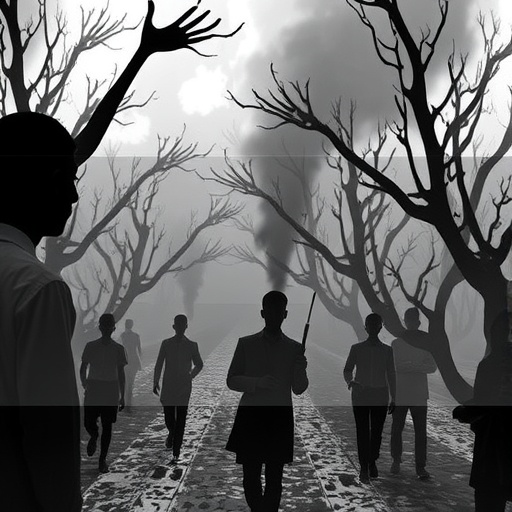
The path to genocide is insidious and often begins long before violent acts are visible to the public eye. It unfolds gradually through a sequence of systematic human rights violations that erode societal protections and target specific minority groups. These early indicators, though subtle, are critical warning signals that demand urgent attention from governments, civil society, and international watchdogs to prevent atrocities on a mass scale.
Initial signs of this perilous trajectory often include the deterioration of labor rights and the gradual undermining of the judicial system’s independence, stripping citizens of their fundamental protections. Once law enforcement and prison officials engage routinely in brutality, unchecked by impartial courts, states pave the way for escalating repression. This pattern follows an alarming progression, whereby freedoms essential to democratic participation—such as free speech and the right to assemble—are curtailed selectively against marginalized communities.
Dr. David Cingranelli, a Political Science professor and co-director of the Human Rights Institute at Binghamton University, highlights that genocides never emerge in isolation but are the apex of chronic and widespread violations of human dignity. His collaborative research with Dr. Skip Mark, published in the Journal of Comparative Policy Analysis, parses decades of data to reveal a predictable human rights degradation sequence that anticipates outbreaks of mass violence and genocide.
Their analysis leverages comprehensive annual human rights reports procured by U.S. embassies globally, starting with reliable data collected under the Carter administration in the early 1980s. These reports meticulously document state conduct toward citizens at risk, including political imprisonment, restrictions on unionizing rights, and extrajudicial killings. Such embassies employ designated human rights officers who gather detailed, on-the-ground intelligence, corroborating it through direct engagement with local officials, including prison wardens.
According to Cingranelli and Mark, the human rights violation sequence begins with the erosion of fair trial guarantees, followed by the rise of torture and state-sanctioned suffering. This initial phase is succeeded by the suppression of collective bargaining and independent judiciary functions, steadily advancing towards curbs on free expression and political association. Ultimately, extrajudicial killings represent the grim climax of this cascade, signaling the onset of broad state-led atrocities.
Intriguingly, the research observes that restrictions on freedom of movement typically do not precede mass killings, emerging only after the onset of widespread extrajudicial violence. Similarly, the diminution of women’s social and economic rights does not consistently fit into this sequence, likely due to the complexity of cultural norms influencing gender roles across different societies. These findings underscore the need for continuous refinement of the theoretical model to encapsulate diverse sociopolitical realities and ensure comprehensive predictive power.
The temporal dimension of these human rights violations varies significantly across cases. For example, the catastrophic genocide against the Rohingya minority in Myanmar unfolded over more than a decade, with accelerating abuses clearly documented years before mass killings began. In contrast, some conflicts, such as the Serbia and Montenegro war, deviate from the model’s predictions, highlighting the necessity for context-specific analysis.
The relentless increase in state-sponsored atrocities worldwide, with a record 47 incidents documented in 2022 alone, reflects troubling global trends. Factors contributing to this rise include growing political polarization, heightened xenophobia, and a societal willingness to empower governments to prioritize social order over individual freedoms. This dynamic is especially pronounced in Western democracies, where rising authoritarian tendencies threaten to normalize violence against minority populations under the guise of security and stability.
Cingranelli stresses that the human rights framework serves as a critical early warning mechanism. By systematically tracking violations such as political imprisonment and judicial independence erosion, activists and policymakers can anticipate potential escalations toward mass violence. This data-driven approach promises to inform targeted interventions designed to halt the progression before atrocities reach their deadly apex.
Despite its robustness, the research acknowledges current limitations, notably the politicization and inconsistencies in post-2023 U.S. State Department human rights reporting, which compromise data comparability and accuracy. Nonetheless, the availability of nearly 40 years of prior data, complemented by alternative sources such as Amnesty International, provides a rich foundation for ongoing analysis and refinement of atrocity prediction models.
Looking forward, Cingranelli, Mark, and their colleagues plan to synthesize their extensive research in an upcoming book aimed at empowering human rights defenders and policymakers with practical tools to identify and disrupt the trajectory toward genocide. By illuminating the sequential nature of abuses, their work offers a scientific basis for preemptive action, emphasizing the moral imperative to respond decisively to early human rights violations.
Ultimately, their findings reveal a sobering insight: societies that tolerate incremental human rights erosion risk descending into cycles of intensified repression and mass violence. Recognizing and addressing these warning signs early is vital to preserving democratic norms, protecting vulnerable minorities, and upholding the universal principles of human dignity and justice.
Cite Scienmag News
Courtney Benton. (November 4, 2025). New Research Reveals Human Rights Violations Often Precede Mass Atrocities. Scienmag. https://scienmag.com/new-research-reveals-human-rights-violations-often-precede-mass-atrocities/
Courtney Benton. "New Research Reveals Human Rights Violations Often Precede Mass Atrocities." Scienmag, 4 November 2025, https://scienmag.com/new-research-reveals-human-rights-violations-often-precede-mass-atrocities/. Accessed 4 September 2026.
Courtney Benton. "New Research Reveals Human Rights Violations Often Precede Mass Atrocities." Scienmag. November 4, 2025. https://scienmag.com/new-research-reveals-human-rights-violations-often-precede-mass-atrocities/


