


CLEVELAND—Researchers at Case Western Reserve University’s School of Medicine believe they have found information that could lead to developing new treatment options for people with metastatic colorectal cancer.

Credit: Case Western Reserve University
CLEVELAND—Researchers at Case Western Reserve University’s School of Medicine believe they have found information that could lead to developing new treatment options for people with metastatic colorectal cancer.
With a new five-year, $1.84 million grant from the National Cancer Institute of the National Institutes of Health, they hope to take a step closer by studying how a protein (LRG1) involved in colorectal cancer growth functions.
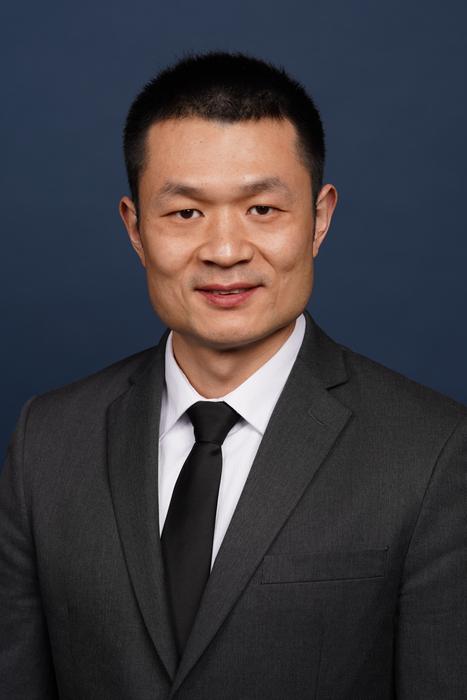
“The goal of this research is to identify the precise drivers of cancer cell proliferation and survival, specifically in metastatic colorectal cancer,” said Rui Wang, an assistant professor in the School of Medicine’s Department of Surgery and the study’s lead researcher. “By understanding these mechanisms, we hope to develop new therapies that can block tumor growth and improve outcomes for patients.”
The study
The liver is the main organ where colorectal cancer cells proliferate. Clinical studies show patients with liver metastases from pancreatic, colon and other cancers don’t respond to medication as well as those without liver growth.
LRG1 is extensively dispersed throughout very small, specific areas of many cancers and contributes to vascular dysfunction. Wang recently discovered that, when secreted from the liver, the protein promotes colon cancer-cell growth. But researchers don’t know why.
According to Wang, his lab is working to find out why patients who have liver growth do not fare as well as those who do not. The lab has already made progress in understanding how the liver fosters the growth of cancer cells.
“Our research involves using an antibody to block communications between the liver and colon cancer cells,” Wang said. “In experimental models, preliminary data suggests that this approach could effectively block the growth of metastatic tumors, which would be encouraging for those afflicted with this terrible disease.
###
Case Western Reserve University is one of the country’s leading private research institutions. Located in Cleveland, we offer a unique combination of forward-thinking educational opportunities in an inspiring cultural setting. Our leading-edge faculty engage in teaching and research in a collaborative, hands-on environment. Our nationally recognized programs include arts and sciences, dental medicine, engineering, law, management, medicine, nursing and social work. About 6,000 undergraduate and 6,300 graduate students comprise our student body. Visit case.edu to see how Case Western Reserve thinks beyond the possible.
Cite Scienmag News
Nathaniel Bowman. (April 16, 2024). New research from Case Western Reserve University aims to block tumor growth in colorectal cancer patients. Scienmag. https://scienmag.com/new-research-from-case-western-reserve-university-aims-to-block-tumor-growth-in-colorectal-cancer-patients/
Nathaniel Bowman. "New research from Case Western Reserve University aims to block tumor growth in colorectal cancer patients." Scienmag, 16 April 2024, https://scienmag.com/new-research-from-case-western-reserve-university-aims-to-block-tumor-growth-in-colorectal-cancer-patients/. Accessed 4 September 2026.
Nathaniel Bowman. "New research from Case Western Reserve University aims to block tumor growth in colorectal cancer patients." Scienmag. April 16, 2024. https://scienmag.com/new-research-from-case-western-reserve-university-aims-to-block-tumor-growth-in-colorectal-cancer-patients/

