


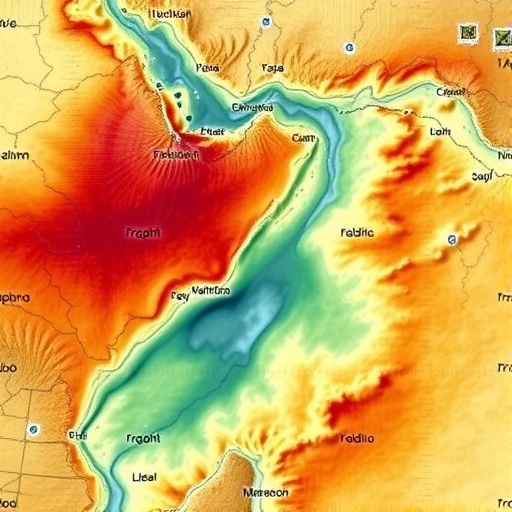
In a groundbreaking study, researchers have shed light on the historical narrative of the Kanem-Borno region in Chad through advanced luminescence and radiocarbon dating techniques. This comprehensive investigation led by authors C. Magnavita, S. Lindauer, and A.C. Adjbane offers critical insights into the chronology of elite settlements, emphasizing the construction of fired-brick sites that have long remained shrouded in mystery. By employing Bayesian chronological modeling, the study aims to create a clearer temporal framework of these ancient communities, which thrived in a region now known for its arid landscapes but once flourished with vibrant civilizations.
The authors focus on fired-brick structures indicative of elite habitation in the Kanem-Borno region, revealing the sophistication and resilience of their builders. These archaeological sites are not merely remnants of the past; they symbolize the cultural and socio-political complexities of a society that navigated the challenges posed by their environment. The research details the various methodologies employed, highlighting how luminescence dating allows for the determination of the last time quartz or feldspar minerals were exposed to sunlight, effectively providing a starting point for the chronological narrative of these structures.
In conjunction with luminescence dating methods, radiocarbon dating serves as an essential tool in the researchers’ arsenal, allowing for direct dating of organic materials found within the sediment layers adjacent to the brick constructions. This dual approach enhances the reliability of the dating by cross-referencing results from both methods to ascertain a more accurate timeline. The integration of these advanced techniques not only fortifies the research’s credibility but also pushes the boundaries of archaeological methodologies, offering a novel perspective on time and space in ancient settlement studies.
The Bayesian chronological modeling used in this study represents a significant leap forward in prehistoric archaeology. This statistical approach allows researchers to create a more probabilistic framework for understanding when specific events occurred, rather than relying solely on linear timelines and fixed dates. As a result, it cultivates a more nuanced understanding of the interplay between environmental factors, cultural evolution, and sociopolitical dynamics throughout the ages. The insights gained from this modeling provide a foundation for future archaeological inquiries into the Kanem-Borno region, as well as other areas of Africa where similar methodologies might be applied.
Throughout the investigation, Magnavita and his colleagues emphasize the importance of incorporating local historical narratives and indigenous knowledge into archaeological frameworks. They argue that understanding the past requires engaging deeply with the cultural contexts surrounding these sites. This relational perspective not only enriches the research but also fosters a greater appreciation for the complexity and continuity of human societies over the millennia.
One of the striking outcomes of this research is the identification of periods of significant construction activity marked by increased political and economic stability in the Kanem-Borno region. These periods reflect a time of prosperity that facilitated the building of grand structures, indicative of elite lifestyles. However, the study also uncovers moments of crisis, hinting at environmental stresses and societal upheaval that could have impacted settlement patterns. Such findings echo broader themes in the anthropological discourse surrounding the resilience and adaptability of human communities in the face of challenges.
The results from this pioneering study not only contribute to the existing body of archaeological knowledge but also open up new avenues for interdisciplinary collaboration. As historians, environmental scientists, and archaeologists engage with the findings presented, the discourse surrounding ancient Kanem-Borno can evolve to incorporate multifaceted viewpoints, ultimately enriching our collective understanding of historical processes. It is a reminder of the interconnectedness of human history, ecology, and culture—elements that shape our world today.
Looking forward, the authors encourage further exploration into lesser-known regions of Chad and neighboring countries that may harbor rich archaeological deposits. By applying similar dating methodologies to unexplored sites, researchers can potentially unearth new facets of history and further enrich the tapestry of human civilization across Africa. The urgency of this call to action resonates, especially considering the ongoing threats to cultural heritage posed by climate change and urbanization, which may accelerate the loss of sites before they can be thoroughly studied.
In conclusion, the findings of Magnavita, Lindauer, and Adjbane present a compelling narrative about the advanced societies that once thrived in Kanem-Borno, emphasizing their architectural accomplishments and the complex socio-political systems that supported them. Through refined analytical techniques and a commitment to interdisciplinary methodologies, this study pioneers new pathways in understanding the past, ultimately igniting curiosity and igniting implications that extend far beyond the confines of archaeology.
This research serves as a reminder of the profound intricacies of human history and the lasting impacts of ancient cultures on contemporary society. It underscores the importance of preserving archaeological sites as critical links to understanding our shared human heritage. As such, the study not only illuminates the past but also calls for responsible stewardship of the places where history continues to whisper through the sands of time.
The narrative forged by these researchers paves the path for future studies, underscoring the role of science in revealing the often-overlooked dimensions of history. As luminescence and radiocarbon dating techniques continue to evolve, the potential for new discoveries grows ever larger, promising to expand our understanding and appreciation of civilizations that have shaped the cultural landscape of regions across the globe.
Cite Scienmag News
Courtney Benton. (January 24, 2026). New Radiocarbon Dates Revolutionize Kanem-Borno Chronology. Scienmag. https://scienmag.com/new-radiocarbon-dates-revolutionize-kanem-borno-chronology/
Courtney Benton. "New Radiocarbon Dates Revolutionize Kanem-Borno Chronology." Scienmag, 24 January 2026, https://scienmag.com/new-radiocarbon-dates-revolutionize-kanem-borno-chronology/. Accessed 3 September 2026.
Courtney Benton. "New Radiocarbon Dates Revolutionize Kanem-Borno Chronology." Scienmag. January 24, 2026. https://scienmag.com/new-radiocarbon-dates-revolutionize-kanem-borno-chronology/


