


Intranasal vaccination has long been viewed as one of the most promising frontiers in immunology, offering the ability to stimulate mucosal immunity directly at the site where respiratory pathogens first make contact with the human body. Unlike conventional injection-based vaccines that primarily induce circulating IgG antibodies, nasal delivery can trigger secretory IgA production and activate interconnected mucosal-associated lymphoid tissues, potentially reducing viral transmission at its very source. However, translating this concept from laboratory bench to clinical reality has proven far more difficult than many anticipated, largely because the delivery method itself remains a critical and often underestimated variable in the entire vaccination equation.
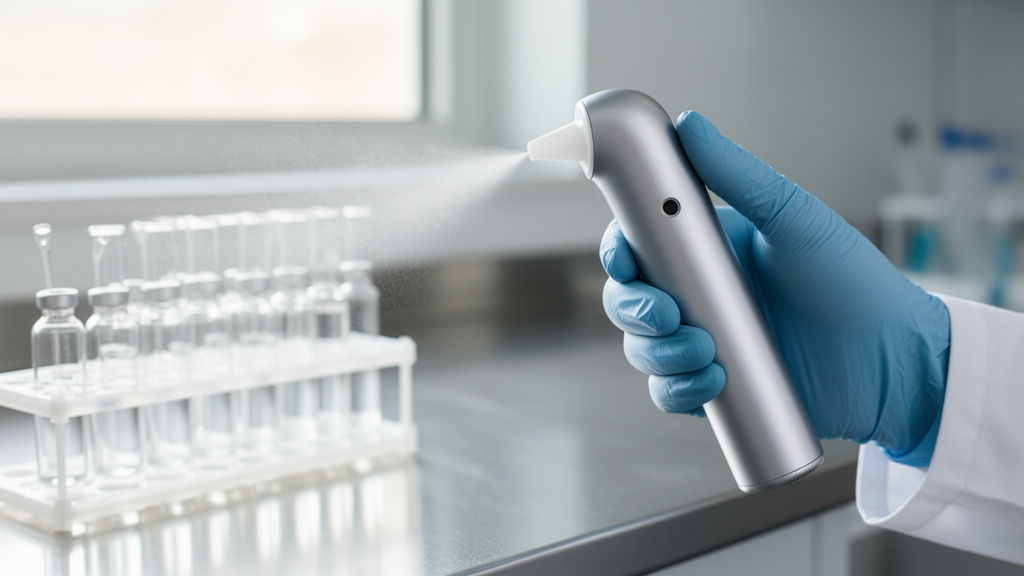
A team of researchers from Aptar Pharma, INRAE, Université de Tours, and Lovaltech has now published a comprehensive proof-of-concept study in Frontiers in Drug Delivery that addresses this challenge head-on. The work, led by Gonçalo Farias and Mathieu Epardaud, describes the engineering and validation of a nasal spray device specifically designed for human nasal immunization. The device, known as the BiVax 200 µL intranasal atomiser, was developed to deliver a broad, homogeneous spray confined entirely within the nasal cavity, thereby avoiding spill-over into the lower respiratory tract and minimising any risk of pulmonary exposure that could provoke adverse inflammatory responses.
The scientific rationale behind this engineering effort stems from a fundamental anatomical problem. In classical rodent preclinical models such as mice and hamsters, intranasal instillation with a micropipette results in deposition in both the nasal cavity and the upper lungs, a phenomenon aggravated by parameters such as the volume delivered and the anaesthesia used. This inadvertent pulmonary exposure can artificially enhance immune responses beyond what a simple nasal immune reaction would produce, creating a misleading picture of safety and efficacy. In humans, however, a strictly nasal delivery must be prioritised to avoid potential adverse effects such as uncontrolled chronic pulmonary inflammation or cytokine storm, making the transition from animal models to human application particularly treacherous.
To overcome these limitations, the researchers designed their validation strategy around two complementary approaches. First, they employed in vitro human nasal cavity replicas, known as nasal casts, which were constructed from computed tomography images of a plastinated head model and previously validated as predictive tools for nasal aerosol deposition. Second, they utilised an in vivo rabbit model, a species widely accepted by regulatory agencies for preclinical vaccine testing and already approved for regulatory toxicity assays. This dual validation framework was deliberately chosen to bridge the gap between conventional rodent models, which suffer from significant anatomical and physiological differences compared to human nasal structure and airflow dynamics, and the eventual human clinical setting.
The vaccine formulation itself represents an equally sophisticated piece of bioengineering. LVT-001, the drug substance under investigation, is a heteromultimeric recombinant protein encoding both the spike and nucleoprotein of SARS-CoV-2. The vaccine fusion protein is composed of two polypeptide chains that self-assemble into a structure containing six spike proteins and two nucleoproteins, a trimerization strategy shown to enhance both vaccine efficacy and structural stability. This antigen is combined with an original cationic nanocarrier called the muco-excipient, composed of positively charged polymeric sugar matrix particles with an average diameter of 35 to 70 nanometres, at a ratio of three nanocarriers to one antigen within a phosphate-buffered saline formulation.
A critical prerequisite before evaluating any delivery device is confirming that the aerosolisation process itself does not compromise the integrity of the biological product. The researchers subjected the drug product to a rigorous analytical toolkit before and after aerosolisation, including protein quantification by bicinchoninic acid assay, structural assessment by native polyacrylamide gel electrophoresis, particle size distribution measurement by dynamic light scattering, and biological activity evaluation through indirect competitive ELISA targeting both the spike and nucleoprotein domains. Across all analyses, the drug product remained stable post-aerosolisation, with only a minor increase in polydispersity index and Z-average that the authors attribute to analytical and sample variability rather than any genuine degradation of the active component.
The spray characterisation results revealed a droplet size distribution with average Dv10, Dv50, and Dv90 values of 18, 32, and 57 micrometres respectively, with only 1.5 percent of droplets below 10 micrometres. This distribution is significant because droplets smaller than 10 micrometres are more likely to reach the lower respiratory tract, while larger droplets tend to deposit within the nasal cavity. The low fraction of sub-10-micrometre droplets, combined with a broad spray angle of 58 degrees, ensures that the delivered dose remains confined to the nasal structures without pulmonary exposure, a finding confirmed by the complete absence of detectable deposition on a filter placed after the nasal cast model.
Regional deposition studies using the nasal cast model revealed that administration parameters significantly influence where the spray lands within the nasal cavity. A multivariate analysis demonstrated that the insertion angle, insertion depth, and model position all had statistically significant impacts on regional deposition patterns, while airflow did not significantly affect the results. At a fixed insertion depth of 15 millimetres, increasing the administration angle from 30 to 50 degrees led to a marked increase in anterior region deposition from 15 to 46 percent, accompanied by a substantial reduction in posterior deposition, particularly in the lower turbinates where average deposition decreased from 28 to just 4 percent. Conversely, increasing the insertion depth from 2 to 15 millimetres significantly reduced anterior deposition from 73 to 15 percent, with the optimised configuration predominantly localising the dose in the lower and middle turbinates.
The in vivo rabbit experiments provided compelling evidence for the superiority of the BiVax device over conventional micropipette administration. Fifteen minutes post-administration, the total radiant efficiency measured within the regions of interest was approximately 50 percent higher following BiVax delivery compared to micropipette instillation. More importantly, the distribution pattern was dramatically more homogeneous with the spray device, with about 31 percent of the formulation detected in the nasal and maxillary turbinates when delivered with BiVax, compared to only 11 percent with micropipette administration. This unbalanced distribution with the micropipette, characterised by high concentrations in the ethmoid turbinates and pharyngeal area, was attributed to the administration procedure during which the rabbit was held in an inverted position.
The implications of this work extend well beyond a single COVID-19 vaccine candidate. The researchers deliberately limited deposition in the olfactory epithelium and paranasal sinuses, because material in the former raises concerns of central nervous system exposure, while retention in the latter may provoke sinusitis or chronic irritation. This safety consideration is particularly relevant given past clinical failures, such as the withdrawal of the intranasal influenza vaccine Nasalflu following reports of Bell’s palsy, a leading hypothesis for which involved retrograde axonal transport of an E. coli heat-labile enterotoxin adjuvant from the olfactory epithelium to the peripheral facial nerve. By demonstrating negligible olfactory deposition and confirming the absence of neurological effects in rabbit toxicity studies, the team has addressed one of the most persistent safety concerns in the field. The device is now being used in an ongoing Phase I clinical trial, and the researchers argue that this transitory delivery platform offers a scalable, safe, and formulation-compatible solution that could reinforce mucosal immunization strategies across diverse indications, facilitating the translation of nasal vaccines from preclinical research to widespread clinical application.
Subject of Research: Intranasal vaccine delivery device engineering
Article Title: Engineering a medical device for intranasal immunisation: ensuring targeted delivery and formulation stability
Article References: Engineering a medical device for intranasal immunisation: ensuring targeted delivery and formulation stability. (n.d.). https://doi.org/10.3389/fddev.2026.1875011
Image Credits: AI Generated
DOI: 10.3389/fddev.2026.1875011
Keywords: intranasal vaccination, nasal spray device, BiVax, mucosal immunity, NALT, SARS-CoV-2 vaccine, nanocarrier, formulation stability, nasal cast, targeted delivery, aerosolisation, vaccine delivery
Cite Scienmag News
Kristina Jarvis. (October 16, 2026). New Nasal Spray Device Delivers Vaccines Precisely While Preserving Formulation Stability. Scienmag. https://scienmag.com/new-nasal-spray-device-delivers-vaccines-precisely-while-preserving-formulation-stability/
Kristina Jarvis. "New Nasal Spray Device Delivers Vaccines Precisely While Preserving Formulation Stability." Scienmag, 16 October 2026, https://scienmag.com/new-nasal-spray-device-delivers-vaccines-precisely-while-preserving-formulation-stability/. Accessed 16 October 2026.
Kristina Jarvis. "New Nasal Spray Device Delivers Vaccines Precisely While Preserving Formulation Stability." Scienmag. October 16, 2026. https://scienmag.com/new-nasal-spray-device-delivers-vaccines-precisely-while-preserving-formulation-stability/


