


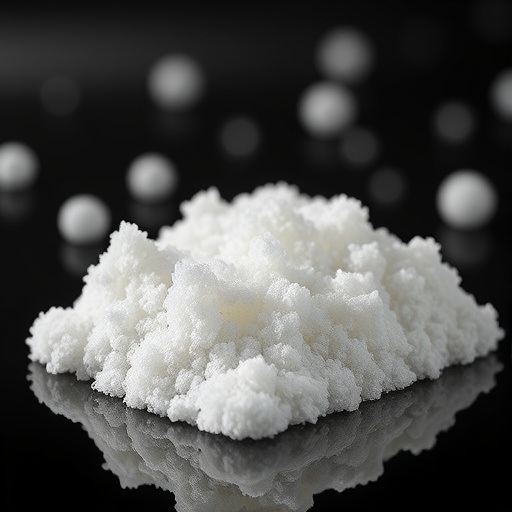
Fluoride contamination in groundwater is an increasingly pressing issue worldwide, posing significant health risks to populations reliant on this vital resource. Researchers have long sought effective and innovative methods to remove fluoride ions from water sources, and a groundbreaking study has emerged that leverages the unique properties of powder-nano magnesium oxide (MgO) as a novel adsorbent. Authored by Ou, JH., Chen, SC., and Lin, WZ, this research offers an exciting glimpse into future potential for addressing fluoride pollution in groundwater.
The study revolves around the development of powder-nano MgO as an adsorbent material aimed at removing fluoride from groundwater. Magnesium oxide nanoparticles have shown promise due to their high surface area and effective chemical properties, making them superior candidates for adsorbents compared to conventional materials. The study meticulously explores the mechanisms behind the fluoride removal process and provides insights into how nano-MgO can outperform traditional methods in terms of efficiency and effectiveness.
The researchers began by synthesizing nano-MgO using a wet chemical method, which is noted for its simplicity and scalability. By controlling the synthesis conditions, they achieved a highly porous structure, which is crucial for enhancing the surface area available for ion exchange. This porosity allows the nano-MgO to interact more effectively with fluoride ions, promoting superior adsorption rates. Through rigorous characterization methods, the authors demonstrated that the synthesized nanoparticles possess distinct morphological and compositional features that facilitate fluoride retention.
In conducting their experiments, the research team focused on various factors affecting fluoride adsorption capacity. These include pH levels, contact time, and initial fluoride concentration in water samples. Their findings revealed that the optimal pH for fluoride adsorption was within a specific range, emphasizing the importance of environmental parameters in water treatment applications. Additionally, the research showcased how extending contact time could lead to higher adsorption rates, providing crucial insights for practical applications in real-world scenarios.
Moreover, the study delves into the underlying mechanisms of fluoride removal through magnesium oxide adsorption. It explains that fluoride ions are attracted to the positively charged sites on the nano-MgO surface, an interaction driven by electrostatic forces. The authors highlight that this process not only effectively reduces fluoride levels but can also lead to the potential recovery of additional valuable minerals within the treatment framework, enhancing the sustainable utility of groundwater resources.
The researchers further examined the regeneration potential of the nano-MgO adsorbent, a significant factor influencing its usability in long-term applications. By testing various regeneration techniques, they demonstrated that the adsorbent could be reused multiple times without significant loss in adsorption capacity. This aspect of the research holds considerable promise for developing cost-effective treatments for fluoride removal, making it an attractive option for water treatment facilities facing rising demands.
To evaluate the effectiveness of the powder-nano MgO adsorbent in real-world conditions, the researchers extended their studies to field samples. They showcased how the adsorbent performed in diverse water quality scenarios, including variations in ionic strength and competing anions. These real-life applications illuminated the practical implications of their findings and underscored the potential impact of their work on meeting global water safety standards.
The implications of this research are far-reaching, particularly in areas where fluoride contamination is pervasive. As communities grapple with the health effects of high fluoride levels, the application of nano-MgO adsorption presents a viable solution. The study advocates for the adoption of this innovative technology in water treatment processes, particularly in regions with limited access to safe drinking water.
Furthermore, this research aligns with broader global efforts to promote sustainable development. By providing a pathway for effective fluoride removal while considering regeneration and sustainability, the authors contribute to addressing the United Nations’ Sustainable Development Goals related to clean water and sanitation. As the global community continues to prioritize environmental protection, studies like this are instrumental in guiding future policies and practices around water quality management.
In summary, the development of powder-nano magnesium oxide as a novel adsorbent for fluoride removal marks a significant advancement in environmental science and water treatment technology. This research not only highlights the material’s effectiveness but also lays the groundwork for future innovation in water purification solutions. As the demand for safe drinking water continues to grow, this innovative approach could play a crucial role in ensuring communities have access to the clean water they need.
Cite Scienmag News
Violet Maxwell. (November 20, 2025). New Nano MgO Adsorbents for Fluoride Removal. Scienmag. https://scienmag.com/new-nano-mgo-adsorbents-for-fluoride-removal/
Violet Maxwell. "New Nano MgO Adsorbents for Fluoride Removal." Scienmag, 20 November 2025, https://scienmag.com/new-nano-mgo-adsorbents-for-fluoride-removal/. Accessed 3 September 2026.
Violet Maxwell. "New Nano MgO Adsorbents for Fluoride Removal." Scienmag. November 20, 2025. https://scienmag.com/new-nano-mgo-adsorbents-for-fluoride-removal/


