


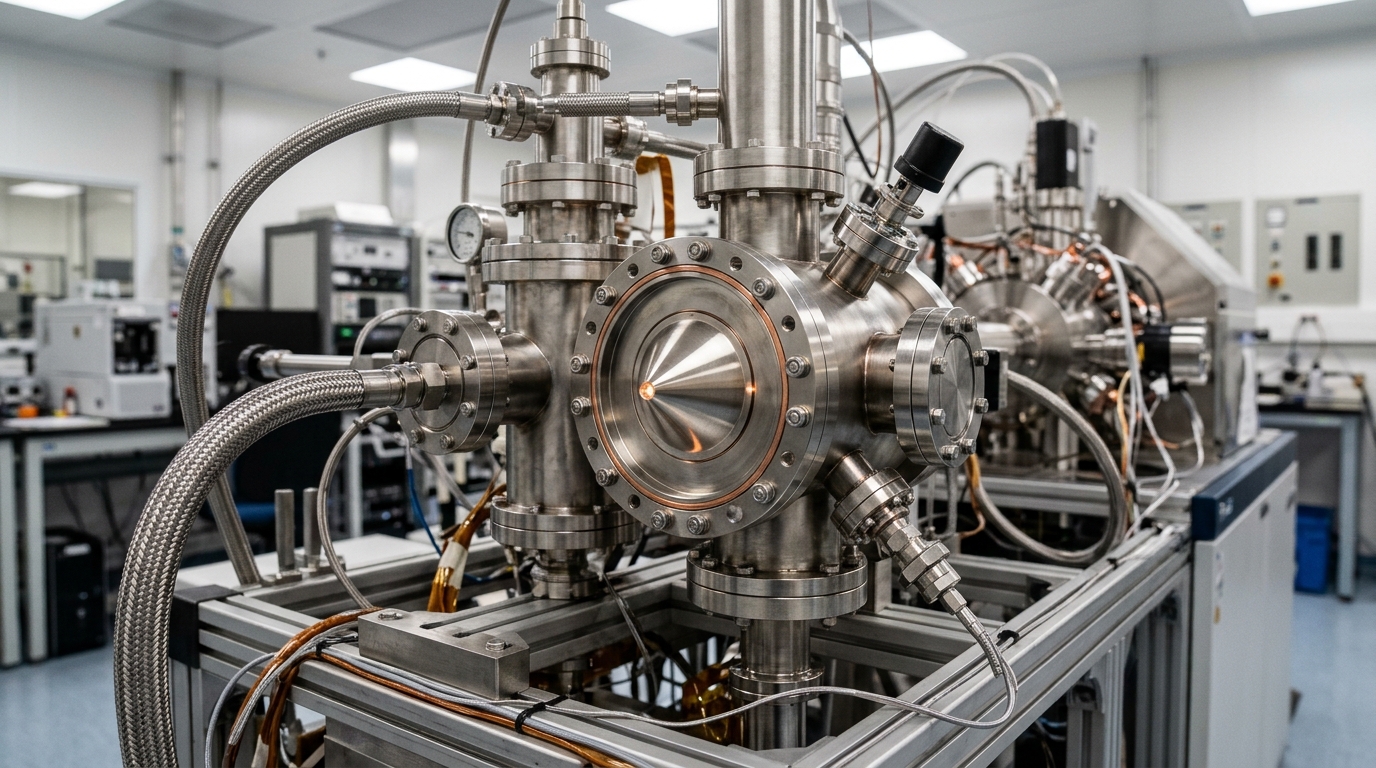
Researchers published a systematic evaluation in Green Technology, Resilience, and Sustainability demonstrating that the ICP-MultiQuad-MS/MS instrument offers superior capabilities for analyzing single nanoparticles compared to standard single quadrupole systems. The study, conducted by Soumya Gupta, Ahmed Allal, and Hugues Preud’Homme, focuses on the technical performance of the NexION 5000 multi-quadrupole system. This instrument is designed to address the growing need for accurate detection and quantification of nanomaterials in environmental systems. The expansion of nanotechnology in consumer products and industrial applications has increased concerns regarding the ecological risks associated with these tiny particles. Accurate characterization is essential for assessing how these materials interact with environmental health systems. The research provides a detailed comparison between the new multi-quadrupole technology and the current state of the art in inductively coupled plasma mass spectrometry.
The primary challenge in nanoparticle analysis lies in detecting elements that suffer from high spectral interference. Standard single quadrupole instruments often struggle to distinguish between the signal of a target element and background noise or other elements with similar mass-to-charge ratios. The ICP-MultiQuad-MS/MS utilizes four quadrupoles to improve the reliability of reaction cell methods. This configuration allows for the rapid detection of highly interfered elements such as iron, silicon, and titanium. By using multiple gas modes, including reaction and collision cells, the instrument can effectively remove interferences that would otherwise obscure the signal. This capability is crucial for analyzing composite nanomaterials with complex elemental compositions in aqueous suspensions.
The study employed two main instruments for comparison: the ICP-MultiQuad-MS/MS NexION 5000 from Perkin Elmer and the ICP-CRC-MS 7900 series from Agilent Technologies. Both instruments were operated in single-particle mode to analyze various nanoparticle standards. The researchers tested spherical, core-shell, and non-spherical particles, including cubes and rods. The elements analyzed ranged from those with high sensitivity and low interference, such as gold, silver, and platinum, to those with high interference and lower sensitivity, such as iron, silicon, and titanium. The experimental setup included specific parameters for dwell time and settling time to ensure accurate data acquisition.
In the determination of particle size, both instruments showed comparable results for non-interfering spherical nanoparticles. For gold and platinum mono-element spherical particles, the sizes determined by both instruments were close to the values provided by the supplier using transmission electron microscopy. However, differences emerged when analyzing core-shell structures. For silver-core silica-shell particles, the Agilent instrument reported a size approximately 3 nanometers less than the multi-quadrupole system. The software in both instruments assumes that the entire nanoparticle is composed of the same element, which can lead to inaccuracies when analyzing multi-element structures. The multi-quadrupole system was able to provide values for shells in cases where the single quadrupole system failed to detect significant peaks.
For non-spherical nanoparticles, the multi-quadrupole instrument demonstrated slightly better accuracy in calculating dimensions. For gold nanorods, the calculated length and width were closer to the manufacturer’s values compared to the single quadrupole system. Similarly, for silver cubes, the multi-quadrupole system provided a size within the error range of the transmission electron microscopy data, whereas the single quadrupole system fell outside this range. The analysis of unknown shape nanoparticles, such as silica and titanium dioxide, highlighted the limitations of the single quadrupole system. Only the multi-quadrupole instrument could provide measurable values for these highly interfering elements, although the results for silica were smaller than expected due to software assumptions about particle shape and mass fraction.
The study also examined the determination of particle number and mass concentration. For non-interfering spherical nanoparticles, both instruments yielded similar values, typically ranging from 80% to 98% of the supplier-provided concentration. However, for samples containing highly interfering elements, only the multi-quadrupole system provided values close to the manufacturer’s specifications. The calculation of transport efficiency played a significant role in these results. When transport efficiency was calculated in particle size mode, there was a bias in the mass concentration values.
Limit of detection comparisons revealed that the multi-quadrupole instrument had significantly lower detection limits for interfering elements. For non-interfering elements, the detection limits were comparable to other high-end mass spectrometers. However, for elements like iron, silicon, and titanium, the multi-quadrupole system offered a clear advantage. The study noted that the method of calculating the limit of detection can vary between instruments, but the multi-quadrupole system consistently showed improved performance in challenging analytical scenarios. This enhanced sensitivity is particularly important for environmental samples, where nanoparticle concentrations are often very low, in the range of nanograms to micrograms per liter.
The effect of dwell time on particle integration was another key aspect of the study. Shorter dwell times, such as 10 microseconds, provided higher precision and size resolution by capturing more points per particle event. However, dwell times that are too short can lead to a decrease in the number of detected peaks, as the signal from a single particle may not be fully captured within the dwell window. The researchers found that dwell times of 25 and 50 microseconds offered the best compromise between resolution and sensitivity.
The study concluded that the ICP-MultiQuad-MS/MS is a powerful tool for nanoparticle characterization, particularly for elements with high interference. Its ability to switch between different gas modes and operate at shorter dwell times makes it suitable for a wide range of analytical applications. The instrument’s high interference removal efficiency and ultra-high sensitivity make it an ideal choice for laboratories seeking to analyze nanoparticles in complex matrices.
Despite its advantages, the study acknowledged certain limitations in the analysis of multi-element nanoparticles. The software’s assumption that particles are spherical and composed of a single element can lead to errors in size and mass calculations. These limitations highlight the need for further development in data analysis algorithms to better handle complex nanoparticle structures. The researchers emphasized the importance of optimizing experimental conditions, such as sonication and dilution, to prevent aggregation and ensure accurate results. Overall, the study provides a comprehensive evaluation of the ICP-MultiQuad-MS/MS, demonstrating its potential to advance the field of nanoparticle analysis and environmental monitoring.
Subject of Research: Multi-screening analysis of single nanoparticles by the first multi-quadrupole ICPMS/MS
Article Title: Multi-screening analysis of single nanoparticles by the first multi-quadrupole ICPMS/MS
Article References: Gupta, S., Allal, A., & Preud’Homme, H. (2023). Multi-screening analysis of single nanoparticles by the first multi-quadrupole ICPMS/MS. Green Technology, Resilience, and Sustainability, 3(1), Article 1. https://doi.org/10.1007/s44173-023-00011-9
Image Credits: AI Generated
DOI: 10.1007/s44173-023-00011-9
Keywords: Multi-screening, analysis, single, nanoparticles, first, multi-quadrupole, ICPMS, scientific research
Cite Scienmag News
Sloane Callahan. (November 8, 2026). New Mass Spectrometer Enhances Nanoparticle Analysis. Scienmag. https://scienmag.com/new-mass-spectrometer-enhances-nanoparticle-analysis/
Sloane Callahan. "New Mass Spectrometer Enhances Nanoparticle Analysis." Scienmag, 8 November 2026, https://scienmag.com/new-mass-spectrometer-enhances-nanoparticle-analysis/. Accessed 8 November 2026.
Sloane Callahan. "New Mass Spectrometer Enhances Nanoparticle Analysis." Scienmag. November 8, 2026. https://scienmag.com/new-mass-spectrometer-enhances-nanoparticle-analysis/




