

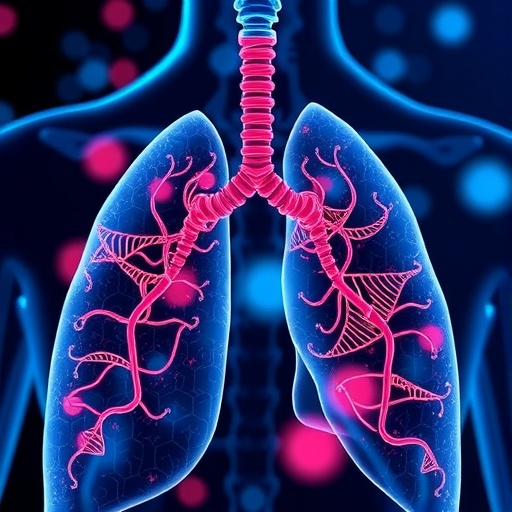
In a groundbreaking new study published in the Journal of Translational Medicine, researchers have delved into the intricate molecular subtyping and prognostic evaluation of idiopathic pulmonary fibrosis (IPF) with a unique focus on mechanical-related genes. This innovative research aims to provide healthcare professionals with enhanced tools to evaluate and treat patients suffering from this devastating and often progressive lung disease. It emphasizes the significant impact that mechanical stress and changes in cellular responses can have on the progression and pathology of IPF.
Idiopathic pulmonary fibrosis is characterized by the thickening and scarring of lung tissue, leading to severe respiratory issues. As IPF progresses, it poses tremendous challenges for patients and healthcare providers alike, with limited effective treatment options currently available. Understanding the underlying molecular mechanisms involved in IPF is crucial, and this study sheds light on how mechanical forces may influence the disease at a cellular level.
The research team, headed by Chen and colleagues, utilized advanced genomic and proteomic techniques to identify specific mechanical-related genes that are differentially expressed in IPF patients. This multifaceted approach enables them to distinguish between various molecular subtypes of the disease. By identifying these subtypes, the study proposes a tailored therapeutic strategy, moving away from the one-size-fits-all model of treatment that has often characterized care for IPF patients.
As mechanical stress is a significant aspect of pulmonary function, this study highlights how cells respond to changes in their physical environment and how this response could result in inflammatory pathways being activated. The researchers conducted extensive analyses to link altered mechanical signaling with the onset and progression of fibrosis, leading to promising implications for diagnosis and treatment. They identified specific gene expression patterns that correlate with disease severity and progression, which may serve as potent biomarkers for the onset of IPF.
Moreover, a key aspect of the study is its exploration of how environmental and lifestyle factors could affect these mechanical-related genes. Factors such as smoking, air pollution, and occupational exposures can exacerbate the disease through mechanical-induced cellular responses. The findings underscore the complex interplay between genetics and external variables, raising awareness of preventive measures that may mitigate the risk of developing IPF.
The study’s insights potentially pave the way for novel therapeutic interventions targeting the identified mechanical-related pathways. By focusing on these specific genetic markers, researchers envision a future where treatment strategies can be personalized according to individual patient profiles, thereby enhancing efficacy and minimizing adverse effects. This paradigm shift in the treatment approach could radically transform the landscape of care for those afflicted with IPF, leading to improved patient outcomes.
Moreover, the research integrates several distinct fields, including molecular biology, bioengineering, and clinical practice. Such interdisciplinary collaboration is vital for harnessing complex data and translating this knowledge into actionable clinical guidelines. Future clinical trials could take cues from the results of this study as they develop targeted therapies that specifically address the mechanical aspects of cellular responses in IPF patients.
The study’s focus on mechanical-related genes serves as a call to action for the scientific community to explore further dimensions of pulmonary fibrosis. As new genomic technologies continue to evolve, the potential to uncover additional biomarkers linked to mechanical stress in lung tissue remains ripe for exploration. By casting a wider net in understanding the molecular mechanisms of IPF, researchers can arm themselves with critical data that may lead to breakthroughs in disease management.
In terms of clinical application, the identification of these mechanical-related genes and their role in fibrosis could significantly influence how clinicians approach diagnosis. Early detection and accurate subtyping of IPF cases may allow for more effective interventions, particularly in the disease’s earlier stages when therapy is known to have the best effect. The urgency to diagnose correctly becomes even more pressing as healthcare professionals recognize the intricate links between genetic predisposition and environmental exposures which are fundamental to the pathology of IPF.
Moving forward, further research is necessary to fully delineate the pathways activated by mechanical forces and their clinical implications. In this context, the researchers advocate for longitudinal studies that can track the efficacy of targeted interventions over time. By closely monitoring patient responses, studies such as this one can generate the data needed to refine treatment regimens and explore the full potential of pharmacogenomics in tailoring therapies that align with each patient’s unique molecular profile.
Given the relevance of the findings to ongoing debates about IPF and management strategies, this study is expected to generate considerable interest within the medical community. There is a palpable need for renewed dialogue and collaboration among researchers, clinicians, and policymakers regarding the management of chronic lung diseases. As the medical field evolves alongside advancements in genetic research, collaborations like these will play a pivotal role in shaping future standards of care for IPF patients.
In summary, the latest research offers a crucial glimpse into the molecular underpinnings of idiopathic pulmonary fibrosis, particularly through the lens of mechanical-related genes. By enhancing our understanding of the relationship between environmental influences and genetic predisposition, this study opens the door to innovative treatment avenues that can ultimately enhance care for patients suffering from this challenging condition. As we look ahead to future applications and potential clinical trials, the significance of identifying molecular subtypes within IPF cannot be understated, heralding a new era of personalized medicine directed at the heart of disease mechanisms.
Ultimately, the hope is that clarity in the molecular landscape of idiopathic pulmonary fibrosis not only empowers clinicians but also encourages a greater awareness of preventative approaches in at-risk populations. As research progresses, the broader implications for the treatment of fibrotic diseases across various organ systems may also come into sharper focus, underscoring a holistic perspective in the battle against fibrosis.
Subject of Research: Mechanisms of idiopathic pulmonary fibrosis and role of mechanical-related genes.
Article Title: Molecular subtyping and prognostic evaluation in idiopathic pulmonary fibrosis: a focus on mechanical-related genes.
Article References:
Chen, Z., Zhi, Y., Wu, B. et al. Molecular subtyping and prognostic evaluation in idiopathic pulmonary fibrosis: a focus on mechanical-related genes. J Transl Med 23, 1405 (2025). https://doi.org/10.1186/s12967-025-07365-7
Image Credits: AI Generated
DOI: https://doi.org/10.1186/s12967-025-07365-7
Keywords: Idiopathic pulmonary fibrosis, mechanical-related genes, molecular subtyping, prognostic evaluation, targeted therapy.


