


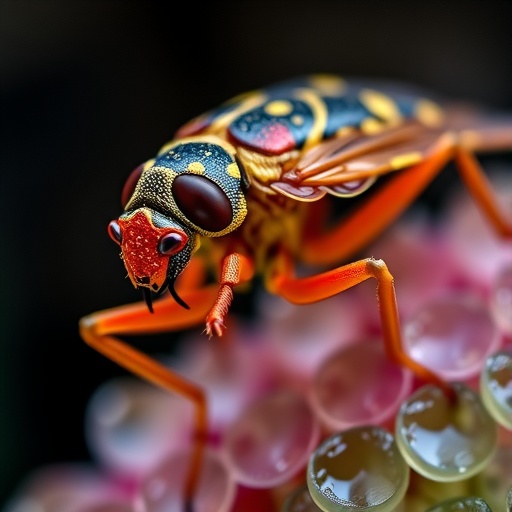
In the realm of ecological research, the complexities of insect symbiosis provide a fascinating window into the evolutionary dynamics of mutualistic relationships. Recent research has unveiled remarkable insights into the endosymbiotic system of cicadas, particularly focusing on how these sap-feeding insects segregate their microbial partners. This study, led by prominent researchers Huang, Wang, and Zhou, pushes the boundaries of our understanding of microbial symbioses, showcasing intricate interactions that may hold evolutionary significance.
Cicadas are well-known for their distinctive calls and lengthy life cycles, but what lies beneath the surface of their existence is a sophisticated network of microbial endosymbionts. These microorganisms live within cicadas, playing crucial roles in their nutrition and overall health. The current study explores this hidden world, revealing how cicadas manage a complex assemblage of endosymbionts, each with distinct functions that contribute to the insects’ survival and reproductive success.
One of the pivotal findings of the research indicates that cicadas possess a unique ability to segregate their endosymbionts within different symbiotic organs. This precise spatial organization of microbial partners is believed to enhance the cicada’s efficiency in nutrient acquisition, allowing them to thrive in environments where carbohydrate-rich sap is their primary food source. By maintaining a diverse microbiome, cicadas might also be better equipped to adapt to various ecological pressures, including climate change and habitat loss.
The study further emphasizes the evolutionary implications of such segregation. As cicadas have evolved to exploit sap-feeding niches over millions of years, the adaptation of internal symbiotic systems likely reflects a co-evolutionary process. Understanding this evolutionary narrative allows scientists to trace the lineage of these insects and their microbial companions, thus painting a more comprehensive picture of their ecological roles.
Critically, the research method utilized by the team combined advanced genomic sequencing techniques with ecological modeling. By sequencing the genomes of various endosymbionts, researchers identified genetic markers that indicated the degree of specialization and adaptability within these microbial communities. Such methodologies mark a significant leap in entomological studies, offering tools to dissect the complexities of insect-microbe interactions on a molecular level.
Moreover, this study raises intriguing questions about the potential applications of this knowledge. As cicadas exhibit highly specialized relationships with their microbial partners, there exists potential for biotechnological innovations. For instance, understanding how cicadas utilize their endosymbionts for metabolic processes could inspire new methods in sustainable agriculture, particularly in enhancing plant resilience against pests and diseases.
In parallel with environmental implications, the findings have sparked discussions concerning biodiversity conservation. The intricate relationships between cicadas and their symbionts underscore the importance of conserving ecosystems that support such diverse microbial life. As habitats deteriorate and climate change poses new challenges, safeguarding these alliances is vital for maintaining ecological balance and biodiversity.
Furthermore, the implications of microbial segregation extend beyond the cicada—studies like this can influence our understanding of other sap-feeding insects. For instance, aphids and whiteflies also engage in unique symbiotic relationships with microorganisms. By extrapolating insights from cicada research, scientists may glean new perspectives on the ecological functions and evolutionary pathways that govern other insect taxa.
As researchers continue to peel back the layers of endosymbiotic complexity, the study sets a precedent for future investigations into microbial communities. With developing technologies, the ability to visualize and manipulate these interactions promises to advance our knowledge significantly. It’s a thrilling prospect for scientists working at the intersection of microbiology, ecology, and evolutionary biology.
In summary, the study conducted by Huang, Wang, Zhou, and their team represents a groundbreaking addition to our understanding of microbial symbiosis in cicadas. Through innovative research methodologies and profound insights into segregation mechanisms, the work not only highlights the intricate relationships between cicadas and their endosymbionts but also opens avenues for applied science in agriculture and conservation. This research reinforces the narrative that every organism, no matter how small, plays a vital role in the tapestry of life. In a world where ecological pressures continue to mount, lessons drawn from cicadas about resilience and adaptation may very well inform our approach to future environmental challenges.
Cite Scienmag News
Gavin Prescott. (September 4, 2025). New Insights into Cicada Microbial Symbiosis Dynamics. Scienmag. https://scienmag.com/new-insights-into-cicada-microbial-symbiosis-dynamics/
Gavin Prescott. "New Insights into Cicada Microbial Symbiosis Dynamics." Scienmag, 4 September 2025, https://scienmag.com/new-insights-into-cicada-microbial-symbiosis-dynamics/. Accessed 7 September 2026.
Gavin Prescott. "New Insights into Cicada Microbial Symbiosis Dynamics." Scienmag. September 4, 2025. https://scienmag.com/new-insights-into-cicada-microbial-symbiosis-dynamics/


