


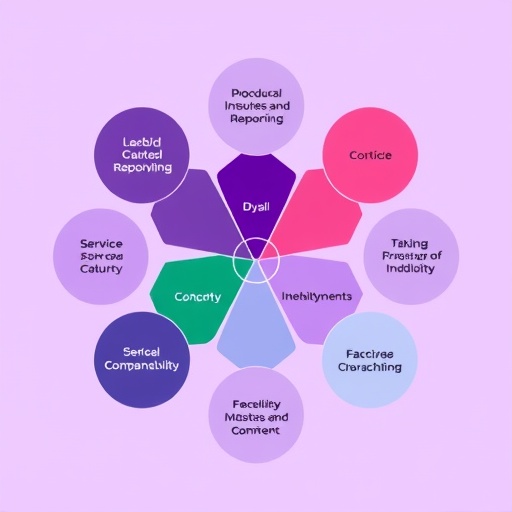
Governments around the world routinely separate mental health from the ministries that actually shape it—housing, transport, education, employment and social welfare—leaving clinical services to treat the downstream casualties of upstream decisions. A new peer-reviewed study published on 29 August 2026 in the journal Discover Mental Health argues that this institutional blind spot is no longer tenable, and offers what its authors present as a comprehensive, evidence-based framework for implementing Mental Health in All Policies, or MHiAP. Led by Linda Liebenberg of the Department of Psychiatry at Dalhousie University in Halifax, Canada, together with Ejemai Eboreime of Dalhousie, Jackie Sanders of Massey University in New Zealand, Tamlynn Jefferis of North-West University in South Africa and colleagues, the research distils years of intersectoral policy thinking into a cyclical model built on three interlocking engines: education and awareness-raising, commitment building, and coordinated action. Crucially, the team went beyond theory. Their implementation guidelines name the concrete mechanisms—from the strategic exploitation of “moments of opportunity” to community-centred co-design and explicit accountability structures—through which abstract political commitments can be converted into measurable population-level gains in mental health.
The premise behind MHiAP is deceptively simple: the social determinants of mental health are manufactured almost entirely outside the health system. Chronic stress from precarious employment, the psychological toll of cold, overcrowded or unaffordable housing, the developmental damage of childhood poverty, the isolation engineered by car-dependent urban design, and the anxiety amplified by economic and climate insecurity all register first as psychiatric epidemiology—rising rates of depression, anxiety, substance use and suicide—long before they appear in any non-health ministry’s ledger. MHiAP has been increasingly recognised as essential for promoting mental health at the scale of whole populations, precisely because so many of its risk and protective factors sit in other departments’ hands. The approach borrows deliberately from the World Health Organization’s “Health in All Policies” tradition, extending its logic from physical health to mental wellbeing. Yet while Health in All Policies has accumulated toolkits, legislation and evaluation infrastructure in pioneering jurisdictions over recent decades, its mental health counterpart has remained largely aspirational: embraced in summit communiqués and strategic plans, but rarely operationalised. The upshot, the authors argue, is a field short on implementation guidance rather than short on underlying evidence.
To build that guidance, the team turned to a methodology designed for exactly this kind of sprawling, multi-sector question: the realist scoping review. Following Ray Pawson’s six-stage approach, realist synthesis does not simply ask whether an intervention works. It interrogates the underlying generative logic—what works, for whom, under what circumstances, and through which mechanisms—and uses those theories to organise the evidence. The researchers first constructed a theoretical implementation framework from three source models: a policy brief developed through the Atlantic Summer Institute, the Circle of Health—a planning model that maps the interacting determinants of wellbeing alongside the sectors, actors and programmes that influence them—and community resilience theory, which emphasises the collective resources, social networks and shared agency that allow communities to withstand and adapt to adversity. They then stress-tested this provisional framework against the published literature, searching Google Scholar, PubMed, Cochrane Reviews and Scopus for publications addressing MHiAP frameworks and implementation strategies. The funnel was strict: from 830 initial records, 38 publications were retrieved for detailed assessment and 20 studies were included in the final synthesis. All coding and analysis were carried out in Atlas.ti, a qualitative data analysis platform that allowed the team to track how often each component of the framework was supported, elaborated or contradicted across the corpus.
The results lent strong structural support to the model. Ninety per cent of the included publications addressed the education and awareness-raising element—the recognition that policymakers, civil servants and the public must first grasp how everyday policy shapes mental health before they will act on it. In practice, education of this kind runs from briefing officials on the mental health footprint of their portfolios to public communication that normalises wellbeing as a shared responsibility. Eighty-five per cent discussed multi-level commitment strategies, reflecting a consensus that durable change requires buy-in simultaneously at political, bureaucratic and community levels rather than from any single tier of government. And 80 per cent emphasised principles of coordinated action—the machinery of intersectoral committees, shared targets, joint planning and integrated data that turns parallel departmental workstreams into a coherent programme. Read together, the literature describes MHiAP not as a linear checklist but as a cycle. Awareness generates commitment, commitment enables coordination, and the visible results of coordinated action feed back into deeper public and political understanding of why mental health belongs in every portfolio, from treasury to transport. The framework’s three components are presented as interconnected rather than sequential, each reinforcing and being reinforced by the others.
Yet the synthesis also exposed where the MHiAP movement is thinnest, and these gaps form arguably the paper’s most consequential contribution. Only 20 per cent of publications addressed the strategic use of “moments of opportunity”—the fleeting windows, such as elections, ministerial reshuffles, budget cycles, public crises and post-disaster reconstruction, when political attention, public sentiment and legislative capacity briefly align and sweeping reform suddenly becomes possible. Community-level engagement appeared in just half of the literature, a striking asymmetry against the 90 per cent that discussed political commitment, implying that the field still tends to treat residents as beneficiaries of policy rather than as co-authors of it. The imbalance hints that MHiAP, as currently practised, risks replicating the top-down habits of conventional governance rather than the participatory models its theoretical foundations call for. Most tellingly, only 40 per cent of publications grappled with accountability mechanisms: the reporting requirements, indicators, audits and governance structures that determine whether a mental health commitment survives its launch press conference. Without such scaffolding, intersectoral initiatives remain acutely vulnerable to electoral turnover, departmental turf protection and the quiet drift of resources back toward whatever a ministry already knows how to measure.
The implementation guidelines that anchor the paper are organised around precisely these failure points. The first pillar instructs implementers to systematically identify and exploit moments of opportunity, treating policy windows as strategic assets to be mapped in advance rather than luck to be recognised in hindsight. The underlying logic is straightforward: windows for structural reform open rarely and close quickly, and a government that has not pre-agreed its mental health priorities will spend the window negotiating rather than acting. The second pillar demands community-centred approaches: because community resilience theory locates much of a population’s psychological armour in local networks, place attachment and collective efficacy, the authors argue that residents, service users and grassroots organisations must be embedded in agenda-setting and design, not merely consulted after decisions have been drafted. The third pillar is values-based collaboration—the deliberate cultivation of a shared value language across sectors whose professional cultures, vocabularies and incentive structures otherwise collide. A transport engineer optimising commute times, a housing officer allocating units and a psychiatrist measuring symptom burden do not naturally speak the same dialect; the framework proposes that explicitly negotiated, jointly held values function as the translation layer that keeps intersectoral partnerships from dissolving into jurisdictional friction.
The framework’s technical core lies in articulating the causal pathways through which non-health policy becomes mental health outcome. Population-level psychology is shaped by chronic stressor exposure—financial strain, housing insecurity, discrimination and unsafe neighbourhoods—which dysregulates stress physiology and steadily erodes the protective factors that buffer individuals against disorder. Policy instruments act upstream on these exposures: zoning and housing supply alter affordability and crowding; labour regulation changes precarity and working hours; transit investment reconfigures social connectivity; income supports moderate childhood adversity. The framework therefore asks every ministry to treat mental health impact as a routine consideration, analogous in spirit to environmental impact assessment, supported by the coordinated-action apparatus of shared indicators, interdepartmental governance and joined-up data systems. In doing so, it converts a rhetorical aspiration—every policy is a mental health policy—into an administrative design: identifiable institutional components that can be staffed, budgeted, scheduled and audited like any other instrument of government.
The authors are careful about the limits of what they have built. This is a framework tested against literature rather than an evaluated intervention; the 20-study evidence base is modest, and realist synthesis generates theory that demands adaptation and empirical scrutiny rather than universal prescriptions. The team also stresses that the model is cyclical and context-dependent, and the configuration that succeeds in one political system may need re-engineering in another. Nevertheless, the significance of filling the how-to vacuum is difficult to overstate at a moment when nearly every government is confronting deteriorating population mental health, from post-pandemic burdens of anxiety and depression to youth mental health emergencies that clinical services alone demonstrably cannot absorb. By naming the field’s key innovations—strategic approaches to opportunity identification, the integration of community resources and explicit accountability mechanisms—the guidelines give policymakers, practitioners and community leaders an actionable translation device for commitments that have otherwise remained declarations of intent. The guidelines should therefore be read as a starting architecture, one to be adapted, evaluated and refined through real-world application across different governance cultures and resource settings.
The study, conducted without dedicated external funding, is published open access, allowing municipal planners, ministries and advocacy groups anywhere to apply the framework directly. Its authorship spans universities in Canada, New Zealand and South Africa, combining psychiatric, public health, social work and psychological perspectives. The acknowledgements note a similarly practical origin, with the authors thanking Patsy Beattie Huggan for recognising the need for the review and facilitating its initial work. As governments increasingly acknowledge that wellbeing is built—or dismantled—in cabinet rooms far removed from the clinic, the paper supplies the missing operational grammar: a repeatable cycle of education, commitment and coordinated action, anchored in communities and held in place by accountability. Mental health, the framework implies, was always in all policies. What has been missing until now is the method.
Cite Scienmag News
Glenn Wilkins. (August 29, 2026). New framework guides mental health integration across all policy sectors. Scienmag. https://scienmag.com/new-framework-guides-mental-health-integration-across-all-policy-sectors/
Glenn Wilkins. "New framework guides mental health integration across all policy sectors." Scienmag, 29 August 2026, https://scienmag.com/new-framework-guides-mental-health-integration-across-all-policy-sectors/. Accessed 3 September 2026.
Glenn Wilkins. "New framework guides mental health integration across all policy sectors." Scienmag. August 29, 2026. https://scienmag.com/new-framework-guides-mental-health-integration-across-all-policy-sectors/


