


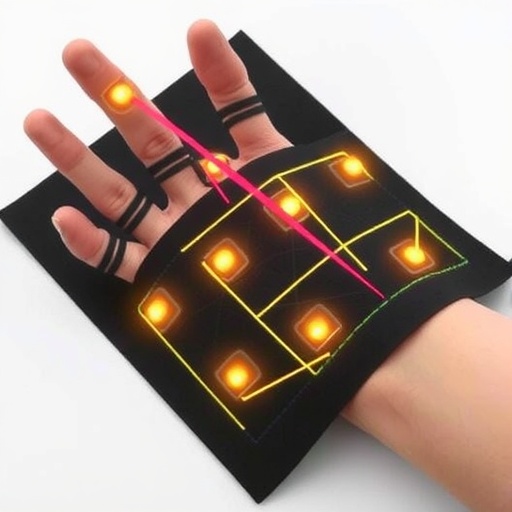
The rapid advancement of motion capture technology is driving significant developments in various fields, namely virtual, augmented, and mixed reality, as well as in film production and sports rehabilitation. However, current systems, such as optical and inertial motion capture solutions, encounter various challenges that compromise user experience. These limitations include cumbersome wearability and interference with natural bodily movements, thereby hampering the integration of such technology into everyday life and its applications within the metaverse. To address these issues, researchers have begun exploring innovative and wearable solutions, focusing on flexible strain and torque sensors, alongside miniaturized inertial units. Yet, even these advancements often require full-body sensor suits, which can be complex and uncomfortable for users, further complicating ease of use and overall comfort.
Amidst these advancements, insoles present a unique opportunity, acting as an inconspicuous yet essential means of data input for capturing lower-limb motion. As everyday items, insoles have the potential to be integrated with embedded sensors that can collect and analyze motion data with minimal impact on the user’s experience. While previous research has attempted to utilize these insole-embedded sensors for the classification of defined movements, they frequently fall short of enabling the seamless interaction and control needed for a fully realized metaverse experience. The lack of precise joint position estimation capabilities solely through sensor-embedded insoles remains a critical gap in the current research landscape.
Recent advancements in sensor technology and data processing methodologies have paved the way for a new realm of possibilities in lower-limb motion capture. In a groundbreaking study, researchers have developed a novel fabrication method that employs laser-selective cutting and dip-coating techniques to create flexible pressure sensors. These sensors exhibit an impressive working pressure range of up to 3770.9 kPa, and demonstrate remarkable sensitivity of 2.68 kPa⁻¹, making them suitable for a range of applications, from rehabilitation to immersive gaming environments. Such high durability has been achieved through extensive testing, with the sensors maintaining their performance stability after enduring over four million pressure cycles.
A carefully designed sensor array layout enables comprehensive pressure signal acquisition, effectively capturing plantar pressure distribution during various movements. The integration of these flexible pressure-sensing insoles, which feature 16 sensing units, allows for real-time data collection thanks to a self-developed array data acquisition system. This results in enhanced analysis capabilities, making it possible to compute vital metrics that inform how lower limbs function during different postures and activities.
Moreover, sophisticated algorithms, including a trained convolutional neural network, classify up to ten distinct static and dynamic postures with remarkable accuracy, achieving a classification rate of 95.5%. This level of precision not only demonstrates the effectiveness of the sensor array but also underscores the potential of using these systems in practical applications, such as rehabilitation and sports science where accurate movement analysis is crucial.
One of the standout features of this research is its emphasis on predicting key joint positions of the lower limb using the insole system, combined with a Transformer-based temporal regression model. This innovation results in accurate estimations of hip, knee, ankle, heel, and toe positions with an average prediction error of only 7.8 pixels, approximately equivalent to 3.6 centimeters. This level of accuracy is unprecedented, offering the potential for real-time monitoring and thus transforming rehabilitation training and performance optimization.
In the context of rehabilitation, the study highlights significant advancements aimed at providing effective remote monitoring solutions. Individuals who require rehabilitation often perform essential movements such as lifting and squatting as part of their recovery regimen. However, the absence of effective monitoring tools currently makes it challenging to provide objective evaluations of movement patterns, which are key to facilitating the recovery process. The flexible pressure sensor array captures the plantar pressure distributions in real-time while accurately predicting joint states, providing invaluable feedback on a patient’s adherence to movement protocols.
For instance, participants in the study simulated both normal leg lifts and non-compliant lifting heights while utilizing the developed sensor array. By computing the ratio of the actual thigh-lifting angle against the target angle, the system automatically assesses whether the movement meets predefined criteria. This capability to quantify deviations not only streams data for evaluation but also enhances the quality of feedback to users and healthcare providers.
The implications of this novel approach to lower-limb motion capture are far-reaching, offering a practical solution that intricately integrates flexible pressure sensor arrays with new data processing models. This study not only addresses the long-standing challenges associated with traditional motion capture technologies but also redefines how lower-limb movements are perceived and quantified in the context of the metaverse, paving the way for further research.
As technology continues to evolve in tandem with the demands of users in both professional and recreational settings, this innovative insole-based capturing system is positioned to become a cornerstone in motion analysis, redefining user-experience standards and setting new benchmarks for accuracy and seamless integration in next-generation applications.
The researchers foresee that this work will facilitate strides in the practical implementation of the metaverse, providing an accessible yet sophisticated method for gathering data on lower-limb motions. This study serves as a foundation for subsequent inquiries, opening new avenues for research into flexible sensing technologies and their applications across various domains, from healthcare to virtual reality experiences.
In conclusion, the future of motion capture technology is being redefined through the synergy between flexible pressure sensor arrays and advanced data analysis techniques. By overcoming traditional boundaries and striving for user-centric innovations, this study lays down a crucial path forward for various fields that rely on precise motion tracking and analysis. As researchers dive deeper into this novel framework, the widespread application capabilities of such technologies in our daily lives are poised to significantly transform how we interact with our physical world and the burgeoning metaverse.
Keywords
motion capture, flexible sensors, plantar pressure, rehabilitation, metaverse, lower limb motion, advanced data analysis, convolutional neural networks, Transformer models
Cite Scienmag News
Denise Maddox. (September 29, 2025). New Fabric-Based Flexible Pressure Sensor Arrays Enable Wide-Range Motion Capture for Lower Limb Activities. Scienmag. https://scienmag.com/new-fabric-based-flexible-pressure-sensor-arrays-enable-wide-range-motion-capture-for-lower-limb-activities/
Denise Maddox. "New Fabric-Based Flexible Pressure Sensor Arrays Enable Wide-Range Motion Capture for Lower Limb Activities." Scienmag, 29 September 2025, https://scienmag.com/new-fabric-based-flexible-pressure-sensor-arrays-enable-wide-range-motion-capture-for-lower-limb-activities/. Accessed 4 September 2026.
Denise Maddox. "New Fabric-Based Flexible Pressure Sensor Arrays Enable Wide-Range Motion Capture for Lower Limb Activities." Scienmag. September 29, 2025. https://scienmag.com/new-fabric-based-flexible-pressure-sensor-arrays-enable-wide-range-motion-capture-for-lower-limb-activities/


