


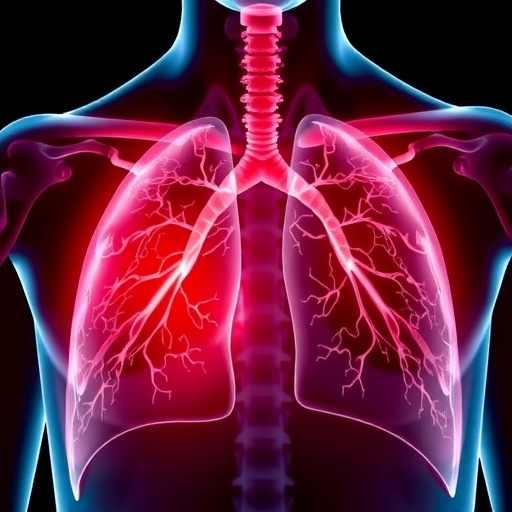
Rheumatoid arthritis (RA) has long been recognized primarily as a debilitating autoimmune disorder characterized by chronic joint inflammation and pain. However, expanding understanding in the field of rheumatology and pulmonology reveals that the impact of RA extends far beyond the joints, encompassing serious systemic complications, particularly involving the lungs. A newly published international expert consensus statement, appearing in the highly regarded journal The Lancet Respiratory Medicine, brings vital clinical guidance aimed at improving the identification, monitoring, and treatment of rheumatoid arthritis-associated interstitial lung disease (RA-ILD). This advancement marks a significant step forward in the multidisciplinary management of patients suffering from this complex and often underrecognized pulmonary condition.
Interstitial lung disease (ILD) associated with RA is a progressive lung disorder characterized by inflammation of the pulmonary interstitium and fibrosis or scarring, which progressively impairs respiratory function. Patients with RA-ILD often experience symptoms ranging from exertional dyspnea and chronic cough to debilitating respiratory insufficiency, contributing to a marked decrease in quality of life and increased mortality risk. Despite the severity, RA-ILD remains underdiagnosed in clinical practice due to overlapping symptomatology and the absence of standardized protocols for screening and intervention.
The expert panel, led by Dr. Joshua Solomon, a specialist in interstitial lung disease at National Jewish Health, undertook a comprehensive review of current evidence and expert experience to synthesize recommendations that address these important gaps. Their consensus reflects a critical shift toward earlier recognition and intervention in lung disease within the RA patient population. Unlike previous approaches which often focused solely on joint manifestations, this guideline advocates for a proactive and systematic surveillance strategy, enabling clinicians to detect pulmonary involvement at initial or subclinical stages.
A central theme in the expert statement is a nuanced understanding of the risk factors and biomarkers that predispose RA patients to developing ILD. The panel identifies genetic predispositions, serological markers such as anti-cyclic citrullinated peptide antibodies, environmental exposures like smoking, and certain demographic factors as critical elements influencing susceptibility. By integrating these parameters into clinical assessments, the guidelines recommend targeted screening for high-risk individuals, utilizing advanced imaging techniques including high-resolution computed tomography (HRCT) to detect early fibrotic changes which often precede symptomatic progression.
Beyond screening, the consensus emphasizes standardized monitoring pathways to track disease evolution accurately. Repeated pulmonary function tests (PFTs) measuring parameters such as forced vital capacity (FVC) and diffusing capacity of the lungs for carbon monoxide (DLCO) serve as cornerstone metrics. This approach aims to stratify disease severity and inform timely therapeutic decisions, a substantial advancement over episodic or reactive management. The guidelines also recognize the value of multidisciplinary collaboration, notably between rheumatologists, pulmonologists, radiologists, and pathologists, to enhance diagnostic precision and optimize patient-centered care outcomes.
Therapeutic recommendations within the consensus are cautiously calibrated due to the paucity of large-scale randomized clinical trial data specifically addressing RA-ILD. Nonetheless, the panel endorses the use of immunomodulatory agents such as corticosteroids and disease-modifying antirheumatic drugs (DMARDs) tailored to the lung disease phenotype and activity. Importantly, the inclusion of antifibrotic therapies, which have shown promise in idiopathic pulmonary fibrosis, is highlighted as an emerging avenue warranting further investigation. Equally, the guidelines underscore the necessity of individualized treatment plans balancing efficacy against potential adverse effects, especially given the immunosuppressive context inherent in RA management.
This consensus statement further addresses the challenges faced by clinicians in diagnosing RA-ILD amid clinical uncertainty and overlapping features with other pulmonary conditions such as infection or drug-induced pneumonitis. The incorporation of a comprehensive diagnostic algorithm combining clinical evaluation, serologic testing, imaging findings, and, where indicated, histopathologic confirmation, assists in differentiating RA-ILD from mimicking diseases, thus facilitating precise therapeutic targeting.
Importantly, the expert group calls attention to the psychosocial and quality of life impairments experienced by patients living with RA-ILD. They advocate for holistic care models encompassing respiratory rehabilitation, symptom management, and supportive therapies alongside pharmacologic interventions. Educating patients about the signs of lung involvement, potential risks, and the importance of adherence to monitoring and treatment plans is also emphasized as an integral component of long-term management strategies.
From a research perspective, this consensus delineates significant knowledge gaps and sets a roadmap for future studies. Priorities include large-scale prospective cohorts to validate risk stratification tools, randomized controlled trials assessing novel therapeutics, and exploration of the molecular mechanisms underpinning RA-ILD pathogenesis. Such investigations have the potential to shift the horizon from reactive treatment towards precision medicine approaches, ultimately improving survival and health-related quality of life.
The publication of this expert consensus represents a milestone in the integration of respiratory care within the rheumatology landscape. It underscores the necessity for heightened clinical vigilance and cross-specialty partnership to confront the morbidity associated with RA-ILD effectively. In light of the considerable disease burden and limited existing guidance, these recommendations promise to catalyze earlier diagnosis, standardized treatment protocols, and enhanced patient outcomes on a global scale.
National Jewish Health, a leading respiratory hospital renowned for multispecialty care and cutting-edge research, has played an instrumental role in this initiative. Their commitment to advancing understanding and treatment of respiratory complications in systemic diseases such as RA exemplifies the critical value of interdisciplinary collaboration in modern medicine. This consensus statement fortifies their ongoing mission to enhance care delivery and research excellence dedicated exclusively to respiratory, immune, and related disorders.
As the medical community assimilates these groundbreaking recommendations into practice, patients living with rheumatoid arthritis stand to benefit from more responsive, comprehensive care that addresses the full spectrum of disease manifestations. This development marks not only progress in rheumatology and pulmonology but also reinforces the vital importance of holistic approaches in managing complex, multisystem autoimmune diseases.
News Publication Date: July 01, 2026
Web References:
References:
- Expert consensus statement published in The Lancet Respiratory Medicine, June 5, 2026.
Cite Scienmag News
Barbara Leach. (July 1, 2026). New Expert Guidelines Enhance Detection and Management of Lung Disease in Rheumatoid Arthritis Patients. Scienmag. https://scienmag.com/new-expert-guidelines-enhance-detection-and-management-of-lung-disease-in-rheumatoid-arthritis-patients/
Barbara Leach. "New Expert Guidelines Enhance Detection and Management of Lung Disease in Rheumatoid Arthritis Patients." Scienmag, 1 July 2026, https://scienmag.com/new-expert-guidelines-enhance-detection-and-management-of-lung-disease-in-rheumatoid-arthritis-patients/. Accessed 3 September 2026.
Barbara Leach. "New Expert Guidelines Enhance Detection and Management of Lung Disease in Rheumatoid Arthritis Patients." Scienmag. July 1, 2026. https://scienmag.com/new-expert-guidelines-enhance-detection-and-management-of-lung-disease-in-rheumatoid-arthritis-patients/


