


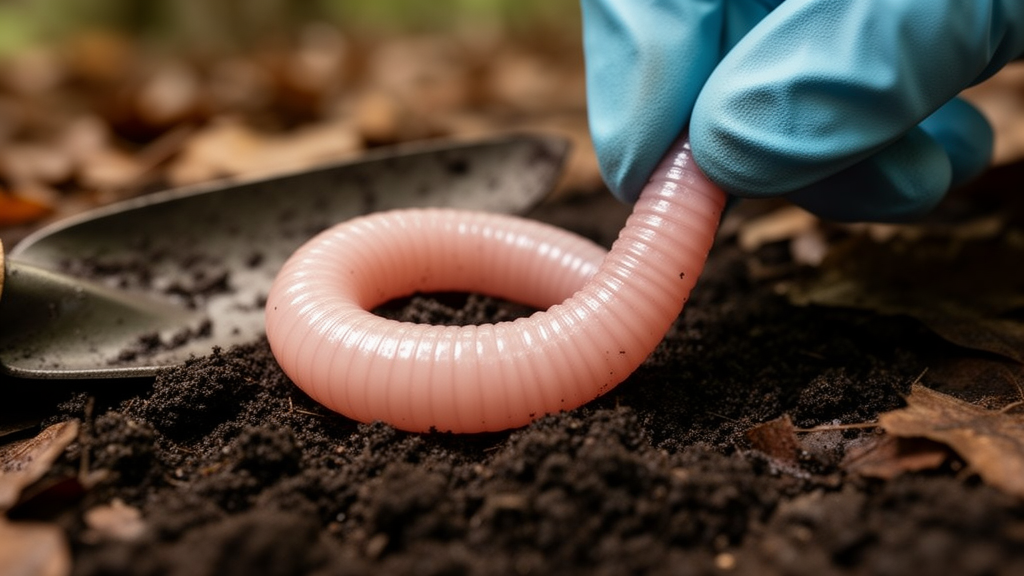
Beneath the parks, farmlands, and forest edges of eastern China lives a humble earthworm that scientists have long treated as a single, well-known species. A new study published in the journal ZooKeys upends that assumption. By combining classical anatomy with cutting-edge DNA analysis, researchers have established the Drawida gisti species complex, a formally recognized group of eight closely related worm species, and described one of them as entirely new to science: Drawida xuqini, collected from a park in the coastal city of Qinhuangdao in northeastern China. The work is a striking reminder that even familiar, ecologically important animals can conceal dramatic hidden diversity.
The family Moniligastridae, to which the new species belongs, comprises five genera and 193 known species, and its largest genus, Drawida, accounts for 163 of them. These worms are distributed across South, Southeast, and East Asia, where they play significant roles in soil aeration, nutrient cycling, and decomposition. Drawida gisti itself, first described in 1931 from specimens collected in Jinan and Beijing, is an East Asian endemic of considerable ecological importance. Yet, paradoxically, nearly all research on it has been non-taxonomic, focusing on its ecology or physiology rather than on the fundamental question of what, exactly, a Drawida gisti is. Its species boundaries remained poorly understood, and its true diversity was likely severely underestimated.
The research team, working from the Hebei Key Laboratory of Animal Diversity at Langfang Normal University, took an integrative taxonomic approach, the modern gold standard for resolving cryptic species. They collected fresh specimens by hand-sorting and digging at multiple sites: the new species came from Weiyuan Park in Shanhaiguan District, Qinhuangdao, in Hebei Province, while comparison specimens of Drawida gisti gisti were gathered from Mentougou in Beijing, Rizhao and Heze in Shandong Province, and Chengde in Hebei. All specimens were fixed in the field in 95 percent ethanol and later preserved at minus 20 degrees Celsius, ensuring that both anatomical structures and DNA would survive intact for analysis.
Under the microscope, the worms revealed a suite of diagnostic characters that taxonomists use to tell species apart. Drawida xuqini measures 48 to 87 millimeters in length and 4.5 to 7.0 millimeters in diameter, with 160 to 181 segments and a pale pink clitellum spanning segments X to XIII. Its most distinctive internal features include three to five gizzards, M-shaped prostate glands reaching up to 11.6 millimeters in length, and, crucially, a vas deferens that is very short and entirely uncoiled, a trait unique among members of the newly defined species complex. Its penes are thick with a swollen base and a blunt, rounded apex, in contrast to the slender, sharply tapering penes of Drawida gisti gisti. In alcohol, the new species is light gray rather than the reddish brown of its relative.
The molecular work was equally decisive. The team sequenced complete mitochondrial genomes, which measured 14,647 to 14,750 base pairs and contained the typical 37 mitochondrial genes: 13 protein-coding genes, two ribosomal RNA genes, and 22 transfer RNA genes. Notably, the control region was absent in both species examined, mirroring a pattern seen in some members of the related Drawida japonica species complex. Phylogenetic trees built from the concatenated 13 protein-coding genes, using both maximum-likelihood and Bayesian inference methods, placed the four sequenced individuals of Drawida xuqini together as a distinct, robustly supported lineage, with maximum-likelihood bootstrap support of 100 and a Bayesian posterior probability of 1.00. The two major species complexes, DiSC and DjSC, each formed independent well-supported monophyletic groups.
Genetic distances sealed the case. Using the Kimura two-parameter model on the mitochondrial COI barcode gene, the researchers found that divergence between Drawida xuqini and Drawida gisti gisti ranged from 19.4 to 22.0 percent, far exceeding the 15 percent interspecific threshold routinely applied in earthworm taxonomy. Within the new species, divergence was a mere 0 to 0.5 percent. Three molecular species delimitation methods, Assemble Species by Automatic Partitioning, the Generalized Mixed Yule Coalescent model, and the multi-locus Bayesian Phylogenetics and Phylogeography approach, all converged on the same conclusion: the Qinhuangdao worms represent a separate species, fully congruent with the morphological evidence.
Establishing the species complex itself was a taxonomic detective story. The team reviewed several morphologically similar species described decades ago from eastern and southwestern China, including Drawida cheni, D. linhaiensis, D. sinica, D. sulcata, and D. syringa, whose type specimens are presumed lost and which could only be assessed from published literature. Because these species share key features with Drawida gisti gisti, such as the presence of a penis and penial chamber, and occur in geographic proximity, the researchers hypothesized they are closely allied and formally grouped them, together with D. gisti gisti, D. anchingiana, and D. gisti nanchangiana, into the Drawida gisti species complex. They also provided an updated redescription of D. gisti gisti based on freshly examined specimens from multiple localities, the first such modern treatment for this long-neglected worm.
Perhaps the most provocative finding concerns variation within Drawida gisti gisti itself. Specimens from different localities showed marked plasticity in body color and size, while their internal anatomy remained highly uniform, a disparity the authors suggest may be environmentally induced. More intriguing still, some specimens from Rizhao displayed divergent penial morphology and COI distances of 4.8 to 5.7 percent from typical populations, and single-locus delimitation methods recovered them as distinct evolutionary lineages. The researchers caution that GMYC is known for excessive lineage splitting, but they note that northern populations may not be simple morphological variants of D. gisti from northward dispersal; they could instead constitute cryptic species or novel taxa awaiting validation through expanded sampling. The team also flagged a cautionary tale for the molecular era: a mitochondrial genome previously published as D. gisti was shown by their phylogeny to actually cluster within the D. japonica species complex, a misidentification likely rooted in the lack of authentic reference sequences.
The discovery of Drawida xuqini at Shanhaiguan, where the Great Wall meets the sea, hints at a broader geographic story. The population may represent a peripheral isolate that diverged through geographic isolation and local adaptation under a different climatic regime. Alternatively, given that allied taxa range widely across eastern China, additional cryptic species may be lurking in the southern portion of the distribution. Both hypotheses, the authors stress, require denser sampling across northern and southern provinces to test. What is already clear is that the Moniligastridae family remains taxonomically poorly resolved and that its actual diversity is likely far higher than current counts suggest.
For soil ecologists and conservation biologists, the implications extend beyond nomenclature. Earthworms are ecosystem engineers whose species identity shapes how soils function, and misidentified species can distort everything from biodiversity surveys to ecological risk assessments. The study demonstrates that morphology alone, especially when external characters are plastic and environmentally influenced, is insufficient for accurate species delimitation in this group. Integrative taxonomy, pairing careful dissection with mitochondrial genomics and coalescent-based species delimitation, offers a path forward. As the case of Drawida xuqini shows, a species can sit unnoticed in a city park for generations, distinguished from its famous relative by a coiled tube, the shape of a prostate gland, and a genome that differs by a fifth. The ground beneath East Asia, it seems, still holds many secrets worth digging for.
Subject of Research: Integrative taxonomy and molecular species delimitation of the Drawida gisti earthworm species complex in China
Article Title: Establishment of the Drawida gisti species complex and description of a new species from northeastern China ( Oligochaeta , Moniligastridae )
Article References: Qiao, S., Li, J., Zhang, Y., Aspe, N. M., & Zhao, H. (2026). Establishment of the Drawida gisti species complex and description of a new species from northeastern China (Oligochaeta, Moniligastridae). ZooKeys, 1293, 327-346. https://doi.org/10.3897/zookeys.1293.204408
Image Credits: AI Generated
DOI: 10.3897/zookeys.1293.204408
Keywords: earthworms, Drawida, Moniligastridae, integrative taxonomy, species delimitation, mitochondrial genome, COI barcode, cryptic species, new species, China, ZooKeys, soil biodiversity
Cite Scienmag News
Drew Townsend. (October 17, 2026). New Earthworm Species Hidden in Plain Sight Rewrites the Story of an East Asian Soil Engineer. Scienmag. https://scienmag.com/new-earthworm-species-hidden-in-plain-sight-rewrites-the-story-of-an-east-asian-soil-engineer/
Drew Townsend. "New Earthworm Species Hidden in Plain Sight Rewrites the Story of an East Asian Soil Engineer." Scienmag, 17 October 2026, https://scienmag.com/new-earthworm-species-hidden-in-plain-sight-rewrites-the-story-of-an-east-asian-soil-engineer/. Accessed 17 October 2026.
Drew Townsend. "New Earthworm Species Hidden in Plain Sight Rewrites the Story of an East Asian Soil Engineer." Scienmag. October 17, 2026. https://scienmag.com/new-earthworm-species-hidden-in-plain-sight-rewrites-the-story-of-an-east-asian-soil-engineer/


