Wednesday, October 28, 2026
Science
No Result
View All Result
  • Login
  • HOME
  • SCIENCE NEWS
  • CONTACT US
  • HOME
  • SCIENCE NEWS
  • CONTACT US
No Result
View All Result
Scienmag
No Result
View All Result
Home Science News Technology and Engineering

New Damage Model Predicts How Concrete Weakens in Fires from 20 to 600 Degrees Celsius

October 28, 2026
in Technology and Engineering
Denise Maddox
By Denise Maddox Scienmag Editorial Profile - Mechanical Engineering
Reading Time: 3 mins read
0
New Damage Model Predicts How Concrete Weakens in Fires from 20 to 600 Degrees Celsius

New Damage Model Predicts How Concrete Weakens in Fires from 20 to 600 Degrees Celsius

65
SHARES
587
VIEWS
Share on FacebookShare on Twitter
ADVERTISEMENT

Engineers have long struggled to predict how concrete behaves when fire heats it to hundreds of degrees, because the material suffers two intertwined kinds of damage at once: thermal damage driven by heat alone and mechanical damage driven by stress. A new modelling study addresses this by treating the two processes separately, using independent, energy-based evolution laws within a thermodynamically consistent damage–plasticity framework. The work, published in Frontiers in Materials, is a computational modelling study whose predictions were checked against previously published experimental data over the range 20–600 °C.

The model couples temperature-dependent plasticity with a full strain decomposition that explicitly accounts for thermal expansion and transient creep, two effects that are often handled inconsistently in existing constitutive models. According to the abstract, existing approaches frequently lump thermal and mechanical damage together or treat them in a manner that is not thermodynamically consistent, which limits their reliability when concrete is exposed to elevated temperatures. The new formulation was implemented as a UMAT subroutine for the finite element software ABAQUS, allowing the same material description to be applied from the scale of a single material specimen up to full structural analysis.

At the material scale, the model predicts that compressive strength falls from 39 megapascals at ambient temperature to 30 megapascals at 400 °C, which is 77 percent of the ambient value, and further down to 14 megapascals at 600 °C, or 36 percent of the ambient value. Alongside these strength losses, the thermal damage variable in the model reaches 0.36 at 400 °C and 0.75 at 600 °C, quantifying how much of the material’s integrity is lost to heat-driven degradation alone. These are model predictions validated against published test data, not new laboratory measurements made in this study.

The structural-scale results follow the same pattern. The predicted peak capacity of reinforced concrete beams drops from 470 kilonewtons at ambient temperature to 360 kilonewtons at 400 °C and 175 kilonewtons at 600 °C, values the authors describe as consistent with the test data used for validation.

Beyond validation, the study includes a fire-protection design example. The authors emphasise that this conclusion applies to the particular configuration they examined rather than to columns in general, and the finding comes from the model’s design study rather than from physical fire tests.

When thermal and mechanical damage are separated, the contribution of each mechanism to strength loss can be traced, and the temperature-dependent plasticity and transient creep terms capture how concrete deforms under sustained load while it heats. The abstract notes that predicting the response of concrete to fire remains difficult precisely because of this complex, coupled damage development, and the proposed framework is offered as a way of assessing high-temperature performance with a more consistent theoretical foundation.

As with any modelling study, the results are predictions whose reliability depends on the experimental data used for validation, which in this case covers temperatures up to 600 °C. The authors present the framework as a tool for assessing the high-temperature performance of concrete structures, from material characterisation through to structural fire design.

Subject of Research: A thermodynamically consistent thermal–mechanical damage and plasticity model for concrete at elevated temperatures, implemented in ABAQUS and validated against published experiments from 20 to 600 °C.

Article Title: Separated thermal–mechanical damage modelling of concrete at elevated temperatures: formulation, ABAQUS implementation, and fire performance prediction

Article References: Zhan, S. (2026). Separated thermal–mechanical damage modelling of concrete at elevated temperatures: formulation, ABAQUS implementation, and fire performance prediction. Frontiers in Materials, 13, Article 1938234. https://doi.org/10.3389/fmats.2026.1938234

Image Credits: AI Generated

DOI: 10.3389/fmats.2026.1938234

Keywords: concrete, fire resistance, elevated temperature, damage mechanics, plasticity, constitutive model, ABAQUS, thermal damage, transient creep, reinforced concrete beams, R120 rating, structural fire design

Cite Scienmag News

Denise Maddox. (October 28, 2026). New Damage Model Predicts How Concrete Weakens in Fires from 20 to 600 Degrees Celsius. Scienmag. https://scienmag.com/new-damage-model-predicts-how-concrete-weakens-in-fires-from-20-to-600-degrees-celsius/


Denise Maddox. "New Damage Model Predicts How Concrete Weakens in Fires from 20 to 600 Degrees Celsius." Scienmag, 28 October 2026, https://scienmag.com/new-damage-model-predicts-how-concrete-weakens-in-fires-from-20-to-600-degrees-celsius/. Accessed 28 October 2026.

Denise Maddox. "New Damage Model Predicts How Concrete Weakens in Fires from 20 to 600 Degrees Celsius." Scienmag. October 28, 2026. https://scienmag.com/new-damage-model-predicts-how-concrete-weakens-in-fires-from-20-to-600-degrees-celsius/

Tags: ABAQUSABAQUS finite element modeling of fire effectsadvanced computational methods for fire-damaged concreteconcreteConcrete fire damage predictionconcrete strength reduction from 20 to 600°Cconcrete structural integrity at high temperaturesconstitutive modeldamage evolution laws in concretedamage mechanicselevated temperatureexperimental validation of concrete fire modelsfinite element analysis of concrete firesfire resistancemodeling concrete thermal expansion and creepplasticityR120 ratingreinforced concrete beamsstructural fire designtemperature-dependent concrete behaviorthermal damagethermal-mechanical damage in concretethermodynamic damage–plasticity modelstransient creep
Share26Tweet16
Previous Post

New open database catalogues 256 natural products isolated from Ghana’s biodiversity

Next Post

Virtual Reality Mindfulness Study Tests Whether Children Can Use Operation Calm

Related Posts

Rigid Molecules and a Sharp Energy Boundary Set the Path to Better Organic Solar Cells
Technology and Engineering

Rigid Molecules and a Sharp Energy Boundary Set the Path to Better Organic Solar Cells

October 28, 2026
Open-source pipeline pairs human judgment with AI to label tricky industrial images
Technology and Engineering

Open-source pipeline pairs human judgment with AI to label tricky industrial images

October 28, 2026
Chaotic fire hawk and pufferfish algorithm targets energy-aware resource allocation in B5G IoT networks
Technology and Engineering

Chaotic fire hawk and pufferfish algorithm targets energy-aware resource allocation in B5G IoT networks

October 28, 2026
Machine learning maps which Ghanaian research fields are bleeding talent
Technology and Engineering

Machine learning maps which Ghanaian research fields are bleeding talent

October 28, 2026
New R package pams separates profile level from shape with bootstrap confidence
Technology and Engineering

New R package pams separates profile level from shape with bootstrap confidence

October 28, 2026
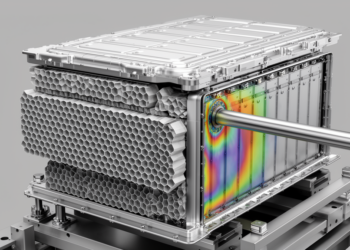
Review maps how EV battery packs survive side pole impacts through layered load paths and lightweight design trade-offs
Technology and Engineering

Review maps how EV battery packs survive side pole impacts through layered load paths and lightweight design trade-offs

October 28, 2026
Next Post
Virtual Reality Mindfulness Study Tests Whether Children Can Use Operation Calm

Virtual Reality Mindfulness Study Tests Whether Children Can Use Operation Calm

  • Mothers who receive childcare support from maternal grandparents show more optimized

    Mothers who receive childcare support from maternal grandparents show more parental warmth, finds NTU Singapore study

    27656 shares
    Share 11059 Tweet 6912
  • University of Seville Breaks 120-Year-Old Mystery, Revises a Key Einstein Concept

    1061 shares
    Share 424 Tweet 265
  • Bee body mass, pathogens and local climate influence heat tolerance

    682 shares
    Share 273 Tweet 171
  • Researchers record first-ever images and data of a shark experiencing a boat strike

    546 shares
    Share 218 Tweet 137
  • Groundbreaking Clinical Trial Reveals Lubiprostone Enhances Kidney Function

    531 shares
    Share 212 Tweet 133
Science

Embark on a thrilling journey of discovery with Scienmag.com—your ultimate source for cutting-edge breakthroughs. Immerse yourself in a world where curiosity knows no limits and tomorrow’s possibilities become today’s reality!

RECENT NEWS

  • HIV-1 in Zunyi shows high genetic diversity and pretreatment drug resistance
  • HbA1c Tracks Blood Sugar, Not Muscle Health, in Type 2 Diabetes
  • Knowledge graph links Hong Kong landslides to delayed rainfall hazards
  • Flooding and Heat Leave Mothers in Nigeria Distressed, Children Vulnerable

Categories

  • Agriculture
  • Anthropology
  • Archaeology
  • Athmospheric
  • Biology
  • Biotechnology
  • Blog
  • Bussines
  • Cancer
  • Chemistry
  • Climate
  • Earth Science
  • Editorial Policy
  • Marine
  • Mathematics
  • Medicine
  • Pediatry
  • Policy
  • Psychology & Psychiatry
  • Science Education
  • Science News
  • Social Science
  • Space
  • Technology and Engineering

Subscribe to Blog via Email

Enter your email address to subscribe to this blog and receive notifications of new posts by email.

Join 5,151 other subscribers

© 2025 Scienmag - Science Magazine

Welcome Back!

Login to your account below

Forgotten Password?

Retrieve your password

Please enter your username or email address to reset your password.

Log In
No Result
View All Result
  • HOME
  • SCIENCE NEWS
  • CONTACT US

© 2025 Scienmag - Science Magazine

Discover more from Science

Subscribe now to keep reading and get access to the full archive.

Continue reading