


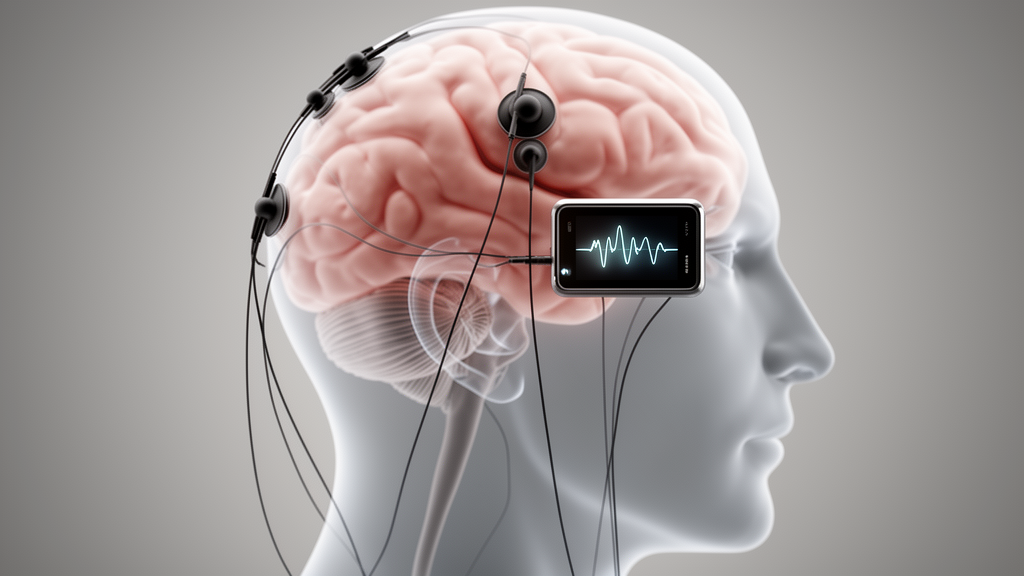
Published in BMC Biomedical Engineering in July 2024, the study aims to create warning devices that can prevent further patient injury and reduce stress by identifying the onset of seizures seconds before they occur. The algorithm is designed to be patient-specific, allowing for tailored thresholds that improve the accuracy of predictions while minimizing the computational burden typically associated with high-volume data processing.
The central challenge in seizure prediction is balancing high accuracy with low computational cost, as many existing algorithms require extensive initial data and significant processing time. To address this, the proposed method relies on only two effective EEG signal channels from the temporal lobes, eliminating the need for manual removal of artifacts through visual inspection. By focusing on a limited number of channels, the algorithm reduces the volume of data processed, which is crucial for the potential development of real-time, portable alarm devices. The study emphasizes that while many previous studies preprocessed data by removing artifacts, the proposed algorithm is designed to perform effectively even in the presence of natural environmental artifacts and noise.
The methodology involves a multi-stage process that begins with preprocessing, where the EEG signals are detrended and bandpass filtered to isolate effective epileptic frequencies. The researchers selected a 5-second window with 80% overlap for segmentation, using a Finite Impulse Response (FIR) band-pass filter with a Hamming window to ensure linearity in the filter phase. The bandwidth was set between 6 and 20 Hz, with a filter order of 220, which was determined to preserve more morphological information for seizure detection compared to other tested orders. This preprocessing step prepares the signal for subsequent analysis without the need for manual artifact rejection.
The core of the prediction stage employs the Discrete Wavelet Transform (DWT) to decompose the preprocessed signals into time-frequency components. The DWT provides simultaneous time and frequency information at multiple resolution levels, which is superior to traditional frequency transform methods for detecting the subtle changes associated with the IT period. The researchers utilized Daubechies (db) wavelets with six levels of resolution, finding that the detail coefficients were more effective in detecting the IT period. These coefficients are then used to parameterize the signal through an Autoregression (AR) model, which helps to identify the weak periodicities characteristic of the pre-ictal state.
Following the AR modeling, the algorithm applies Cepstrum analysis to the segmented signals. The Cepstrum, defined as the inverse Fourier transform of the log magnitude spectrum, is used to detect regular and slow periodic changes in the EEG. The study notes that the first Cepstrum coefficient is sufficient for prediction, significantly reducing the computational load. This step is crucial for distinguishing the IT period from the interictal period, as the seizure rhythm in the EEG is more regular and periodic compared to the background activity. The use of Cepstrum analysis allows the algorithm to deconvolute the EEG signal, separating the components generated by motivation signals and neuronal structures.
To further enhance accuracy and reduce the false-positive rate, the algorithm incorporates a median filter and compares the current epoch with a background section. The median filter is applied to the squared signal magnitude to remove random noise while preserving the edges between seizure and non-seizure states. The background period is calculated using an exponentially forgetting median filter, which allows for timely adaptation to state changes without increasing the computational burden. By comparing the current period of the main channel with the background and with the non-main channel, the algorithm generates dimensionless ratios that highlight the morphological differences between the two channels during the IT period.
The final stage of the algorithm involves averaging and calculating the positive envelope of the processed signals to prepare them for thresholding. The averaging step eliminates bursts and high-frequency artifacts, while the positive envelope facilitates the determination of patient-specific thresholds. The researchers found that different thresholds were required for each patient, and the threshold values were selected based on the training data to minimize error and optimize the prediction delay. The algorithm predicts a seizure when half of the acceptable output signals exceed their respective thresholds within a 100-second Seizure Occurrence Period (SOP) interval.
The performance of the proposed algorithm was evaluated on EEG data from 10 patients with temporal lobe epilepsy, collected through long-term monitoring at Mehrgan Hospital in Kerman, Iran. The dataset included 11 hours of interictal data and 34 minutes of ictal data, recorded from 26 electrodes at a sampling rate of 256 Hz. The results demonstrated a sensitivity of 87.5%, a specificity of 95.6%, and an accuracy of 92.6%. The false-positive rate (FPR) was 1.50 per hour of interictal data, with an average prediction time of 18.5 seconds before the onset of the seizure. These metrics indicate that the algorithm can provide a warning sufficient for initial management of epileptic seizures before clinical symptoms appear.
The study also compared the proposed method with two other short-term prediction algorithms, reference [18] and reference [20], applied to the same EEG dataset. The results showed that the proposed method outperformed the others in terms of accuracy, FPR, and prediction time. While reference [20] utilized a threshold-based classification approach with multiple parameters that required extensive tuning for each patient, the proposed method offered a more streamlined process with lower computational cost. The comparison highlighted the robustness of the AR-Cepstrum and signal morphology approach in handling artifacts and interictal epileptiform discharges, which often degrade the performance of other detection methods.
Additionally, the algorithm was tested on a synthetic adult epileptic EEG model derived from the Celka model. This model was modified to reflect the frequency characteristics of adult seizures, which typically occur between 0.5 and 10 Hz, as opposed to the lower frequencies seen in infants. The simulation results confirmed the robustness of the proposed method to artifacts and errors, demonstrating its potential for real-time application. The ability to process data continuously without manual artifact removal is a significant advantage for clinical deployment, as it reduces the need for specialized preprocessing and allows for more seamless integration into patient monitoring systems.
The study acknowledges several limitations, including the relatively small sample size of 10 patients and the fact that the channels were selected non-automatically based on the seizure focus. The authors note that while the algorithm shows promising results, further testing on a larger patient population is recommended to confirm its clinical performance. The data used in the study were collected for diagnostic purposes and are not publicly available due to privacy restrictions. Despite these limitations, the research provides a significant step towards the development of non-invasive, real-time seizure prediction devices that can improve the safety and quality of life for patients with epilepsy.
By leveraging existing EEG technology and advanced signal processing techniques, the proposed algorithm offers a practical solution for short-term seizure prediction. The focus on reducing computational cost and eliminating the need for manual artifact removal makes the method suitable for integration into portable devices, which could be used in various settings, including hospitals and home environments. This approach not only aims to prevent injury but also to reduce the psychological stress associated with the unpredictability of seizures.
In conclusion, the study presents a robust and efficient short-term seizure prediction algorithm that utilizes AR modeling, Cepstrum analysis, and signal morphology to detect the IT period in non-invasive EEG data. The algorithm’s high accuracy and low false-positive rate, combined with its low computational requirements, make it a promising candidate for clinical application. The successful validation on both real patient data and a synthetic adult EEG model underscores the method’s reliability and potential for future development.
Subject of Research: Short-term epileptic seizure prediction using non-invasive EEG signal processing
Article Title: Short-term epileptic seizures prediction based on cepstrum analysis and signal morphology
Article References: Tajadini, B., Seydnejad, S. R., & Rezakhani, S. (2024). Short-term epileptic seizures prediction based on cepstrum analysis and signal morphology. BMC Biomedical Engineering, 6(1), Article 6. https://doi.org/10.1186/s42490-024-00081-1
Image Credits: AI Generated
DOI: 10.1186/s42490-024-00081-1
Keywords: epilepsy, seizure prediction, EEG, biomedical engineering, signal processing, cepstrum analysis, autoregression, wavelet transform, medical devices, neurology, Short-term, epileptic
Cite Scienmag News
Denise Maddox. (November 10, 2026). New Algorithm Predicts Epileptic Seizures Using Two EEG Channels. Scienmag. https://scienmag.com/new-algorithm-predicts-epileptic-seizures-using-two-eeg-channels/
Denise Maddox. "New Algorithm Predicts Epileptic Seizures Using Two EEG Channels." Scienmag, 10 November 2026, https://scienmag.com/new-algorithm-predicts-epileptic-seizures-using-two-eeg-channels/. Accessed 10 November 2026.
Denise Maddox. "New Algorithm Predicts Epileptic Seizures Using Two EEG Channels." Scienmag. November 10, 2026. https://scienmag.com/new-algorithm-predicts-epileptic-seizures-using-two-eeg-channels/




