


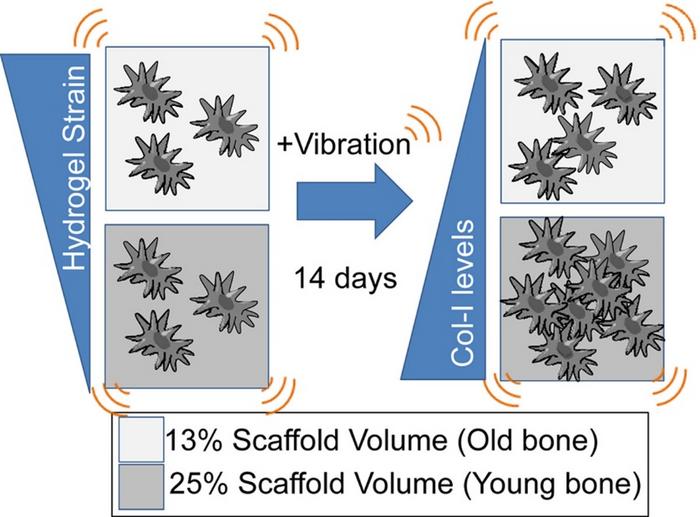
In a groundbreaking study led by Professors Gunes Uzer from the Mechanical and Biomedical Engineering Department at Boise State University, researchers have developed a sophisticated three-dimensional (3D) platform aimed at exploring the impact of mechanical signals on multicellular processes. This innovative approach allows for a comprehensive understanding of how aging and reduced mechanical stimuli influence bone health, specifically focusing on the mechanoresponsiveness of bone marrow. The research reveals significant insights that may pave the way for novel therapeutic strategies in combating age-related bone disorders.
The investigation highlights a major paradox: both elderly individuals and astronauts, despite engaging in regular physical activities, experience considerable bone loss. This contradiction highlights the critical role of bone mechanobiology—specifically, how mechanical signals dictate the behavior of mesenchymal stem cells (MSCs). These MSCs are pivotal in maintaining bone density and integrity; however, their functionality wanes with age and in simulated microgravity settings. This research emphasizes that reduced mechanical signal delivery within bone marrow adversely affects MSC activity, leading to diminished bone strength and integrity over time.
At the heart of this study is the groundbreaking concept of low-intensity vibration (LIV), which has begun to emerge as a viable intervention for restoring MSC proliferation in both aging and microgravity conditions. By simulating mechanical stress through LIV, researchers observed a potential recovery of MSC functions that are typically compromised in older adults. This discovery reinforces the hypothesis that maintaining an environment rich in mechanical signals may be integral to preserving bone density and enhancing the regenerative capacity of bone marrow stem cells as people age.
Understanding the mechanistic underpinnings of MSC behavior under varied mechanical stimuli is paramount. The team’s research highlights that MSCs, residing within adult musculoskeletal tissues, serve critical roles in tissue regeneration and repair. They act as progenitor cells, differentiating into osteoblasts, osteocytes, and adipocytes that contribute to bone modeling. With age or circumstances such as microgravity, the proliferative and osteogenic potential of these stem cells deteriorates, ultimately leading to compromised bone health. The research sheds light on the role of mechanical environments, such as treadmill activities or ladder climbing, that positively influence MSC function and, consequently, bone density.
The introduction of a 3D bone marrow analog represents a significant advancement in bone mechanobiology research. This biomimetic environment allows for the simulation of real-life mechanical stimulation experienced by bones, thereby permitting the quantification of MSC responses to various mechanical loads. By creating a cell-laden bone marrow analog with a three-dimensional printed polylactic acid (PLA) trabeculae and hyaluronic acid-based bone marrow matrix, the researchers have set the stage for in-depth analysis of the effects of trabecular bone volume on MSC mechanoresponsiveness during LIV protocols.
In their analyses, the researchers compared hydrogel strains produced during vibrational stimulation across different scaffold bone volumes—specifically 13% and 25%, corresponding to the estimated bone volumes of aged and young mice, respectively. Through rigorous finite element (FE) simulations combined with in vitro experimental validations, they unearthed a stark contrast: advanced-age trabecular densities produced higher hydrogel strains, while the scaffold mimicking younger densities exhibited less strain. This counterintuitive finding suggests that factors beyond mere mechanical strain are significantly influencing cell behavior and the overall health of bone marrow.
The implications of this study extend beyond the confines of academic inquiry. These findings underscore the potential of the 3D bone marrow analog in studying the intricate interactions between scaffold-lining and hydrogel-encapsulated cells. Such advanced models mimic complexities inherent in bone marrow mechanobiology, allowing researchers to assess the nuances of cellular responses to mechanical signals in distinct contexts, including those relevant to aging, physical inactivity, microgravity, and even radiation exposure.
Furthermore, the research could provide vital therapeutic insights into how engineered mechanical environments might be utilized to restore or enhance MSC function in the treatment of age-related bone degenerative diseases. For individuals grappling with the ramifications of aging on their bone health, understanding and potentially harnessing mechanotherapy could offer a pathway to improved musculoskeletal health.
The 3D bone marrow analog also opens doors for future investigations into how different mechanical environments influence the development of bone conditions and the potential for interventions that could ameliorate the impacts of reduced bone density and the onset of osteoporosis. The collaborative effort among researchers at Boise State University highlights the interdisciplinary nature of current biomechanical research, integrating principles from engineering, biology, and medicine.
As this line of research continues to evolve, the community can anticipate novel strategies designed to manipulate mechanical signals as a way to enhance MSC activity and overall bone health. Promoting this avenue of study could be crucial not only for elderly populations but also for astronauts facing unique challenges related to bone health in space.
In conclusion, this research represents a significant step forward in our understanding of bone mechanoresponsiveness and the cellular mechanisms underpinning muscle and bone health. The potential applications for these findings in clinical settings could vastly improve treatment options and outcomes for various populations, propelling the field of mechanobiology into a brighter future.
Cite Scienmag News
Beatrice Stafford. (March 31, 2025). New 3D Bone Marrow Model Unveils Trabecular Volume’s Impact on MSC Response and Aging-Related Bone Loss in Microgravity. Scienmag. https://scienmag.com/new-3d-bone-marrow-model-unveils-trabecular-volumes-impact-on-msc-response-and-aging-related-bone-loss-in-microgravity/
Beatrice Stafford. "New 3D Bone Marrow Model Unveils Trabecular Volume’s Impact on MSC Response and Aging-Related Bone Loss in Microgravity." Scienmag, 31 March 2025, https://scienmag.com/new-3d-bone-marrow-model-unveils-trabecular-volumes-impact-on-msc-response-and-aging-related-bone-loss-in-microgravity/. Accessed 4 September 2026.
Beatrice Stafford. "New 3D Bone Marrow Model Unveils Trabecular Volume’s Impact on MSC Response and Aging-Related Bone Loss in Microgravity." Scienmag. March 31, 2025. https://scienmag.com/new-3d-bone-marrow-model-unveils-trabecular-volumes-impact-on-msc-response-and-aging-related-bone-loss-in-microgravity/


