

In a groundbreaking study published in Translational Psychiatry, researchers have unveiled new insights into the neurobiological underpinnings of Attention Deficit Hyperactivity Disorder (ADHD) among adolescents by identifying distinct neuroimaging subtypes through state-of-the-art semi-supervised machine learning techniques. This pioneering research not only challenges the conventional one-size-fits-all perception of ADHD but also opens new avenues for personalized diagnosis and treatment strategies tailored to diverse neural profiles within this heterogeneous disorder.
ADHD, a neurodevelopmental condition characterized by inattention, hyperactivity, and impulsivity, has long been recognized as a heterogeneous disorder with varied clinical presentations and outcomes. While traditional diagnostic criteria focus primarily on behavioral symptoms, they often fail to capture the complex neural diversity that underlies these manifestations. The study by Chen et al. addresses this critical gap by employing advanced neuroimaging data analyses combined with machine learning to stratify adolescents with ADHD into biologically meaningful subgroups.
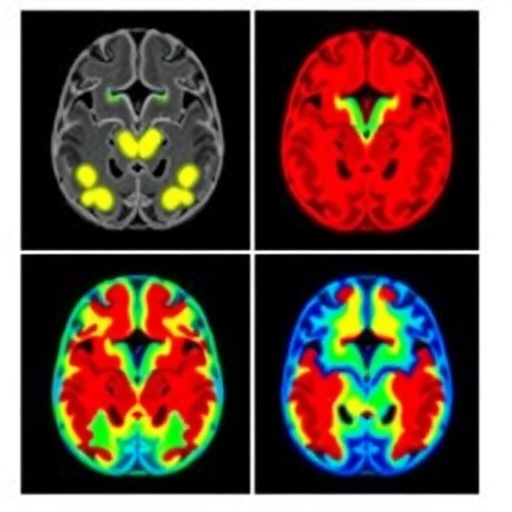
Utilizing structural and functional magnetic resonance imaging (MRI) data from a substantial cohort of adolescents, the researchers applied a novel semi-supervised learning framework designed to integrate labeled and unlabeled data. This approach allowed for the identification of subtle, yet clinically relevant, neural variations that may be overlooked by purely supervised or unsupervised methods. The resultant clustering revealed several distinct neuroimaging subtypes exhibiting unique patterns of brain morphology and connectivity.
One of the main findings of the study is the discovery of at least three neuroimaging subtypes within the adolescent ADHD population. Each subtype demonstrated differential alterations in key brain regions implicated in attention regulation, executive function, and impulse control. For example, one subtype exhibited marked reductions in prefrontal cortical thickness combined with hyperconnectivity in subcortical circuits. In contrast, another subtype showed widespread cortical thinning but hypoactivity in networks responsible for cognitive control. These neuroanatomical distinctions corresponded with variable clinical symptom severity and cognitive performance profiles.
This multi-dimensional neural characterization highlights the importance of considering ADHD as a spectrum of neurobiological constructs rather than a monolithic diagnostic category. By capturing the diverse brain imaging signatures, the study acknowledges the heterogeneity inherent in ADHD pathology and underscores the necessity for neurobiologically informed clinical interventions. Such precision medicine approaches could ultimately improve treatment efficacy and reduce trial-and-error prescribing prevalent in current psychiatric practice.
The use of semi-supervised learning in this context is particularly innovative. Traditional supervised learning requires large amounts of labeled data, which are often costly and time-consuming to obtain, especially in clinical populations. Conversely, unsupervised learning may identify clusters but lacks the ability to incorporate prior clinical knowledge effectively. Semi-supervised learning balances these paradigms by leveraging both labeled and unlabeled datasets, enhancing model robustness and the biological validity of resultant subtypes. This methodological advance could serve as a blueprint for future psychiatric neuroimaging research.
Importantly, the study also probed the relationship between these neuroimaging subtypes and behavioral phenotypes. By integrating comprehensive clinical assessments, the research team correlated brain imaging patterns with specific symptom clusters, cognitive tasks, and functional outcomes. This approach confirms that neural subtype distinctions translate into meaningful differences in real-world functioning, reinforcing the clinical utility of neuroimaging biomarkers.
The implications of the work extend beyond diagnosis; they crucially inform the development of targeted therapeutic interventions. For example, adolescents with prefrontal cortical thinning and associated executive dysfunction may benefit from cognitive training programs or neuromodulation techniques aimed at enhancing prefrontal activity. Conversely, individuals with altered subcortical hyperconnectivity might respond more favorably to pharmacological agents modulating dopamine pathways. Personalized treatment algorithms based on neuroimaging subtype identification could significantly enhance patient outcomes.
Moreover, the study paves the way for longitudinal investigations examining the stability of neuroimaging subtypes across developmental stages and treatment trajectories. Understanding how these brain signatures evolve could aid in predicting disease course and response to interventions. The researchers suggest that future work incorporating genetic and environmental data alongside neuroimaging will further elucidate the etiopathogenesis of ADHD subtypes and refine biomarker panels for clinical use.
Another notable aspect of the research is its potential to reduce stigma and increase self-understanding among affected adolescents and their families. Moving away from purely behavior-based diagnoses to biologically grounded classifications emphasizes that ADHD represents a spectrum of brain-based differences rather than character flaws or willful misbehavior. This neurobiological framing could promote empathy and tailor educational strategies to individual neural profiles.
Technically, the study leveraged high-resolution multimodal MRI sequences and advanced preprocessing pipelines, ensuring data quality and reproducibility. The machine learning models implemented neural network architectures capable of capturing non-linear relationships within high-dimensional imaging data. Cross-validation techniques and independent replication cohorts were employed to validate findings, underscoring the robustness of the neuroimaging subtypes identified.
Despite these major advancements, the authors acknowledge limitations, such as the predominantly adolescent sample and lack of ethnic diversity, which may constrain generalizability. They also point out the need for integrating real-world data from wearable devices and ecological momentary assessments to complement neuroimaging with behavioral dynamics in naturalistic environments. Addressing these challenges will enhance the ecological validity of neuroimaging subtype frameworks.
In conclusion, this transformative study marks a significant leap forward in understanding the neurobiological heterogeneity of ADHD during adolescence. By uniting cutting-edge machine learning with comprehensive neuroimaging, Chen and colleagues illuminate distinct brain-based subtypes that correlate with varied clinical expressions. This paradigm shift from symptom clusters to neural mechanisms heralds a new era of precision psychiatry for ADHD, promising improved diagnostics, tailored treatments, and ultimately, better outcomes for millions of young individuals worldwide. The findings serve as a call to action for the field to embrace integrative computational neuroimaging approaches as standard tools in the quest to unravel complex psychiatric disorders.
Cite Scienmag News
Colin Clarke. (November 17, 2025). Neuroimaging Reveals ADHD Subtypes in Adolescents. Scienmag. https://scienmag.com/neuroimaging-reveals-adhd-subtypes-in-adolescents/
Colin Clarke. "Neuroimaging Reveals ADHD Subtypes in Adolescents." Scienmag, 17 November 2025, https://scienmag.com/neuroimaging-reveals-adhd-subtypes-in-adolescents/. Accessed 4 September 2026.
Colin Clarke. "Neuroimaging Reveals ADHD Subtypes in Adolescents." Scienmag. November 17, 2025. https://scienmag.com/neuroimaging-reveals-adhd-subtypes-in-adolescents/


