

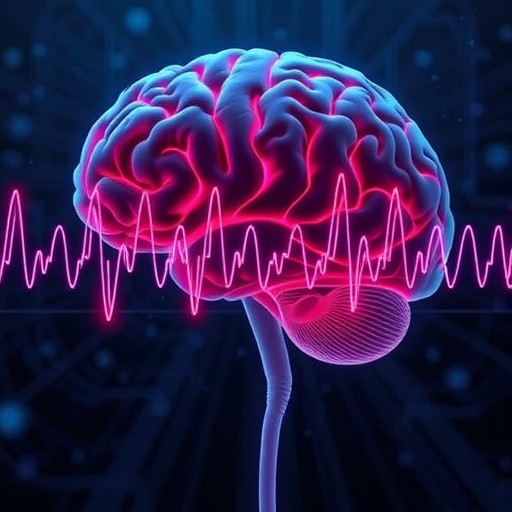
In the evolving landscape of neuroscience, the exploration of neural oscillations presents a compelling frontier in understanding psychiatric disorders, particularly depression. Recent research, as published in Translational Psychiatry, has illuminated the pivotal role that gamma oscillations—high-frequency brain waves—may play in the etiology and potential treatment of depression. This groundbreaking study by Yin and Li offers profound insights into how these rhythmic oscillations might influence neural circuitry and mood regulation, potentially revolutionizing therapeutic approaches.
Neural oscillations are the rhythmic or repetitive patterns of neural activity in the central nervous system. Among the various frequency bands, gamma oscillations typically range from 30 to 100 Hz and have been implicated in higher-level cognitive functions such as attention, memory, and perception. Understanding their dysfunction in depression could uncover new mechanisms that underlie this pervasive mental health condition, long known for its complexity and multifactorial origins.
Depression, characterized by persistent low mood, anhedonia, and cognitive impairments, has historically been attributed to neurotransmitter imbalances and structural brain changes. However, an emerging body of evidence now suggests that abnormal neural synchrony and oscillatory activity could be equally significant. Gamma oscillations, in particular, appear to modulate neuronal communication across distributed brain networks, facilitating the integration of emotional and cognitive information.
Yin and Li’s study meticulously examines the alterations seen in gamma oscillatory patterns in depressive subjects, integrating findings from both animal models and human neuroimaging studies. They report that depressed individuals often exhibit reduced gamma power and coherence particularly in the prefrontal cortex and limbic regions, areas intimately involved with affect regulation and executive function. Such disruptions may lead to impaired neural connectivity, yielding the characteristic symptoms of depression.
Furthermore, the research highlights the bidirectional relationship between gamma oscillations and neurochemical systems. For instance, the role of GABAergic interneurons in generating gamma rhythms is well-documented, and these neurons are known to be dysfunctional in depression. By influencing excitatory-inhibitory balance, gamma oscillations can modulate serotonin and glutamate transmission, two neurotransmitter systems critically implicated in mood disorders.
The therapeutic implications of these findings are profound. Traditional antidepressants primarily target monoaminergic systems and often require weeks of administration before clinical effects materialize. In contrast, interventions aimed at restoring or modulating gamma oscillatory activity could offer faster and more precise treatment outcomes. Techniques such as transcranial alternating current stimulation (tACS) and transcranial magnetic stimulation (TMS), which can entrain neuronal rhythms noninvasively, show promise in normalizing gamma oscillations and alleviating depressive symptoms.
Moreover, the study discusses the potential of closed-loop neuromodulation paradigms that can detect aberrant gamma oscillations in real time and deliver targeted stimulation accordingly. This approach could tailor treatment to individual neural signatures, marking a shift toward personalized psychiatry.
The authors also delve into the molecular underpinnings linking gamma oscillations to depression, exploring how neuroinflammatory processes and synaptic plasticity might disrupt oscillatory dynamics. Elevated pro-inflammatory cytokines commonly observed in depressed patients can impair interneuron function, thereby dampening gamma synchrony. Conversely, treatments that reduce inflammation or enhance synaptic connectivity may help restore normal oscillatory patterns.
Importantly, these revelations underscore gamma oscillations not merely as biomarkers but as active contributors to the pathophysiology of depression. By modulating network-level communication, they influence cognitive-emotional integration and behavioral outputs. This mechanistic perspective challenges reductionist views and advocates for a systems neuroscience approach to mood disorders.
The research also aligns with accumulating evidence that cognitive therapies might influence neural oscillations. Mindfulness meditation and cognitive behavioral therapy (CBT), through regulating attentional and emotional control circuits, could indirectly enhance gamma activity, thereby complementing pharmacological and neuromodulatory treatments.
Yin and Li emphasize that further studies are imperative to decode the precise causal relationships between gamma oscillations and depressive phenotypes. Longitudinal research employing multimodal imaging, electrophysiology, and computational modeling will be crucial to unravel dynamic circuit alterations and their responsiveness to interventions.
The integration of advanced neurotechnologies, including optogenetics in animal models and high-density MEG in humans, can deepen understanding of how gamma oscillations orchestrate large-scale brain networks under both health and pathological states. Such tools may ultimately pave the way for biomarker-driven diagnostics and targeted therapies, optimizing clinical outcomes for depression.
As we stand at the intersection of neuroscience and psychiatry, the role of neural oscillations, particularly gamma frequencies, beckons a paradigm shift in conceptualizing and tackling depression. This study not only underscores oscillatory dysfunction as a hallmark of depressive disorders but also opens horizons for innovative neuromodulation techniques that could transform patient care.
The translational potential of modulating gamma rhythms extends beyond depression as well, holding promise for other neuropsychiatric conditions marked by neural dysrhythmias, including schizophrenia and anxiety disorders. Future research expanding this oscillatory framework might unravel shared and distinct mechanisms across mental illnesses.
In summary, the elucidation of gamma oscillations’ role in depression advances the neuroscientific narrative from static brain abnormalities to dynamic neurophysiological disruptions. It enriches our grasp of the brain’s rhythmic symphony and its profound influence over mental health, heralding a new era of rhythm-based diagnostics and therapies for one of the most debilitating global diseases.
Subject of Research: Neural oscillations in depression, with a focus on gamma oscillations and their role in mood regulation and potential therapeutic interventions.
Article Title: Role of neural oscillations in depression: highlights on gamma oscillations.
Article References:
Yin, YY., Li, YF. Role of neural oscillations in depression: highlights on gamma oscillations. Transl Psychiatry (2026). https://doi.org/10.1038/s41398-026-03991-x
Image Credits: AI Generated


