


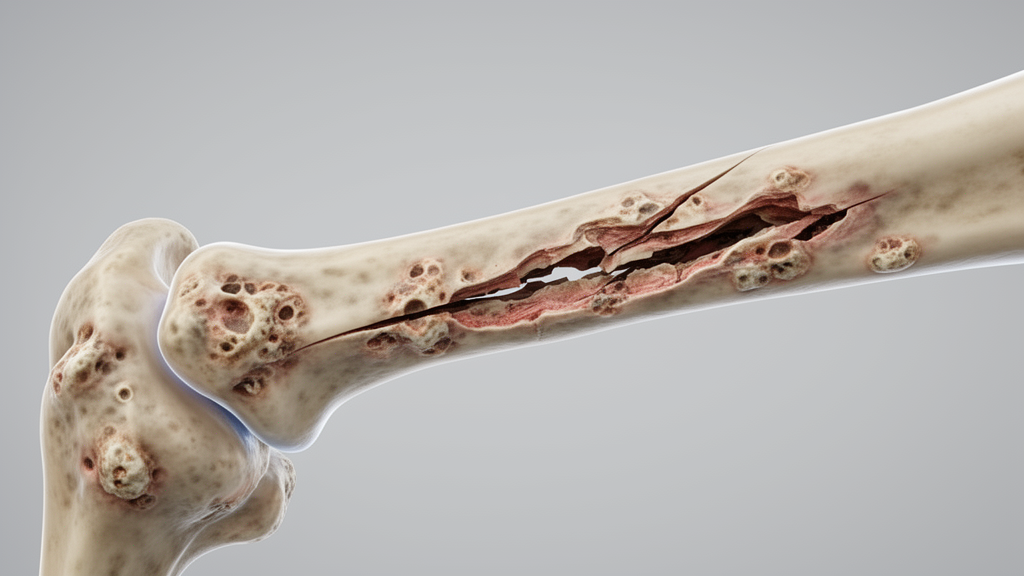
Nearly half of patients with multiple myeloma experience pathological fractures, according to a retrospective analysis of 692 cases treated at a tertiary teaching hospital in Changsha, China. The study, published in BMC Cancer, reports an overall fracture incidence of 48.4 percent among patients newly diagnosed with the disease between 2007 and 2023, making bone failure one of the most common severe complications facing people with this malignancy.
Multiple myeloma is the second most prevalent hematologic malignancy, and pathological fracture represents the most severe complication of the osteolytic bone disease that accompanies it, significantly impairing patient survival and quality of life. Because most existing studies of fracture patterns in myeloma have focused on Western populations, data on Chinese patients had remained limited. The researchers set out to quantify the incidence of pathological fractures and identify the clinical factors associated with them in this group.
The single-center retrospective observational study reviewed the records of 692 patients with newly diagnosed multiple myeloma, all of whom underwent imaging examinations—X-ray, CT, or MRI—to confirm the diagnosis of pathological fracture. The spine was by far the most frequent fracture site, involved in 72.2 percent of fracture cases, followed by the ribs at 30.0 percent and the limbs at 6.9 percent.
Using binary logistic regression, the team identified six factors associated with pathological fracture. Four were positively associated: overweight status, defined as a body mass index of 24 or higher; hypoalbuminemia, with serum albumin below 35 grams per liter; hyperglobulinemia, with serum globulin above 40 grams per liter; and a worse Eastern Cooperative Oncology Group performance status, the standard clinical scale capturing how well a patient can carry out daily activities.
Two factors showed an inverse association with pathological fractures: glucocorticoid use and bisphosphonate use. The study reports these as statistical associations identified by the binary logistic regression; it did not examine the mechanisms underlying the link between these medications and lower fracture occurrence, and the authors note that the observed associations cannot establish temporal or causal relationships.
The authors caution that indicators including elevated BMI, hypoalbuminemia, hyperglobulinemia and a high ECOG performance-status score may assist clinicians in identifying patients likely to present with pathological fractures during clinical evaluation, but they emphasize a critical limitation: the observed associations cannot establish temporal or causal relationships, given that clinical variables were assessed at the time of the fracture event. A retrospective, single-center design further means the findings describe one hospital’s patient population rather than the broader Chinese myeloma population.
Nevertheless, the high fracture prevalence—nearly one in two patients—underscores the scale of skeletal morbidity in multiple myeloma and the potential value of simple, routinely measured indicators such as BMI, serum albumin, serum globulin, and ECOG status in flagging vulnerable patients. The researchers note that whether interventions targeting these factors can actually reduce fracture rates warrants further prospective investigation, a question that will require following patients forward in time rather than looking back at records.
For a disease in which bone complications can significantly impair survival and quality of life, the study offers a detailed single-center picture of fracture patterns among 692 Chinese patients with multiple myeloma, and a reminder that the skeleton frequently bears the heaviest toll of this malignancy.
Subject of Research: Factors associated with pathological fractures among patients with multiple myeloma: a single-center retrospective analysis of 692 cases
Article Title: Factors associated with pathological fractures among patients with multiple myeloma: a single-center retrospective analysis of 692 cases
Article References: Tan, S., Yang, X., Li, M., Ruan, C., Li, L., & Zhang, A. (2026). Factors associated with pathological fractures among patients with multiple myeloma: a single-center retrospective analysis of 692 cases. BMC Cancer. https://doi.org/10.1186/s12885-026-17172-y
Image Credits: AI Generated
DOI: 10.1186/s12885-026-17172-y
Keywords: multiple myeloma, pathological fracture, bone disease, bisphosphonates, retrospective study, oncology, hematologic malignancy, osteolytic lesions, China, BMC Cancer, Factors, associated
Cite Scienmag News
Nathaniel Bowman. (October 24, 2026). Nearly Half of Multiple Myeloma Patients Suffer Pathological Fractures, Chinese Study Finds. Scienmag. https://scienmag.com/nearly-half-of-multiple-myeloma-patients-suffer-pathological-fractures-chinese-study-finds/
Nathaniel Bowman. "Nearly Half of Multiple Myeloma Patients Suffer Pathological Fractures, Chinese Study Finds." Scienmag, 24 October 2026, https://scienmag.com/nearly-half-of-multiple-myeloma-patients-suffer-pathological-fractures-chinese-study-finds/. Accessed 24 October 2026.
Nathaniel Bowman. "Nearly Half of Multiple Myeloma Patients Suffer Pathological Fractures, Chinese Study Finds." Scienmag. October 24, 2026. https://scienmag.com/nearly-half-of-multiple-myeloma-patients-suffer-pathological-fractures-chinese-study-finds/


