


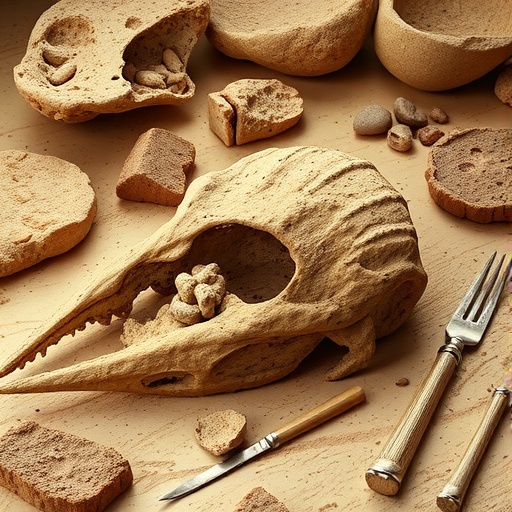
New insights into the subsistence practices of Neanderthals have emerged following an extensive zooarchaeological analysis conducted at the Middle Paleolithic site of Arrillor in Álava, Spain. This research, led by a team of experts including Romero, A.J., Arceredillo, D., and Díez Fernández-Lomana, provides a unique window into the dietary habits and hunting strategies of these ancient peoples. As one delves into the analysis, it becomes apparent that the Neanderthals who inhabited this region were not just simple foragers; rather, they exhibited a complex understanding of their environment and the fauna within it.
The archaeological site of Arrillor has presented a wealth of vertebrate remains, allowing researchers to reconstruct the Neanderthal diet with remarkable precision. The analysis undertaken reveals that these early humans had access to a diverse range of animal species, showcasing not only their adaptability but also their strategic approach to hunting. The findings challenge long-held beliefs that Neanderthals were primarily focused on large game, highlighting instead a varied diet that included smaller fauna and possibly even scavenging behaviors.
One of the remarkable aspects of this research is the meticulous excavation process. Layers of sediment were carefully analyzed, yielding an impressive collection of faunal remains. Each bone provides critical clues to the ecological context of the time, reflecting the climatic conditions and available resources. By employing cutting-edge techniques in zooarchaeology, such as stable isotope analysis and advanced dating methods, the researchers have painted a detailed picture of life during the Middle Paleolithic period.
The implications of these findings extend beyond mere diet. They speak volumes about the social organization of Neanderthals and their ability to collaborate within groups while engaging in complex hunting strategies. Evidence suggests that these early humans often worked together to hunt larger game, demonstrating a level of social sophistication not previously attributed to them. The social dynamics inherent in these activities hint at a culture rich in cooperative behaviors.
Moreover, the diversity of the hunted species at Arrillor indicates a profound adaptability to varying environmental conditions. As the climate fluctuated, so too did the choices available to Neanderthals. This adaptability may have been a crucial factor in their survival during periods of climatic stress, showcasing their resilience in a world that was often harsh and unforgiving. The ability to switch between different food sources depending on availability is a testament to their resourcefulness.
Technological advancements also played a significant role in improving hunting success rates. The tools that have been recovered from the site reveal a sophisticated understanding of stone technology. From finely crafted blades to general-purpose hand axes, these implements were essential for effective butchering and processing of game. The innovation seen in these tools points not only to the intelligence of the Neanderthals but also to their capacity for planning and foresight in hunting endeavors.
As research continues, the question arises: What can we learn about the ecological impact of Neanderthal activities? The analysis suggests that hunting and gathering practices had significant effects on local fauna populations. Understanding these impacts can offer further insights into the relationship between ancient humans and their ecosystems, highlighting the need for a nuanced view of Neanderthal interactions with their environment.
Furthermore, the study has implications for how we view Neanderthals in the context of human evolution. The perception of Neanderthals as brutish and limited in scope may be outdated. Instead, emerging evidence suggests they possessed a rich culture, capable of adapting to changes in their surroundings while also exhibiting complex social behaviors, such as the sharing of resources.
The significance of the findings resonates beyond the immediate archaeological community. They prompt a re-examination of how we educate the public about our evolutionary history, particularly regarding Neanderthals. Engaging narratives around their lives can help foster appreciation for our ancient relatives and encourage a deeper understanding of the human story as a whole.
In conclusion, the zooarchaeological analysis of the Arrillor site has unveiled a wealth of information regarding Neanderthal subsistence practices that challenges previous stereotypes. The research not only illuminates the dietary diversity and adaptability of these fascinating beings but also enriches our understanding of human evolution, social organization, and survival strategies. As future studies emerge, we anticipate uncovering even more intriguing details about the Neanderthals and their place in the tapestry of prehistoric life.
The detailed work done in this study, published in the journal Archaeological and Anthropological Sciences, is an excellent contribution to the field and offers a substantial leap in our understanding of Neanderthal life. As scholars continue to investigate these ancient practices, we are likely to learn more about how early humans thrived in a world that was vastly different yet fundamentally similar to our own.
Romero, A.J., Arceredillo, D., Díez Fernández-Lomana, J.C. et al. Subsistence Practices of Neanderthals: Zooarchaeological Analysis of the Middle Paleolithic Site of Arrillor (Álava, Basque Country, Spain).
Archaeol Anthropol Sci 17, 226 (2025). https://doi.org/10.1007/s12520-025-02328-x
Cite Scienmag News
Daisy Hatcher. (November 14, 2025). Neanderthal Diet Uncovered: Zooarchaeological Insights from Arrillor. Scienmag. https://scienmag.com/neanderthal-diet-uncovered-zooarchaeological-insights-from-arrillor/
Daisy Hatcher. "Neanderthal Diet Uncovered: Zooarchaeological Insights from Arrillor." Scienmag, 14 November 2025, https://scienmag.com/neanderthal-diet-uncovered-zooarchaeological-insights-from-arrillor/. Accessed 3 September 2026.
Daisy Hatcher. "Neanderthal Diet Uncovered: Zooarchaeological Insights from Arrillor." Scienmag. November 14, 2025. https://scienmag.com/neanderthal-diet-uncovered-zooarchaeological-insights-from-arrillor/


