


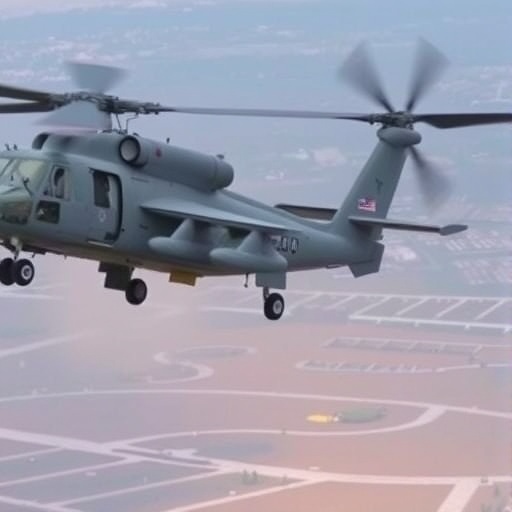
The U.S. Naval Research Laboratory’s Scientific Development Squadron One (VXS-1) stands at the forefront of airborne scientific experimentation and technology development within the U.S. Navy, serving as a critical nexus for transforming laboratory innovations into operational capabilities. Located at Naval Air Station Patuxent River, Maryland, VXS-1 is the Navy’s sole research and development squadron dedicated to testing advanced airborne systems across a diverse fleet of aircraft specially modified to meet unique scientific and technological demands. This dynamic unit plays an indispensable role in bridging the gap between theoretical research and practical deployment, directly contributing to the technological superiority and readiness of the Naval Research Enterprise.
VXS-1’s mission is ambitious yet sharply focused: to provide the Navy with cutting-edge airborne platforms that facilitate rigorous testing of new technologies, ensuring that innovative systems are not only scientifically valid but also operationally effective. In this capacity, the squadron collaborates intimately with scientists and engineers from the Naval Research Laboratory (NRL), supporting experimental research that spans a broad spectrum of naval priorities, including sensor development, communications, environmental monitoring, and missile defense technology. The results of these collaborations have a direct impact on enhancing naval warfighting capabilities and shaping the future of maritime security.
The squadron’s Commanding Officer, Commander Tony Levine, emphasizes the strategic importance of their work by highlighting the squadron’s dual role—serving as both a laboratory in the sky and as a mission-ready entity committed to national defense. Each flight operation embodies the transition from theory to practice, converting lines of code and prototypes into tangible technological advantages for Navy personnel operating in complex and contested environments. This workforce-intensive process of iterative testing and refinement ensures that new tools fielded to the Navy undergo the necessary validation to thrive under the stress of real-world conditions.
Architecturally, VXS-1’s fleet is tailored for versatility and capability, featuring several aircraft platforms that provide varied testing envelopes and payload capacities. The P-3 Orion, renowned for its robust airframe and ample payload space, serves as the primary platform for experiments that require substantial instrumentation, such as advanced sensor arrays and communications suites. One of the squadron’s notable recent initiatives involved deploying sensor-equipped buoys in the path of hurricanes, leveraging these data streams to refine models that predict wave dynamics and storm surge impacts—key information that safeguards naval vessels, shore installations, and civilian populations alike.
In parallel, the Twin Otter aircraft delivers exceptional performance for low-altitude scientific missions, enabling precise environmental monitoring and mapping operations. Its maneuverability and structural adaptability allow it to carry high-resolution imaging and atmospheric data-gathering instruments crucial for coastal and littoral zone assessments. These capabilities support Navy operations in environments where detailed environmental intelligence directly informs tactical and strategic decision-making.
Complementing these platforms, the C-12 aircraft operates at higher altitudes, providing an ideal testbed for evaluating missile defense systems and advanced communications relays. Its ability to operate efficiently at elevated flight levels facilitates experimentation with long-range sensing technologies and secure data links, which are fundamental to maintaining seamless integration across the Navy’s larger sensor and weapons network. Testing on the C-12 thus advances critical components of layered defense architectures designed to thwart emerging threats from adversaries.
Behind these technologically sophisticated flight operations is a dedicated cadre of personnel who enable rapid development cycles and agile responses to research needs. Project liaison officers like Steve Rorke are pivotal in coordinating seamless transitions from laboratory prototypes to airborne experimentation. Their role streamlines the complex logistics and technical support necessary for integrating scientific payloads into the squadron’s aircraft, thereby accelerating the path from conceptual innovation to operational use.
The squadron’s capability to serve as both a proving ground and a demonstration platform positions it as a linchpin in the Navy’s broader innovation ecosystem. By providing real-world testing environments that push emerging technologies to their limits, VXS-1 ensures that solutions delivered to the Fleet meet rigorous standards for performance, reliability, and survivability. This process goes beyond mere validation—it informs design refinements, operational procedures, and integration strategies that collectively augment naval effectiveness and survivability.
Operationally, VXS-1 maintains a commitment to a “warfighter-first” ethos, recognizing that every experiment and test ultimately supports sailors and Marines deployed worldwide. Operations Officer Brandon Bui expresses this ethos by stressing that each mission pushes the envelope to deliver tomorrow’s science and technology solutions to today’s operational forces. This forward-looking perspective embodies the squadron’s urgent and practical approach to research, where the accelerated delivery of mission-ready capabilities can pivotally influence conflict outcomes and national security.
Science underpinning the squadron’s work spans multiple domains, integrating aeronautical engineering, advanced sensor technologies, environmental science, and cyber-physical systems. Through continuous airborne experimentation, VXS-1 contributes a critical feedback loop—enabling scientists to iteratively improve their innovations based on empirical data collected under authentic flight conditions. This loop is vital in ensuring that technological advancements keep pace with the evolving complexity of maritime operations and potential adversary capabilities.
Furthermore, VXS-1’s unique role fosters interdisciplinary collaboration between military specialists, civilian researchers, and industry partners. The squadron acts as a dynamic testbed bringing together a diverse range of expertise necessary to tackle the multifaceted challenges inherent in modern naval warfare. This collaborative environment accelerates maturation of technologies from the initial design stage to full operational capability, supporting a resilient and technologically agile naval force prepared for future threats.
Ultimately, Scientific Development Squadron One exemplifies the Navy’s broader commitment to scientific excellence and innovation as foundational pillars of national defense. By maintaining advanced capabilities for airborne technology testing and rapidly integrating new systems into operational use, VXS-1 ensures that the U.S. Navy remains at the vanguard of military technology. The squadron’s efforts not only empower the warfighter with superior tools but also embody a forward-thinking model for how science and engineering can directly translate into tactical and strategic advantage.
News Publication Date: May 2, 2025
Web References:
Cite Scienmag News
Courtney Benton. (August 12, 2025). Navy’s Airborne Lab Puts New Technology to the Test. Scienmag. https://scienmag.com/navys-airborne-lab-puts-new-technology-to-the-test/
Courtney Benton. "Navy’s Airborne Lab Puts New Technology to the Test." Scienmag, 12 August 2025, https://scienmag.com/navys-airborne-lab-puts-new-technology-to-the-test/. Accessed 3 September 2026.
Courtney Benton. "Navy’s Airborne Lab Puts New Technology to the Test." Scienmag. August 12, 2025. https://scienmag.com/navys-airborne-lab-puts-new-technology-to-the-test/


