


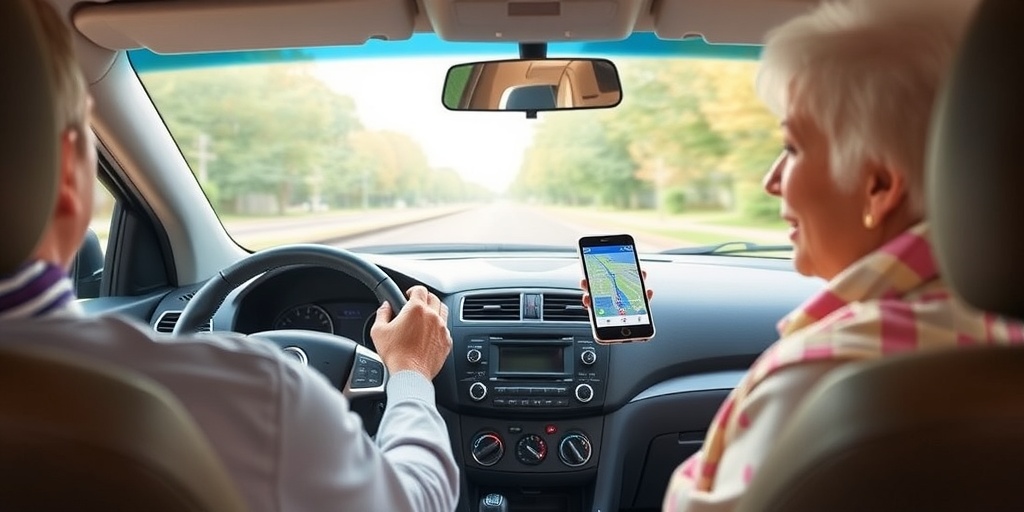
In our increasingly fast-paced world, reliance on technology has become commonplace. Consider the realm of navigation: GPS systems are not merely luxury items but essential tools that have transformed how we traverse our streets. A recent study sheds light on a particularly crucial demographic—the older adult population—and explores how GPS technology can enhance their driving experience. The implications are profound, suggesting that such innovations can significantly improve the quality of life for older adults by granting them greater independence and mobility.
Driving remains a preferred mode of transport among older adults, a notion that underscores the need for solutions tailored to their unique challenges. Age-related cognitive decline can act as a barrier to driving proficiency, understandably diminishing confidence and frequency on the road. According to researchers led by Sol Morrissey from the University of East Anglia, the integration of electronic navigation systems may serve as a facilitating tool for enhancing driving safety and overall mobility. The quest for understanding how navigation aids influence driving behaviors has paved the way for new insights into this critical area of public health.
Research involved an extensive survey of 895 older drivers, predominantly those over the age of 65, where participants provided feedback on their driving habits, histories, and cognitive assessments. The methodology also included subjective questionnaires that focused on assessing wayfinding abilities—a skill that significantly impacts driving confidence and competence. The findings revealed that over 80% of participants utilized navigational assistance, with a majority employing GPS for a considerable portion of their journeys.
Interestingly, most survey respondents indicated a balanced approach to GPS usage. While more than half acknowledged using the technology for selective trips, over 70% relied on GPS for entire journeys from start to finish. This suggests a nuanced relationship between older drivers and navigation technology; they appear willing to embrace advancements that enhance their mobility while still retaining a level of traditional driving practices.
Among participants who demonstrated weaker wayfinding skills, a clear distinction emerged. Those who utilized GPS reported a higher rate of driving mobility compared to their peers who navigated without such assistance. The results indicate that GPS technology may specifically cater to individuals with poorer spatial awareness, effectively compensating for the challenges posed by cognitive aging. A valuable takeaway is that reliance on GPS is not simply a matter of convenience but a means of empowerment for those who face unique barriers.
The implications of these findings extend beyond individual convenience. By supporting older adults in harnessing GPS technology, we can empower them to maintain their driving independence—an essential aspect of autonomy and quality of life. A lack of mobility can lead to social isolation and deteriorating physical health, underscoring the need for solutions that keep older adults connected to their communities. The research emphasizes the importance of incorporating tools like GPS into broader strategies aimed at promoting safe and confident driving in older populations.
Future studies may further delve into how cultural differences, geographic locations, and the specific characteristics of various navigation systems play a role in this dynamic. With technology continuously evolving, the impact of passenger assistance and the role of copilots cannot be overlooked. As we adapt to changing demographics and the increasing integration of technology into everyday life, it becomes imperative to understand how best to support older adults on the road.
The authors of this pivotal study champion the notion that driving is essential not just for transportation but for maintaining a meaningful and fulfilling life. The goal is to foster an environment where older drivers can utilize technology to support, rather than hinder, their ability to navigate their world. As GPS technology becomes more prevalent, its potential benefits for this demographic warrant further exploration.
In conclusion, the convergence of technology and aging presents a unique opportunity to improve driving experiences for older adults. The promising results of Morrissey and colleagues’ research indicate that with the right tools, older adults can thrive on the road, actively participating in their lives and communities. The results lay the groundwork for further inquiry and practical applications of navigating technology in enhancing the mobility and wellbeing of older adults.
As society grapples with the challenges posed by an aging population, it becomes increasingly clear that we must embrace innovations that facilitate independence. Supporting older drivers in using GPS capability represents a meaningful step towards fostering resilience among this demographic. Through strategic integration of such tools in everyday life, we can enhance the autonomy, safety, and social connectivity of older adults, ultimately contributing to their overall wellbeing.
Cite Scienmag News
Beatrice Stafford. (April 3, 2025). Navigating Independence: How GPS Technology Empowers Older Adult Drivers. Scienmag. https://scienmag.com/navigating-independence-how-gps-technology-empowers-older-adult-drivers/
Beatrice Stafford. "Navigating Independence: How GPS Technology Empowers Older Adult Drivers." Scienmag, 3 April 2025, https://scienmag.com/navigating-independence-how-gps-technology-empowers-older-adult-drivers/. Accessed 6 September 2026.
Beatrice Stafford. "Navigating Independence: How GPS Technology Empowers Older Adult Drivers." Scienmag. April 3, 2025. https://scienmag.com/navigating-independence-how-gps-technology-empowers-older-adult-drivers/


