


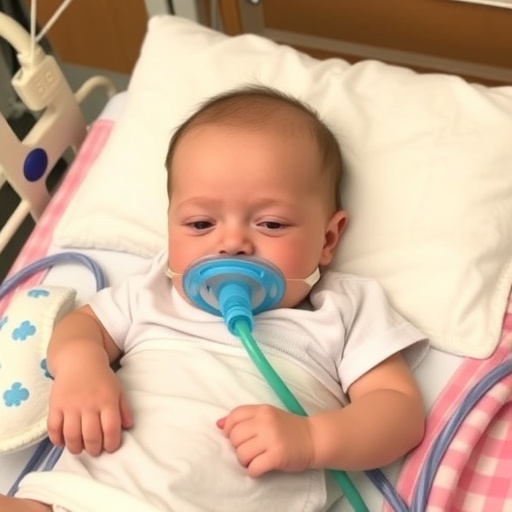
In the intricate realm of fetal development, congenital diaphragmatic hernia (CDH) emerges as a perplexing and formidable challenge, tethered to profound respiratory complications that extend well beyond infancy. CDH is characterized by a defect in the formation of the diaphragm during fetal growth, a condition that disrupts the anatomical partition between the thoracic and abdominal cavities. This anomaly allows abdominal organs to protrude into the chest, compressing the developing lungs and dramatically altering their growth trajectory. The consequences manifest primarily as pulmonary hypoplasia, where underdeveloped lungs are insufficient to meet postnatal oxygen demands, and pulmonary hypertension, which further compromises respiratory efficiency. Together, these pathophysiological hallmarks contribute to significant morbidity and mortality rates associated with this congenital disorder.
The global incidence of CDH reveals its status as a relatively rare yet impactful birth defect. Epidemiological estimates place the incidence of this condition between approximately 1.7 and 5.7 cases per 10,000 live births, with a commonly reported prevalence figure of one in every 4,000 births. Despite its rarity, the burden on affected individuals and healthcare systems is substantial due to the complexity of respiratory support required and the long-term management of associated sequelae. Over recent decades, advances in neonatal intensive care and surgical interventions have contributed to a gradual decrease in mortality rates among infants born with CDH. However, survival is only part of the challenge, as many survivors face enduring respiratory and developmental challenges.
One of the most compelling aspects of CDH pathology is the disruption of lung development at a critical juncture—branching morphogenesis. This early phase of pulmonary formation involves the repetitive branching of epithelial tubes, establishing the vast network necessary for effective gas exchange. In CDH, this process is impeded by mechanical and biochemical alterations induced by the herniated abdominal contents occupying space within the thoracic cavity. The resultant reduction in alveolar units, the microscopic air sacs vital for oxygen and carbon dioxide exchange, compromises lung function from the outset. This structural inadequacy complicates efforts to ventilate affected neonates, who often require mechanical respiratory support.
Adding dimensional complexity is the impairment of vasculogenesis in CDH-affected lungs. Pulmonary blood vessels develop in conjunction with airways, and their abnormal formation contributes to heightened pulmonary vascular resistance. This physiological aberration lays the groundwork for pulmonary hypertension, imposing increased strain on the right heart and diminishing oxygen delivery. The confluence of hypoplastic airways and vascular abnormalities compounds the respiratory compromise experienced by these infants and challenges clinicians seeking to optimize ventilation strategies that minimize additional injury.
Mechanical ventilation, a lifesaving tool in neonatal intensive care units, presents unique challenges in infants with CDH. The immature and structurally compromised lungs are particularly vulnerable to ventilator-induced lung injury (VILI), a phenomenon where the mechanical forces applied during ventilation exacerbate lung damage and inflammation. The delicate balance between providing sufficient respiratory support and avoiding overstretching fragile lung tissues demands nuanced approaches tailored to the individual patient. VILI not only jeopardizes immediate recovery but can also precipitate chronic lung disease, extending the burden of illness into childhood and beyond.
While mortality rates in CDH have been decreasing, survivors often navigate a complex landscape of long-term respiratory morbidity. Chronic pulmonary sequelae can persist for years, and in some cases extend into adulthood, significantly impacting quality of life. These sequelae include ongoing difficulties with lung function, susceptibility to respiratory infections, and potential development of bronchopulmonary dysplasia (BPD), a chronic lung disease more commonly associated with prematurity but relevant here due to the fragile pulmonary milieu. The trajectory of lung health in CDH survivors reflects the intricate interplay of initial structural deficits, therapeutic interventions, and postnatal growth.
Beyond the respiratory system, CDH imposes multifaceted clinical challenges encompassing surgical repair, cardiovascular management, and developmental monitoring. The timing and approach to surgical intervention remain critical considerations, as premature surgery can exacerbate pulmonary hypertension, yet delayed repair prolongs compromised respiratory mechanics. Multidisciplinary teams involving neonatologists, surgeons, pulmonologists, and rehabilitation specialists are vital to optimizing outcomes. Understanding the interplay of mechanical ventilation strategies, pulmonary vascular resistance, and lung growth informs these clinical decisions and underpins ongoing research efforts.
Recent scientific inquiry has focused on advancing mechanical ventilation techniques to better accommodate the unique pathophysiology of CDH lungs. For instance, modalities that synchronize ventilator support with the patient’s own respiratory efforts show promise in reducing VILI and promoting more physiologic lung inflation. Such approaches recognize the heightened vulnerability of hypoplastic and dysplastic pulmonary tissues. The goal of minimizing additional injury while maximizing oxygen delivery is central to improving survival and decreasing long-term morbidity, highlighting the importance of individualized respiratory care in this population.
Research also delves into prenatal interventions aimed at mitigating the severity of CDH-related lung hypoplasia. Techniques such as fetal endoscopic tracheal occlusion (FETO) seek to stimulate lung growth by temporarily blocking the fetal trachea, thereby encouraging lung fluid retention and expansion. These pioneering interventions, performed in utero, represent a paradigm shift from reactive postnatal care to proactive fetal therapy. While outcomes are still being evaluated, fetal interventions offer hope of improving lung development and reducing the burden of respiratory failure post-birth.
Genetic and molecular investigations into CDH pathogenesis continue to unveil potential mechanisms underpinning diaphragmatic defects and associated pulmonary anomalies. Mutations affecting muscle development, extracellular matrix composition, and signaling pathways that regulate morphogenesis are under scrutiny. Understanding these molecular underpinnings could pave the way for targeted therapies that address root causes rather than solely managing clinical manifestations. Such discoveries hold promise for transforming the prognosis of affected infants through earlier diagnosis and molecularly guided treatments.
Despite advances in survival and technology, the landscape of CDH management remains fraught with uncertainty. Variability in presentation severity, response to treatment, and likelihood of complications demands robust, evidence-based guidelines that incorporate emerging data and real-world clinical experience. Registries and collaborative networks that consolidate patient data internationally are proving invaluable in refining knowledge and optimizing care protocols. The complexity of CDH exemplifies the challenges inherent in managing rare congenital diseases with multifactorial etiologies.
Furthermore, the psychosocial impact on families and patients is an integral consideration in CDH care. Navigating prolonged hospitalizations, uncertain prognoses, and potential developmental delays calls for comprehensive support systems encompassing psychological, social, and educational resources. Patient-centered care models that address quality of life and functional outcomes alongside medical management are critical in fostering holistic recovery and long-term well-being.
Looking ahead, the future of CDH treatment lies at the nexus of technological innovation, molecular medicine, and personalized care. Biotechnological advances such as regenerative medicine and bioengineered diaphragmatic patches offer tantalizing prospects for reconstructive therapies that restore diaphragm integrity and lung architecture. Concurrently, improved imaging techniques and biomarkers could enable earlier and more precise diagnosis, guiding bespoke treatment plans that reflect individual disease biology and progression patterns.
Ultimately, CDH stands as a poignant illustration of how congenital defects intersect with developmental biology, respiratory physiology, and clinical innovation. While substantial strides have been made in reducing mortality, the persistent challenge of minimizing chronic respiratory morbidity calls for continued investment in translational research. Interdisciplinary collaboration among scientists, clinicians, and families will be indispensable in unraveling the full spectrum of CDH and forging pathways toward improved outcomes for the most vulnerable infants.
As the global medical community advances efforts to understand and treat congenital diaphragmatic hernia, the imperative remains clear: to transform a once uniformly fatal condition into one that is not only survivable but compatible with a healthy, fulfilling life. This journey of discovery and care epitomizes the evolving nature of neonatal medicine — a marriage of cutting-edge science and compassionate clinical practice aimed at rewriting the narrative for infants born with this formidable challenge.
Cite Scienmag News
Harold Sullivan. (April 17, 2026). NAVA Support in Infants with Complex Respiratory Conditions. Scienmag. https://scienmag.com/nava-support-in-infants-with-complex-respiratory-conditions/
Harold Sullivan. "NAVA Support in Infants with Complex Respiratory Conditions." Scienmag, 17 April 2026, https://scienmag.com/nava-support-in-infants-with-complex-respiratory-conditions/. Accessed 4 September 2026.
Harold Sullivan. "NAVA Support in Infants with Complex Respiratory Conditions." Scienmag. April 17, 2026. https://scienmag.com/nava-support-in-infants-with-complex-respiratory-conditions/


