


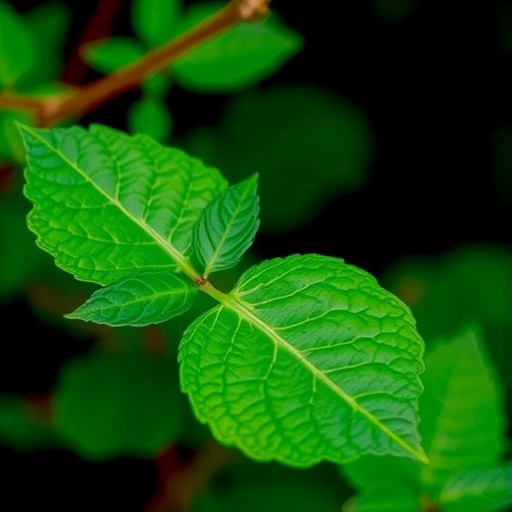
In a groundbreaking exploration into the vibrant world of natural plant pigments, recent research spearheaded by de Souza, L.R., de Azevedo, E.C., Dutra, J.M., and colleagues unveils the intricate genetic and biochemical pathways that govern pigment synthesis, degradation, and their multifaceted applications in the food industry. This comprehensive study delves into how plants regulate their captivating colors at the genetic level, the technological advancements that enable efficient extraction and preservation, and the profound impact these pigments have on sensory experience and food product innovation.
The allure of natural pigments is not merely aesthetic; it represents a nexus of biology, chemistry, and technology. Plants synthesize a diverse array of pigments—ranging from chlorophylls and carotenoids to anthocyanins and betalains—that play vital roles in photosynthesis, stress response, and pollinator attraction. Central to this process are specific genes and transcription factors meticulously orchestrating the biosynthetic routes. Understanding these molecular regulators offers unprecedented potential to enhance pigment production through biotechnological means, thereby meeting the growing demand for natural colorants in food systems that are safer and more sustainable than synthetic alternatives.
At the molecular core, the study highlights how transcription factors act as master switches controlling enzymatic cascades responsible for pigment biosynthesis. The identification of these genetic elements paves the way for precise genome editing strategies aimed at optimizing pigment concentration and stability. Moreover, insights into degradation pathways reveal how pigment breakdown is a tightly regulated phenomenon, influenced by environmental cues and developmental stages, underscoring a dynamic balance that determines the hues expressed in plant tissues over time.
Moving from genetic insight to practical application, the research meticulously discusses innovative extraction techniques that maximize yield while preserving pigment integrity. Traditional solvent-based methods often face limitations in efficiency and environmental impact, thus driving the development of green extraction technologies, such as supercritical fluid extraction and ultrasonic-assisted methods. These techniques not only enhance purity and bioactivity of pigments but also align with ecological sustainability goals, a factor increasingly pressing in commercial food production.
Preserving the delicate structure of natural pigments during processing and storage remains a significant challenge due to their susceptibility to degradation triggered by light, oxygen, and temperature fluctuations. The research underscores the role of microencapsulation technologies in stabilizing these compounds by creating protective barriers at the microscopic level. Encapsulation materials such as polysaccharides, proteins, and lipids effectively shield pigments from adverse conditions, thereby extending shelf life and facilitating controlled release in food matrices.
The sensory implications of natural pigments extend beyond visual appeal, profoundly influencing flavor perception and consumer acceptance. The study reveals that pigments can engage in complex interactions with taste and aroma compounds, occasionally modifying the overall sensory profile of food products. Understanding these interactions at the molecular and organoleptic level is crucial for designing products that not only appeal visually but also deliver a harmonious and enhanced eating experience.
Food industry applications of natural pigments have surged in recent years as consumers demand cleaner labels and transparency. The pigments’ functionality transcends coloration; some exhibit antioxidant, antimicrobial, and nutraceutical properties that can be harnessed to improve food quality and shelf stability. This multifunctionality positions natural pigments as valuable ingredients in the development of functional foods and nutraceutical products tailored to health-conscious markets.
Furthermore, the study addresses regulatory challenges and safety considerations pivotal to the commercialization of natural pigment-derived additives. Comprehensive toxicological evaluations and adherence to international standards ensure consumer safety, while facilitating global market acceptance. The establishment of robust regulatory frameworks is essential to support the scaling of natural pigment utilization within the food sector.
An intriguing aspect covered by the authors is the potential use of plant genetic engineering to produce novel pigment profiles that do not naturally occur, thereby expanding the palette available to food technologists. The manipulation of biosynthetic pathways via CRISPR-Cas technologies and synthetic biology approaches could allow for the creation of pigments with enhanced stability, functionality, and tailored sensory attributes, pushing the boundaries of conventional food design.
At the intersection of agriculture and food science, the study also contemplates the influence of cultivation conditions on pigment biosynthesis. Environmental factors such as light intensity, temperature, and soil nutrients significantly modulate the expression of pigment-related genes and thus the final color of plant-derived raw materials. Optimizing agronomic practices to favor pigment accumulation could serve as an eco-friendly approach to improve the quality of natural colorants sourced from plants.
The researchers emphasize the socio-economic impact of natural pigments by highlighting their role in supporting sustainable agricultural practices and rural livelihoods. By valorizing pigmented crops and by-products, the food industry can foster circular economy models that reduce waste and promote biodiversity. This has far-reaching implications for food security and environmental stewardship in an era marked by increasing resource constraints.
Despite these advancements, the authors caution that challenges remain in scaling up the production of natural pigments to meet industrial demands. Issues such as variability in pigment concentration, batch-to-batch consistency, and cost-effectiveness need to be addressed through integrated multidisciplinary efforts combining molecular biology, process engineering, and market research.
Importantly, the study calls attention to the dynamic field of sensory science in evaluating pigment applications. Employing advanced analytical tools such as electronic noses and tongues alongside human sensory panels enables a holistic understanding of how pigments influence consumer perception, an essential step for product development that resonates with target markets.
In conclusion, this transformative body of work provides a detailed map of the genetic underpinnings, technological innovations, and multisensory impacts of natural plant pigments. By weaving together fundamental biology with applied sciences, it opens novel avenues for the food industry to leverage pigments not only as natural colorants but as multifunctional agents enhancing food quality, health benefits, and consumer experience in a sustainable manner.
As consumer preferences continue to shift towards natural and health-promoting ingredients, the insights gleaned from this research will be instrumental in guiding future innovations. From the lab bench to industrial production lines, the journey of natural pigments epitomizes the convergence of science and sensory delight—a colorful revolution poised to reshape the food landscape in the years to come.
de Souza, L.R., de Azevedo, E.C., Dutra, J.M. et al. Natural plant pigments: genes and transcription factors regulating synthesis and degradation, extraction, microencapsulation, food applications, and sensory impacts.
Food Sci Biotechnol (2025). https://doi.org/10.1007/s10068-025-01982-0
Cite Scienmag News
Juliet Wilcox. (August 19, 2025). Natural Plant Pigments: Genes, Extraction, and Food Effects. Scienmag. https://scienmag.com/natural-plant-pigments-genes-extraction-and-food-effects/
Juliet Wilcox. "Natural Plant Pigments: Genes, Extraction, and Food Effects." Scienmag, 19 August 2025, https://scienmag.com/natural-plant-pigments-genes-extraction-and-food-effects/. Accessed 4 September 2026.
Juliet Wilcox. "Natural Plant Pigments: Genes, Extraction, and Food Effects." Scienmag. August 19, 2025. https://scienmag.com/natural-plant-pigments-genes-extraction-and-food-effects/


